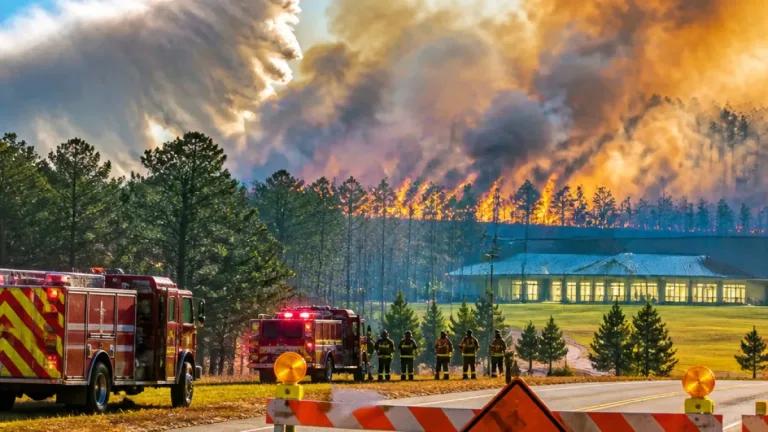
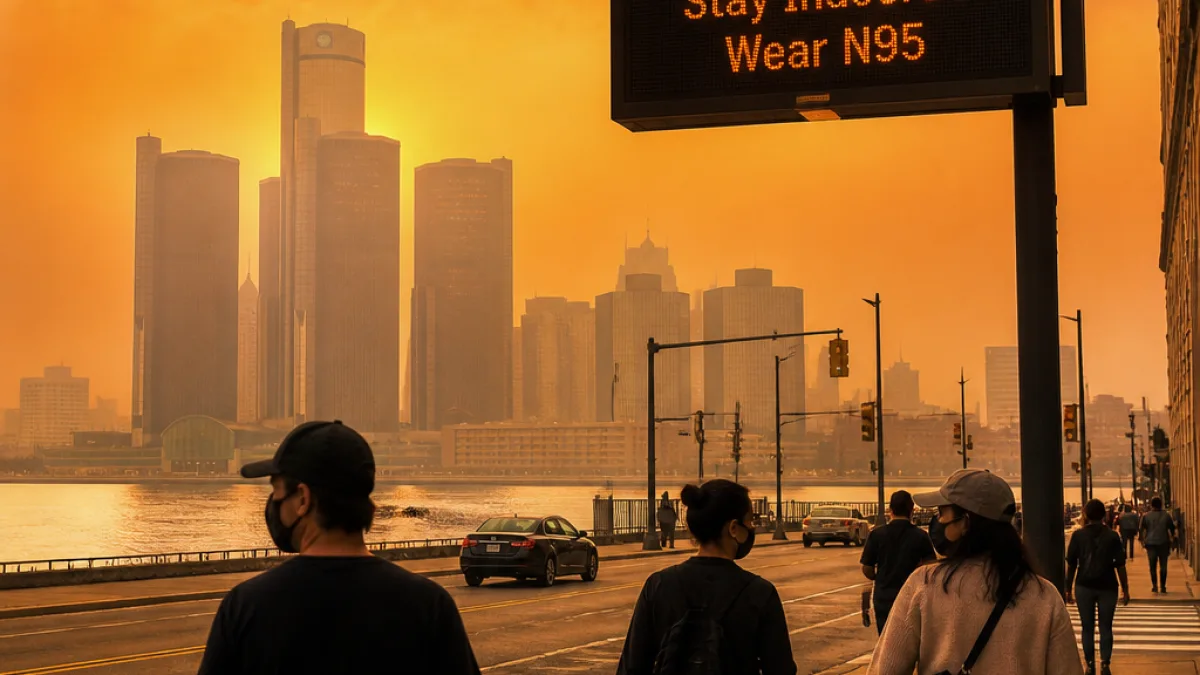
Metro Detroit woke to hazy skies and the smell of burning on Thursday, July 16, as wildfire smoke flowing south from northern Minnesota and parts of Ontario, Canada, pushed fine-particulate pollution into the hazardous range across southeast Michigan.
Air-quality readings spike into dangerous territory
Hourly measurements of the Air Quality Index (AQI) showed some of the highest values recorded today in the region. At one monitoring site the AQI exceeded 800, and the city of Detroit registered an AQI of 460, a level that public-health agencies classify as hazardous for everyone.
| Location | Reported AQI (approx.) |
|---|---|
| Lake Orion | 857 |
| Waterford | 758 |
| Monroe | 739 |
| Plymouth | 708 |
| Grosse Pointe | 613 |
Specialized air-quality trackers ranked Detroit among the major cities worldwide with the poorest air today. State monitoring showed elevated concentrations of fine particulate matter, known as PM2.5, which can penetrate deep into lungs and aggravate heart and lung conditions.
State officials: stay indoors, limit activity, use masks if necessary
The Michigan Department of Environment, Great Lakes, and Energy issued air-quality alerts across the state for July 16 because of the elevated PM2.5 levels. The Michigan Department of Health and Human Services offered precautions for residents.
“Stay indoors with windows closed and air conditioning running amid wildfire smoke. If you have to go outside, limit your time outdoors, avoid strenuous activities and consider wearing an N95 mask.”
Health experts say children, older adults, pregnant people and those with respiratory or cardiovascular disease are especially vulnerable to short-term exposure to smoke. Even healthy adults can feel irritation of the eyes, nose and throat, coughing, or shortness of breath during episodes like this.
Practical steps for residents
- Keep windows and doors closed and run central air or portable air cleaners with HEPA filters if available.
- Avoid outdoor exercise and strenuous work until air quality improves.
- Use an N95 or equivalent respirator if you must be outdoors for extended periods.
- Check local AQI updates hourly through state or national monitoring sites before travel or outdoor plans.
Officials said the smoke originated from active wildfires well north of Michigan, and shifting winds can change local conditions quickly. Residents should monitor guidance from state and local health departments and local air-quality maps for the most current information.
For now, the clearest protection is reducing outdoor exposure and keeping indoor air as clean as practical while the smoke plume moves through the region.