MONTGOMERY — The Alabama Department of Public Health confirmed Wednesday that 11 cases of cyclosporiasis have been reported in the state since May 1, with most of the illnesses occurring in north Alabama, agency officials said.
Where cases have appeared
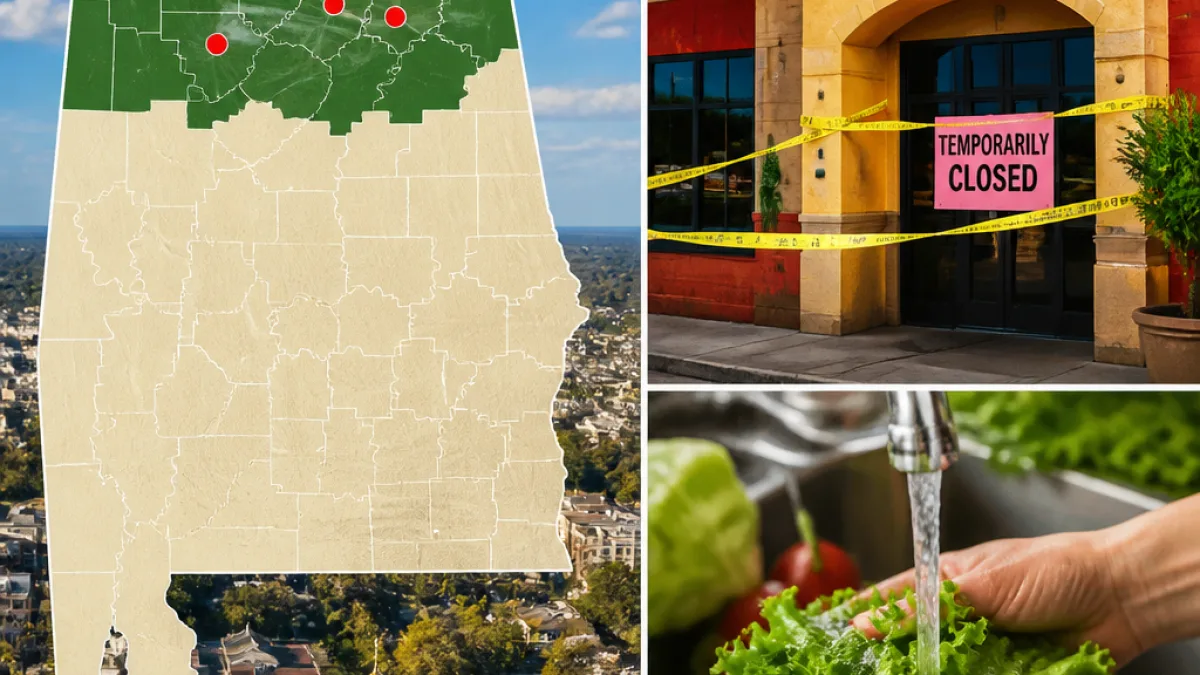
ADPH reported that 9 cases are concentrated in its Northern District. One case was recorded in the Northeastern District and one in the Southwestern District, according to Ryan Easterling, director of the Health Media and Communications Division at ADPH.
Known exposures and travel links
Of the 11 infections, two are associated with international travel. One case has been connected to a foodborne outbreak tied to a local Mexican-style restaurant chain, ADPH said. The remaining cases do not currently share known links to those exposures, and investigators continue to seek common sources.
"What has probably concerned a lot of people right now is that we haven’t identified that one food that we should be avoiding or that one brand," said Dr. Rachael Lee, chief healthcare epidemiologist at the University of Alabama at Birmingham.
Symptoms, risks and prevention
Cyclosporiasis is an intestinal illness caused by a microscopic parasite that can be passed through contaminated food or water. Typical symptoms include watery diarrhea, bloating and stomach cramps. ADPH epidemiologist DeJuana Grant emphasized safer produce choices as a risk-reduction step.
- Choose locally grown produce when possible or grow your own.
- Frozen produce may pose lower risk than some fresh items.
- Wash hands and rinse fresh fruits and vegetables under running water before eating, cutting or cooking.
- Cooking food thoroughly destroys the parasite.
- If you have symptoms, contact your healthcare provider for testing.
Local and national context
ADPH said no hospitalizations or deaths have been reported in Alabama in connection with this cluster. Nationally, the Centers for Disease Control and Prevention has received more than 1,600 reports of cyclosporiasis since May 1, reflecting a wider outbreak under investigation.
| ADPH District | Reported cases |
|---|---|
| Northern | 9 |
| Northeastern | 1 |
| Southwestern | 1 |
Public-health officials continue to interview patients and review food histories and other exposures to identify any common source. Because the state has not identified a single contaminated product or brand linked to the cluster, public messaging is focused on prevention and awareness.
Residents with symptoms consistent with cyclosporiasis — particularly prolonged or severe diarrhea — are urged to seek medical evaluation and testing so health investigators can better track and respond to the outbreak.
— Caleb Whitfield, Alabama Correspondent