WILMINGTON — Homeowners and gardeners across Wilmington face a recurring trio of challenges: sandy soil, prolonged summer heat and increasing salt exposure near the coast. Landscape experts and extension services increasingly recommend planting native species that are adapted to the Cape Fear region's conditions and to a warming, drier climate.
Why native plants matter here
Native plants are already suited to the local soil profile and climate patterns, which improves their odds of thriving with less water and maintenance than many nonnative ornamentals. For coastal properties, salt tolerance matters as sea-level rise and tidal surges make periodic inundation and salt spray more common.
"Choosing native plants offers a better chance of success and supports local wildlife and pollinators."
That practical resilience is also ecological: native species provide food and habitat for local birds, insects and pollinators, supporting the broader Cape Fear ecosystem while reducing the need for extra irrigation, fertilizers or pesticides.
One native to consider: Yaupon holly
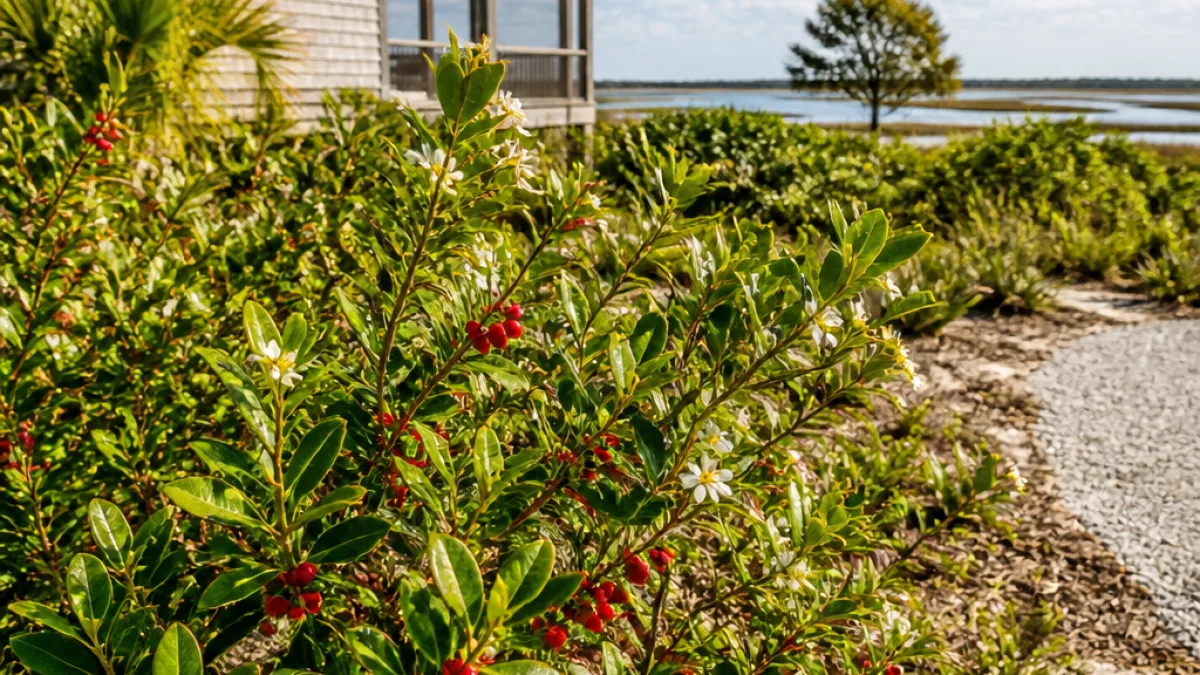
Among recommended choices is Yaupon holly, a coastal plain evergreen shrub noted for its adaptability. It produces white flowers in spring and bright red berries in fall and winter, offering multi-season interest. Homeowners will also find it practical: Yaupon is reported to be deer-resistant and drought-tolerant, making it suitable for low-maintenance plantings and buffers along edges of lots facing salt spray.
| Feature | Yaupon holly |
|---|---|
| Evergreen | Yes |
| Flowers | White, spring |
| Berries | Red, fall/winter |
| Resistance | Deer, drought tolerant |
Practical tips for Wilmington gardeners
- Match plants to the soil and sun exposure; many natives tolerate sandy, well-draining soils better than exotics.
- Prioritize drought- and salt-tolerant varieties on waterfront sites or low-lying yards.
- Use native shrubs and groundcovers to reduce irrigation needs and support pollinators.
- Plant in groups to create habitat corridors for birds and beneficial insects.
For Wilmington and New Hanover County, landscaping choices are also a form of climate adaptation. Native plantings can help property owners reduce maintenance costs and water use while improving resilience to hotter, drier summers and more frequent coastal salt exposure projected for the region.
Local extension offices and native plant societies can provide lists of species proven in the Cape Fear region and guidance on placement. For many homeowners, a simple shift toward native shrubs like Yaupon holly represents both an aesthetic upgrade and a pragmatic response to the environmental realities shaping Wilmington's yards.