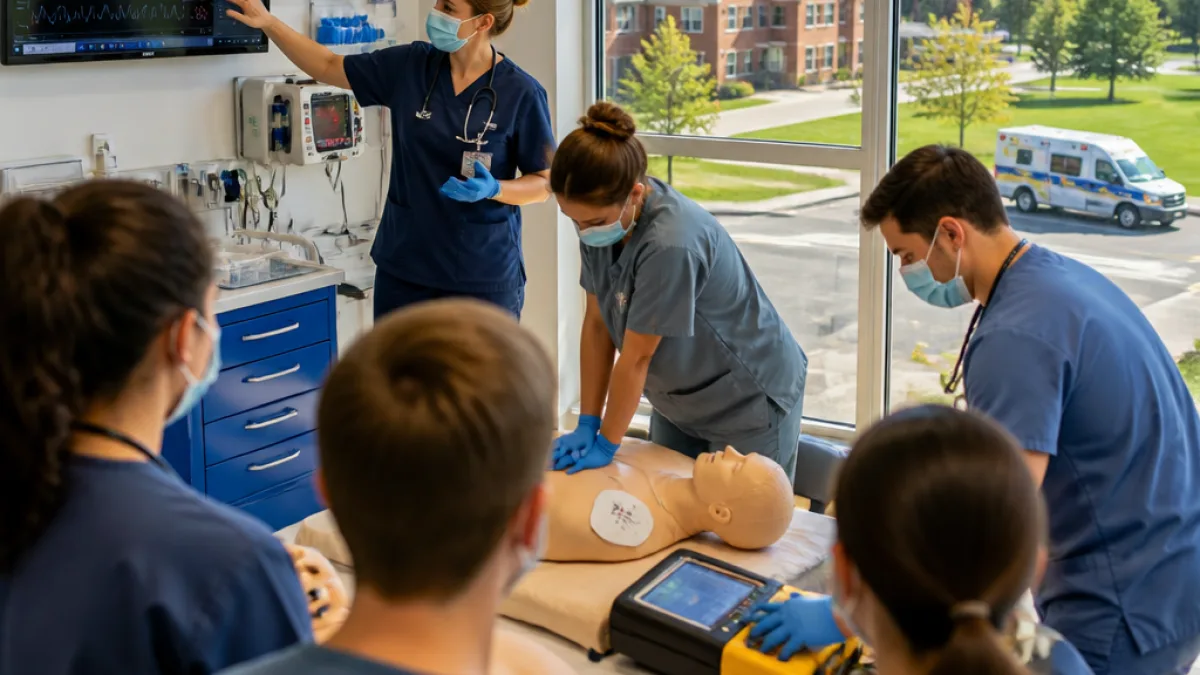
High school students from across Vermont spent part of July on the University of Vermont campus receiving intensive, hands-on clinical training and emergency-simulation experience through the Governor’s Institutes of Vermont Health and Medicine program.
The institute combines remote coursework and an on-campus residency. Participants complete four days of online learning, then move into campus housing for a seven-day block of practical instruction in UVM’s clinical simulation laboratory, organizers said.
What students learn and why it matters
Instructors lead trainees through emergency scenarios and teach foundational clinical skills that can qualify students for the Vermont Emergency First Responder certification. That credential can help graduates seek early roles with local ambulance services or volunteer fire and rescue departments, program directors said.
- Structure: 4 days online + 7 days in residence.
- Setting: University of Vermont clinical simulation lab and campus housing.
- Outcome: Preparation for Vermont Emergency First Responder certification.
“Once they’re on campus, we have seven days of training hands-on clinical skills,” Elizabeth Frascoia, executive director of the Governor’s Institute, said. Living in a college environment also gives students a practical view of higher-education options, she added.
“A program like this where you’re in residence on a college campus like UVM, they get to picture themselves and their lives here and I think it makes a difference.”
Instructors emphasized that the training provides prerequisites and confidence for teens to approach fire departments and ambulance services about opportunities that accept the certification. Kevin Adams, one of the institute instructors, said the skills taught form a foundation for future medical education and careers.
Students’ motivations
Participants cited personal reasons for joining. Nakyah Furtado said family health concerns motivated her interest in medicine; Alexis Hebert said she wants to be prepared to handle emergencies while babysitting. Their experiences illustrate how the institute can turn personal motivation into practical training that benefits both students and the community.
| Program element | Length |
|---|---|
| Online pre-work | 4 days |
| On-campus instruction | 7 days |
For Vermont residents, the program represents an early pathway into health care and emergency services at relatively low cost of entry: students gain practical skills, college exposure and a route toward certification that may open part-time employment or volunteer opportunities locally.
News Block contacted the Governor’s Institutes of Vermont for additional details about enrollment and long-term outcomes; program officials provided the timeline and goals cited in this report.
— Willa Prescott, Vermont Correspondent