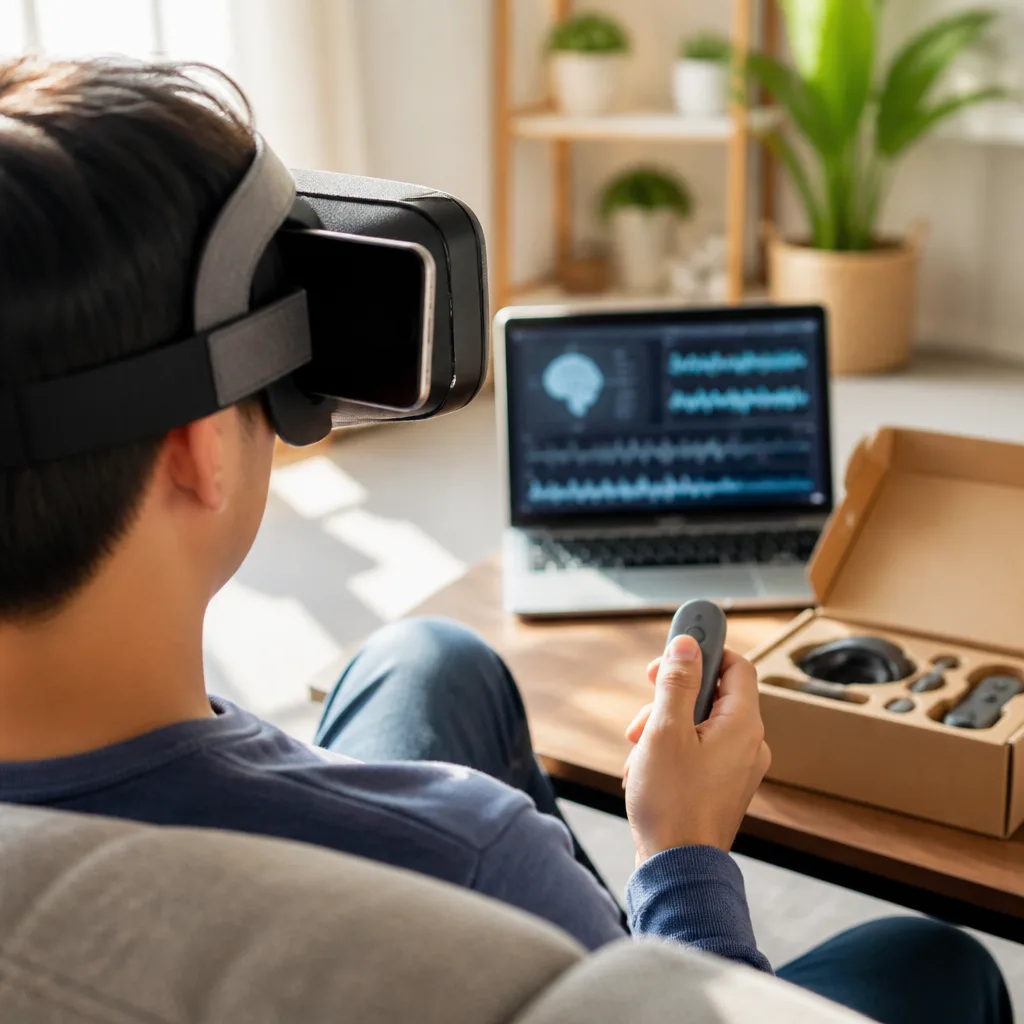
USF Health ophthalmologists in Tampa are piloting a patent-pending, AI-driven system that aims to recreate clinical visual field testing at home using a smartphone, a VR headset and a handheld clicker. The device bundle is being marketed as a roughly $42 alternative to office-based equipment that can cost as much as $30,000.
How the system works
The prototype uses a mobile phone and virtual-reality goggles to present visual stimuli and a handheld button to record patient responses. Software built with machine-learning algorithms analyzes test results over time to detect changes consistent with glaucoma, a progressive disease of the optic nerve that can cause irreversible vision loss if not caught early.
Why it matters
Visual field testing is a standard tool for diagnosing and monitoring glaucoma, but the specialized machines used in clinics are expensive and typically require an in-person visit. USF Health's approach aims to lower barriers to regular screening by shifting the testing environment into patients' homes and automating interpretation with AI.
- Cost difference: home kit presented as about $42 vs. clinical devices up to $30,000.
- Scale of early testing: 60 patients are currently using the technology in the trial.
- Regulatory path: developers say the technology is patent-pending and must obtain FDA approval before broad deployment.
“I didn’t notice the pressure in my eye. It’s something you can’t feel,”
The quoted patient, identified as Jeffrey Reuter, described how a routine checkup led to an unexpected glaucoma diagnosis in 2023 and how frequent clinical follow-ups and daily eye drops have affected his schedule and finances. Reuter and other early users say a portable test could reduce time away from work and lower out-of-pocket costs tied to monitoring.
Clinical and practical considerations
Developers at USF Health, led by ophthalmologist Ramesh Ayyala, say the goal is twofold: enable patients to screen themselves at home and use AI to flag when clinical follow-up is required and whether the disease is stable. The system is intended to replicate the diagnostic value of in-office perimetry by tracking changes in peripheral vision over repeated sessions.
Before the technology can be adopted widely, it must clear regulatory review and broader clinical validation. USF Health clinicians told reporters they hope, pending FDA approval, to make the tool available beyond the United States.
| Item | Cost (as stated) |
|---|---|
| USF at-home kit | $42 |
| Office visual field equipment | Up to $30,000 |
The trial is small and described as ongoing; the technology's effectiveness at matching clinical perimetry and its sensitivity/specificity metrics have not been released publicly. Still, if validated and approved, a low-cost, AI-assisted home test could change how populations at risk for glaucoma—who often go undiagnosed for years—are screened and monitored.
For clinicians, the promise lies in more frequent, lower-friction data points to detect progression earlier. For patients, the appeal is reducing the burden of clinic visits and potentially lowering costs. Both benefits, however, hinge on regulatory clearance, independent validation and integration into care pathways by eye-care providers.