
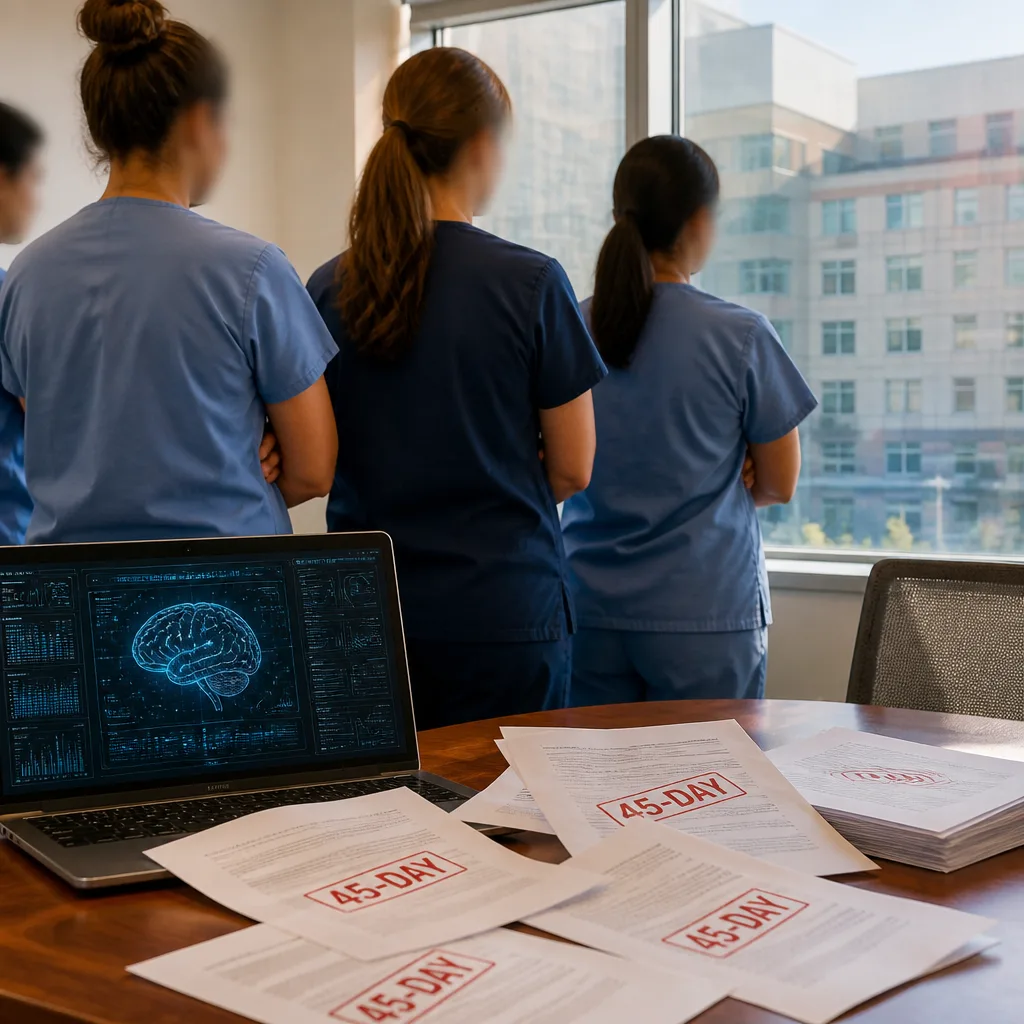
The New York State Nurses Association has filed a formal grievance against Montefiore Health System after the Bronx hospital notified a group of utilization nurses that their positions would be eliminated and their tasks transferred to AI-powered software.
What happened
The nurses affected worked as utilization nurses, roles that the union says involved reading patient charts and coordinating insurance claims. The union contends Montefiore issued a 45-day layoff notice without engaging in bargaining or exploring alternatives to avoid job losses, actions it says violate the employer’s collective bargaining contract.
"45-day layoff notice"
Why it matters
This dispute sits at the intersection of three pressing issues: rapid deployment of artificial intelligence in clinical operations, protections under collective bargaining agreements, and how health systems manage workforce transitions. If hospitals can replace clinical staff with automation without bargaining, unions and labor lawyers warn that similar reductions could ripple through the health sector.
Key claims and stakes
The union’s grievance alleges two central violations:
- Failure to meet and discuss means to avoid layoffs as required by the contract.
- Violation of a technology clause the contract contains, which the union says governs how new systems affecting work are introduced.
For hospitals, AI promises faster chart reviews, automated prior authorization work and lower administrative cost. For clinicians and unions, the questions are legal and practical: when does technology deployment trigger bargaining obligations, and what protections do workers have as duties shift from people to software?
| Party | Position |
|---|---|
| New York State Nurses Association | Filed grievance alleging contract violations |
| Montefiore Health System | Initiated layoffs citing AI replacement of duties |
Broader context
Labor contracts increasingly include provisions that require employers to notify and consult unions before automating work. This case could test those clauses in a health-care setting where regulatory, clinical and payer processes shape how and whether AI can substitute for skilled staff. The outcome may influence how health systems phase in automation and whether they must offer redeployment, retraining or other mitigations first.
The complaint, as described by the union, does not detail the specific software product or vendor involved. It does, however, underscore a growing trend: institutions are moving to machine-assisted administrative workflows, and labor organizations are pushing back when those moves reduce head count without negotiation.
How arbitrators, courts or regulators treat the intersection of labor rules and AI adoption in health care will set precedents for similar clashes across industries where software can assume tasks once done by humans.