The National Science Foundation has named the University of Alaska Fairbanks the home of a new Critical Minerals Accelerator Engine, awarding an initial $15 million for two years and making the project eligible for as much as $160 million across a decade, university officials said Tuesday.
From research to commercialization
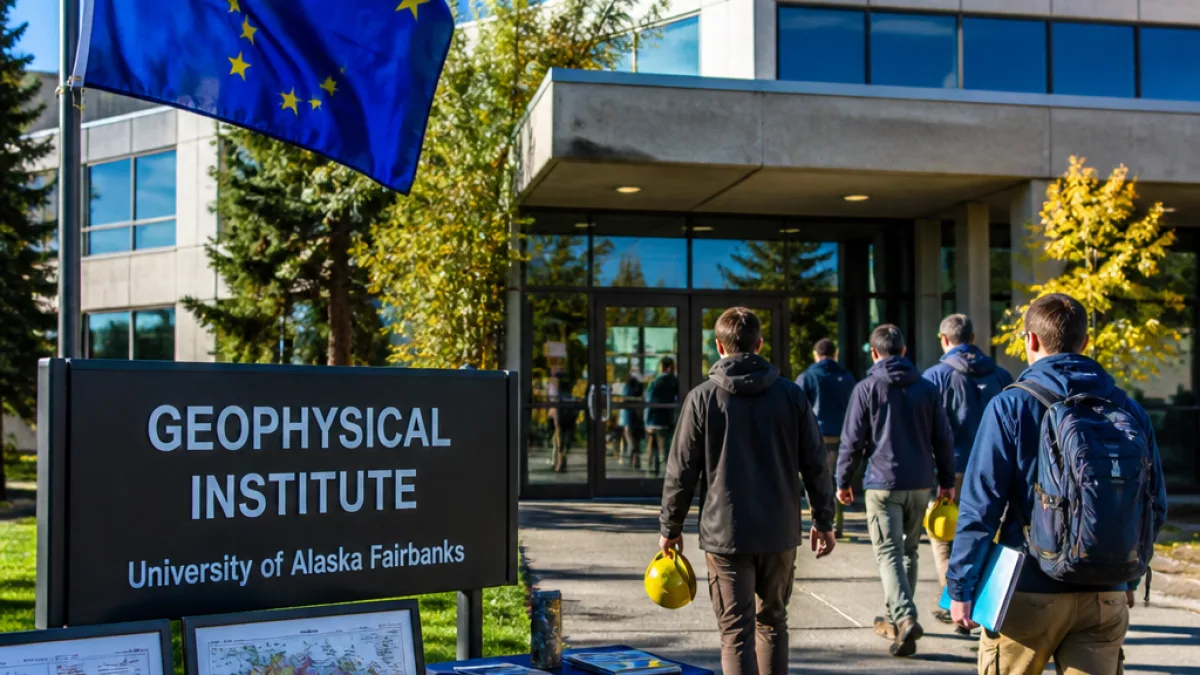
The accelerator will be located at and led by UAF’s Geophysical Institute and is designed to move the university’s mineral science toward practical, market-ready solutions. Unlike UAF’s existing Critical Minerals Collaborative, which focuses largely on academic research, the accelerator emphasizes economic development, workforce training and strategies to scale supply chains.
Steve Masterman, a UAF faculty member who helped lead the application and who previously served as Alaska’s state geologist, said the project will pair university expertise with industry needs. The initiative will involve more than 40 partners, including private companies, Native corporations, nonprofits and other universities, Masterman said.
"This is quite different because it's an economic development project," Masterman said.
Why Alaska matters
Alaska possesses a significant share of the minerals the United States considers critical. UAF notes the state has 56 of the 60 minerals listed by the U.S. Geological Survey as critical to the national economy. The new accelerator aims to leverage that resource base to address supply vulnerabilities, expand local industry capacity and develop a skilled workforce.
- Initial NSF award: $15 million for two years
- Potential funding over 10 years: up to $160 million
- Project leadership: UAF Geophysical Institute, led by Lee Ann Munk
- Partners: more than 40 entities including Native corporations and private industry
Leadership and focus
Lee Ann Munk, a geosciences professor at UAF’s College of Natural Science and Mathematics, will lead the Alaska innovation engine. University officials say the accelerator will pursue commercialization pathways, workforce development, and solutions to meet industry demand for critical minerals used in technologies ranging from renewable energy equipment to electronics.
| Item | Detail |
|---|---|
| Initial NSF funding | $15 million (two years) |
| 10-year funding potential | Up to $160 million |
| Number of critical minerals in Alaska | 56 of 60 USGS-listed minerals |
Officials say the accelerator differs from other NSF innovation engines announced nationally by center purpose: while some focus on robotics, disaster mitigation or advanced information technologies, the Alaska site will concentrate on translating mineral science into economic activity that strengthens both local communities and national supply chains.
The award positions UAF as a central node in federal efforts to reduce reliance on foreign sources of critical minerals and to expand domestic production capacity. For Alaska communities, the program could mean new jobs, partnerships with Native corporations, and investment in exploration, processing and value-added industries — though the university and its partners will need to define specific projects and timelines as the accelerator ramps up.
University and state officials will likely face several near-term tasks: formalizing partnerships, outlining workforce training programs, and identifying pilot commercialization projects that demonstrate how Alaska’s mineral resources can be responsibly developed to meet U.S. industrial needs.