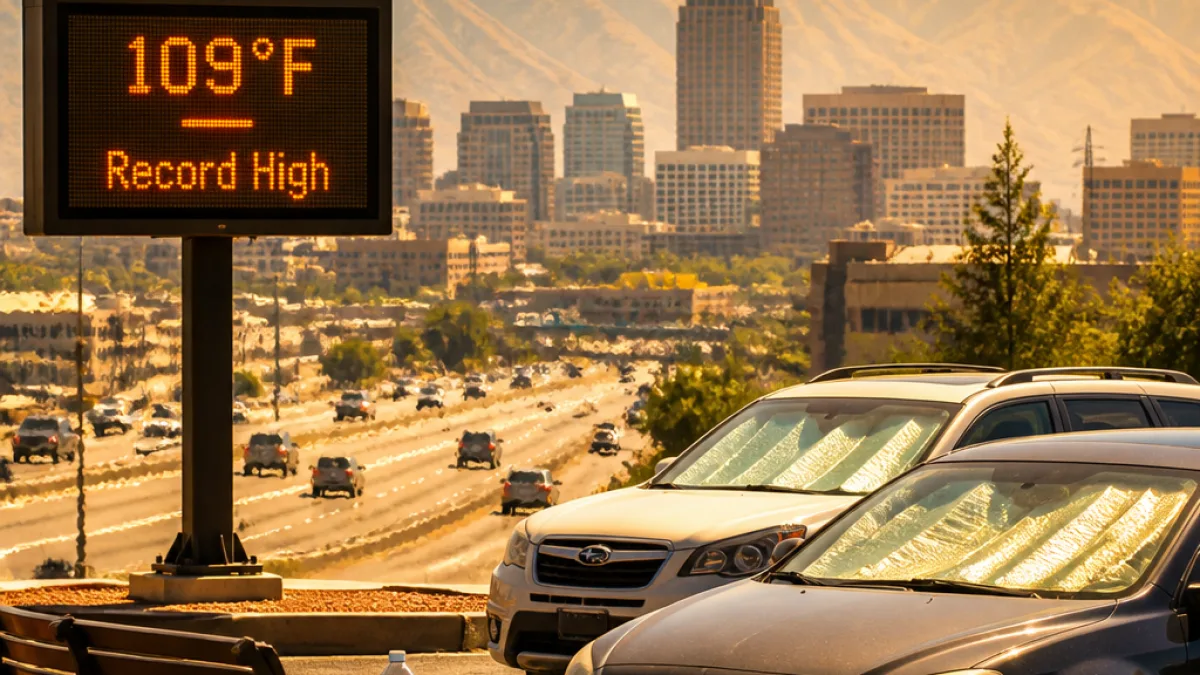
The Salt Lake City area hit 109 degrees Sunday afternoon, setting a new all-time high at the National Weather Service's official station near Salt Lake City International Airport and surpassing a previous mark that stood for decades.
What changed for residents
The official reading of 109°F came shortly before 3 p.m. MDT, according to the National Weather Service in Salt Lake City. That number broke the prior city record of 107°F, a value first reached on July 26, 1960, and matched in several years since.
Local officials and meteorologists said the spike was driven by a pronounced high-pressure ridge parked north of the Four Corners region. That weather pattern limited airflow and allowed temperatures to climb well above typical summer highs for the Wasatch Front.
"Salt Lake City has now observed a high of 109 degrees so far as of 2:58 PM MDT, which sets a new all-time temperature since records began at the site in 1874," the National Weather Service in Salt Lake City tweeted Sunday.
The extreme heat prompted an excessive heat warning for parts of the state. Residents should expect hotter-than-normal evenings, increased strain on cooling systems and a higher risk of heat-related illnesses, especially for older adults, infants and those working outdoors.
How this fits into regional conditions
The weekend’s warmth was not confined to Salt Lake City. Several other Utah locations reported near- or record-setting temperatures, and communities outside the state also saw extraordinary heat.
- Logan: at least 106°F, topping a previous local record of 103°F.
- Ogden: matched its all-time high of 106°F.
- St. George: remains Utah’s historical high-water mark at 117°F, a measure recorded in prior years.
| Location | Reported high (°F) |
|---|---|
| Salt Lake City (official site) | 109 |
| Las Vegas | 106 |
| Phoenix | 109 (matched) |
| Billings, Mont. | 111 |
Forecasters noted the pattern resembles past "heat dome" events that have driven some of Utah’s top temperature readings in recent years. Salt Lake City matched its all-time highest reading multiple times between 2021 and 2022, and this weekend’s spike pushes the record even higher.
What residents should know and do
Health and emergency officials typically advise these precautions during sustained extreme heat:
- Stay hydrated and avoid strenuous activity outdoors during peak afternoon hours.
- Check on elderly neighbors and those with medical vulnerabilities.
- Use cooling centers if air conditioning is unavailable; contact local municipal websites or 211 for locations and hours.
Salt Lake City and county agencies monitor power and water systems for strain during heat waves. Extended high temperatures can increase electricity demand, raise wildfire danger in dry areas and stress transportation infrastructure.
The National Weather Service will continue to provide updates as the high-pressure system shifts and temperatures evolve across the Intermountain West.
Miles Christensen is the Utah correspondent covering weather and local impacts for News Block.