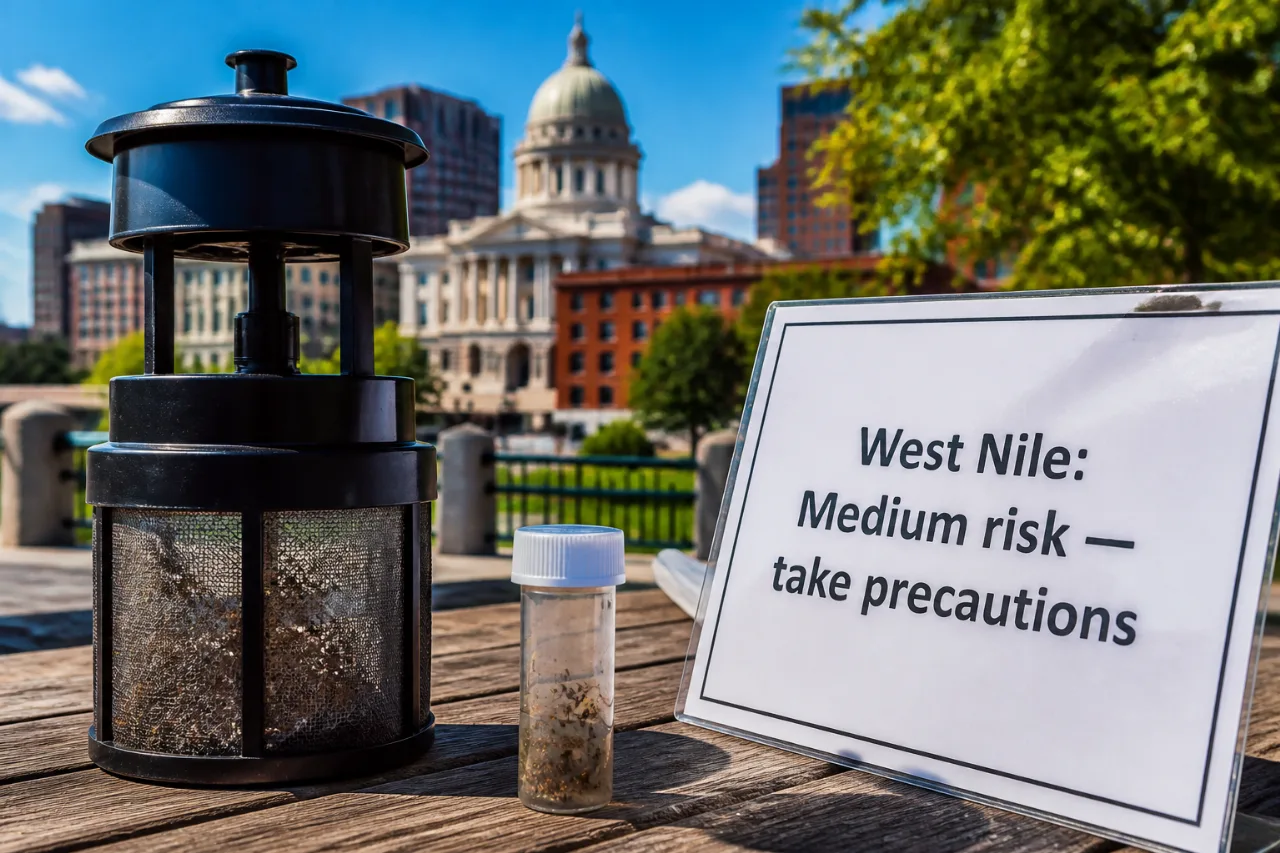
The state’s first confirmed West Nile virus detection in 2026 came from a mosquito sample trapped in Providence on June 29, health authorities announced this week. The finding, reported jointly by the Rhode Island Department of Environmental Management and the Rhode Island Department of Health, marks the season’s initial signal that the virus is circulating in the local mosquito population.
What officials found and what it means
Laboratory testing of the mosquito sample identified West Nile virus, while additional samples collected across the state returned negative results for West Nile as well as for Eastern Equine Encephalitis and Jamestown Canyon virus, according to the release. State officials have placed Rhode Island’s risk level for West Nile at medium.
The announcement underscores a familiar pattern: West Nile is the primary mosquito-borne illness routinely monitored in the United States, and its detection in traps often precedes human cases. There is no vaccine available for the virus, so public prevention remains the frontline defense.
"About 20% infected with the virus 'develop a fever and other symptoms,'" the release said.
Local steps and advice for Providence residents
City and state mosquito-control and public-health entities routinely monitor traps and test samples through the summer months. For Providence residents that translates into practical steps to reduce risk:
- Avoid outdoor activity at dusk and dawn when mosquitoes are most active.
- Use EPA-registered insect repellent and wear long sleeves and pants when possible.
- Remove standing water from containers around yards, including gutters, birdbaths and plant saucers.
Officials also encourage residents to report areas with excessive standing water to municipal services so targeted control measures can be considered. In neighborhoods across the city, residents often rely on local public works and health outreach to coordinate larviciding and education campaigns.
Surveillance data at a glance
| Item | Detail |
|---|---|
| Sample collection date | June 29, 2026 |
| Location | Providence |
| Other viruses tested statewide | Eastern Equine Encephalitis, Jamestown Canyon virus (all negative) |
| State risk level | Medium |
For Providence, the detection is a reminder that summer brings predictable public-health chores: mosquito monitoring, community outreach and personal prevention. City residents should treat the finding as a cue to refresh simple protections and to watch for any further guidance from the Department of Health as surveillance continues through the season.