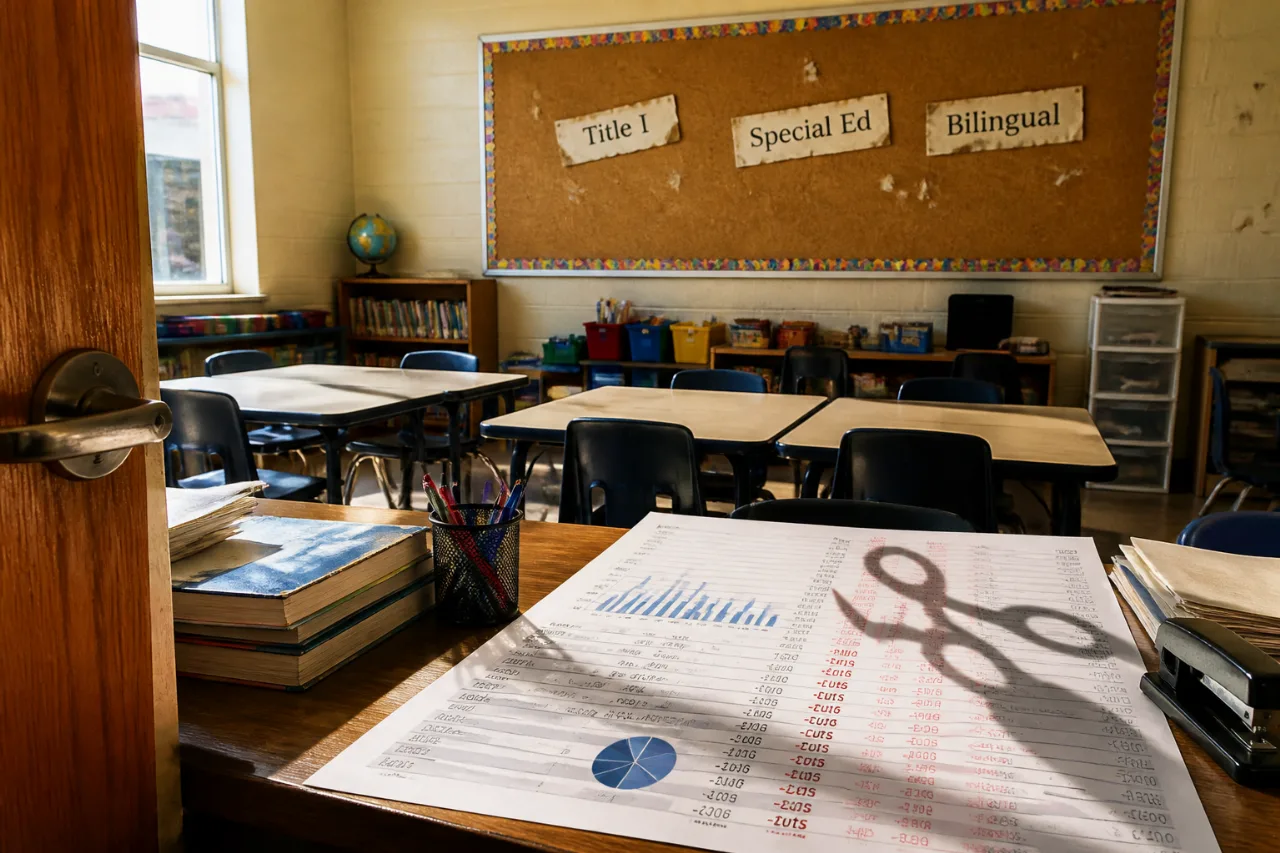
Federal proposals for the fiscal 2027 budget would substantially reduce federal support for public education, targeting funding streams that many districts rely on for staffing, student supports and specialized services.
What the proposals would change
Two different FY27 plans put forward by House Republican leaders and the White House would together eliminate or shrink a range of programs that support school districts across the country. The measures highlight cuts to teacher training, after-school programs, counseling and nursing services, and research and data activities used to evaluate and improve schooling.
"Great American Heist"
Advocates at The Education Trust characterize the plans as a sweeping transfer of resources away from public education. The proposals include:
- A near $2 billion reduction to Title I funding under the House plan, a key source for schools serving high‑poverty communities.
- A White House plan to consolidate 17 federal programs into a single block grant while cutting the combined funding from about $6.5 billion to $2 billion.
- Elimination of multiple programs aimed at training educators and supporting a diverse teacher workforce, according to analysis by The Education Trust.
Practical consequences for districts, students and staff
Districts say Title I dollars and federal program allocations pay for essential services that often do not have local funding streams. Reductions or consolidation could force districts to reallocate limited local funds, reduce staff or curtail programs that serve students with the greatest needs, including:
- school counselors and nurses, who provide health and mental‑health support;
- specialists who assist students with disabilities and multilingual learners;
- after‑school and tutoring programs that help close learning gaps.
Education advocates warn a dramatic reduction in programmatic funding or a shift to a smaller block grant could leave districts with fewer targeted resources and less federal oversight, increasing the risk that some students and schools would receive less support.
Where the process goes next
The proposals are initial offers in a larger appropriations debate. Senate appropriations leaders have in prior years rejected sharp cuts to education, and the path forward will depend on negotiations between House and Senate lawmakers and the White House. Advocates are calling on senators to protect these investments and to preserve programs transferred improperly in earlier proposals.
| Program or change | Proposed impact |
|---|---|
| Title I | Nearly $2 billion cut (House proposal) |
| 17 programs converted to block grant | Funding reduced from $6.5B to $2B (President's proposal) |
| Educator training/diversity programs | Elimination in both proposals, per The Education Trust |
Tools and advocacy
The Education Trust has published a "Federal Funding at Risk" tool to show how proposed changes would affect districts, teachers and services in dollar terms and in practical outcomes such as counselor and tutor availability. Advocates say such tools help parents, educators and local leaders understand what would change in their communities and support advocacy efforts aimed at the Senate and appropriators.
For parents and school leaders, the immediate takeaway is to monitor negotiations closely and connect with state and national education organizations to gauge how proposed cuts might translate into local budget pressure, staffing changes, or program reductions for the 2026–27 school year and beyond.