
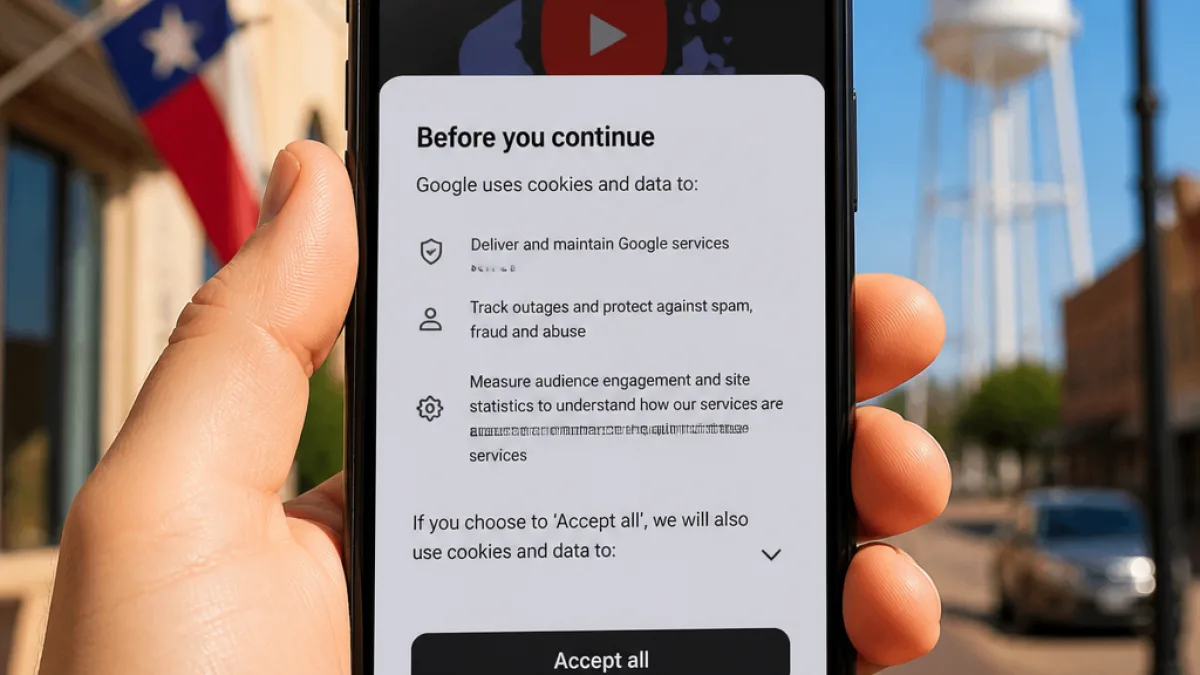
ODESSA, Texas — Internet users in Odessa who visit YouTube will see a consent screen outlining how Google uses cookies and data to deliver services, measure engagement and protect against fraud. The prompt gives viewers a clear choice between broader data collection for personalization and a more limited tracking setting.
What the consent screen says
The notice explains that Google uses cookies and data for several operational reasons, including delivering and maintaining services, tracking outages and protecting against spam and abuse. It also says the company measures audience engagement and site statistics to understand how services are used and to improve their quality.
- Accept all enables wider uses, such as developing new services, measuring ad effectiveness and showing personalized content and ads.
- Reject all limits cookies so Google will not use them for those additional personalization and ad-targeting purposes.
- Non-personalized content and ads may still be shown based on general factors like the content being viewed or the user’s broad location.
The prompt points users to a “More options” area for managing privacy settings and includes a web link for further privacy tools.
“If you choose to ‘Accept all,’ we will also use cookies and data to Develop and improve new services… If you choose to ‘Reject all,’ we will not use cookies for these additional purposes.”
Local implications
For Odessa residents, the choice affects everyday experiences on YouTube — from the videos recommended on the homepage to the ads shown while streaming. It also matters for local content creators and advertisers who rely on audience targeting to reach West Texas viewers. Public bodies, schools and nonprofits that use YouTube for outreach may see differences in how their material is distributed and measured depending on viewers’ settings.
Google’s notice emphasizes both operational needs (service delivery, outage tracking, abuse prevention) and commercial uses (ad personalization and product development). Even when users reject expanded tracking, Google notes non-personalized ads and content may still be tailored by general factors such as the content currently being viewed and a viewer’s approximate location.
Options and next steps for users
Odessa users who want to control how their data is used should click “More options” on the consent screen or visit the company’s privacy tools page for additional settings. Those who accept broader uses will receive more personalized recommendations and ads; those who reject them will retain a more limited, less targeted experience.
| Choice | Effect |
|---|---|
| Accept all | Enables personalization, ad targeting, and product development uses |
| Reject all | Limits cookies for personalization and targeted ads; still allows non-personalized content |
As digital platforms refine consent flows and privacy controls, the decisions of individual users in Odessa will shape how local content is discovered and monetized. Residents and organizations should review the settings and consider how those choices affect both personal privacy and the reach of local online communications.