
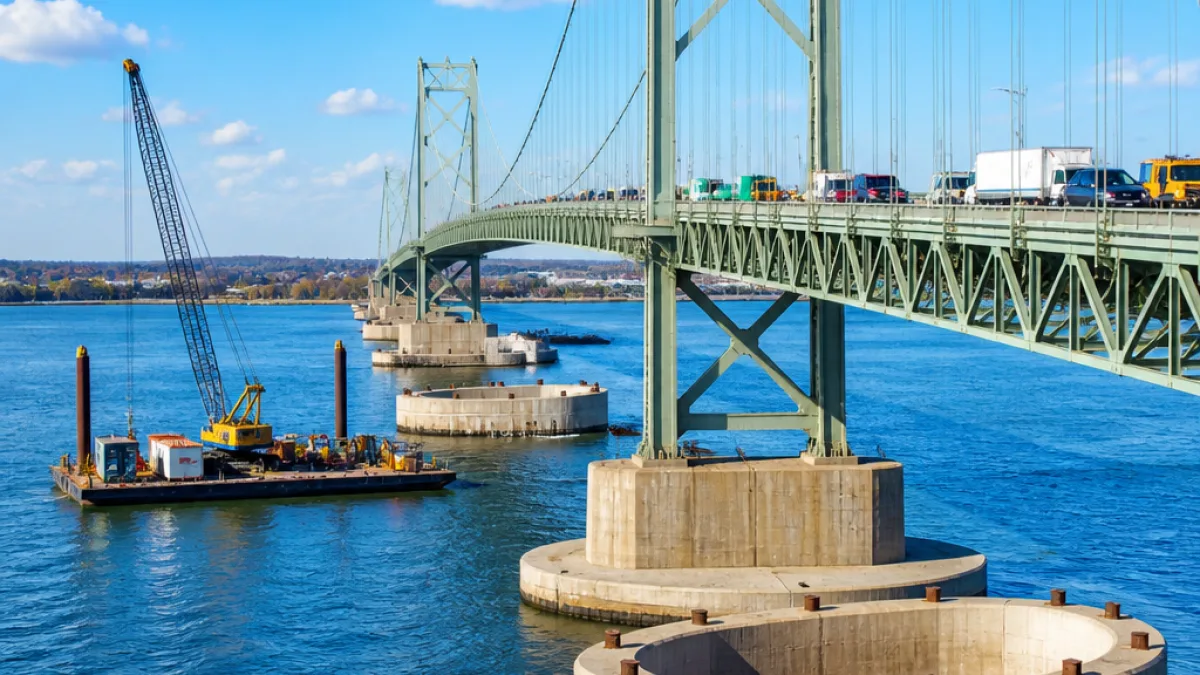
Drivers and freight carriers crossing the Delaware Memorial Bridge will now see new protections in place after completion of an $89 million ship-collision system designed to shield the twin suspension spans from vessel strikes, Delaware River and Bay Authority officials said Wednesday.
What changed for commuters and commerce
The project installed eight solid concrete barriers, often called "dolphins," around the base of the bridge piers to reduce the risk that a large ship striking a tower could cause catastrophic damage. The authority said the construction reached substantial completion in late 2025 and was celebrated this week alongside the 75th anniversary of the first opening of the span.
Officials described the work as a preemptive measure to match current maritime risks. Modern commercial vessels are larger and travel faster than those for which the original pier protections were designed decades ago.
Why the upgrade was done
Owners of the Delaware Memorial Bridge began planning the replacement of the original pier protection systems in 2022. The urgency for many bridge owners increased after the collapse of the Francis Scott Key Bridge in Baltimore in March 2024, when a container ship that lost propulsion struck the structure.
“Completing this Ship Collision Protection System ensures that this iconic structure remains safe, resilient, and fully protected for the millions of travelers and commercial carriers who depend on us every single day,”
said Joel Coppadge, executive director of the Delaware River and Bay Authority.
Project details
The finished system includes:
- Eight circular concrete barriers built around key bridge piers;
- Each barrier measures roughly 80 feet in diameter;
- Total project cost: $89 million;
- Construction began in 2023 and reached substantial completion in late 2025.
| Item | Detail |
|---|---|
| Number of barriers | 8 |
| Diameter per barrier | Approximately 80 ft |
| Project cost | $89 million |
| Construction period | 2023 to late 2025 |
The Delaware River Memorial Bridge pair carry both local traffic and heavy commercial volumes between New Jersey and Delaware. The authority previously reviewed the spans after the National Transportation Safety Board asked owners of dozens of bridges to re-evaluate pier protections following the Baltimore collapse.
Thomas J. Cook, the authority’s executive director in earlier statements about the project, noted that original tower pier protection systems dated to the bridges’ mid-20th-century construction and needed updating to address the size and speed of contemporary tankers and container ships.
Officials say the new dolphin system is intended to increase resilience and reduce the likelihood that a single maritime mishap could threaten the structural integrity of a bridge tower — an outcome with severe implications for traffic, commerce and public safety across the region.
For travelers, the visible change will be the presence of the large circular concrete barriers at pier bases; for maritime and transportation planners, the work represents a modernization of protective infrastructure in response to evolving vessel risks.