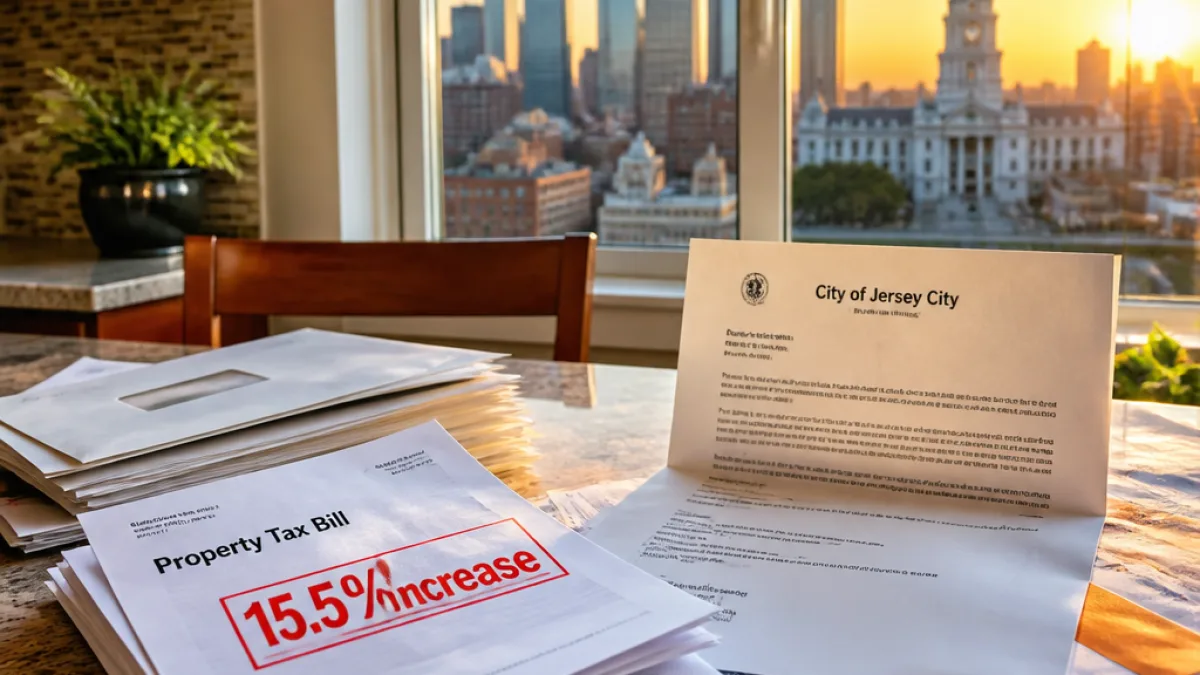
Jersey City residents will see a significant change on their tax bills after the City Council introduced and approved an $886.5 million municipal budget at its July 15 meeting and voted to accept a state loan that carries a 15.5% property tax increase.
What the council approved
The council approved a memorandum of understanding with the state to accept a $105 million loan that is to be repaid over 10 years. The loan agreement specifies a 15.5% increase in property taxes, which the city says would be reflected in the third-quarter tax bills mailed in August.
City officials presented the new budget as a response to an estimated $255 million deficit the city had been addressing over recent months. The adopted total is $886.5 million, about $12 million higher than an earlier $874 million figure disclosed weeks before. The budget is reported to include:
- $775.7 million for operations and appropriations.
- $109.9 million attributed to unpaid debt from the previous administration.
Attempts to soften the immediate tax impact
Council members also voted unanimously, 9-0, to approve the loan memorandum. At the same meeting the council passed a last-minute resolution seeking state permission to delay mailing third-quarter tax bills past the state's deadline. The stated purpose is to reduce the percentage increase residents would see this summer to 12%, with the remaining 3 percentage points to be addressed later through cuts or possibly reflected on the fourth-quarter bill if reductions are not realized.
"That solution did not contradict voting for the loan with a higher tax rate," said Corporation Counsel Sarah Levine, according to city statements.
The council described the delay request as a mechanism to buy time for additional budget hearings and potential cuts that could reduce the immediate burden on taxpayers. If the city cannot achieve the targeted cuts, the full 15.5% increase would remain in place and could be billed later in the year.
Context and local consequences
The budget followed several weeks of heightened public scrutiny. Three weeks earlier, the city had proposed a 20% tax hike; that proposal drew intense public pushback during council meetings and town halls. Since then, the city reports it has secured roughly $120 million in combined loans and state aid and implemented personnel reductions, including the elimination of 31 city jobs.
Residents and public-employee representatives packed City Hall during the prolonged meeting, voicing opposition to steep tax increases and urging alternatives. Union leaders and municipal employees have publicly criticized the size of the proposed levy, pointing to the hardship a double-digit increase would impose.
| Item | Amount |
|---|---|
| Total adopted budget | $886.5 million |
| Operational appropriations | $775.7 million |
| Unpaid past debt | $109.9 million |
| State loan | $105 million |
| Specified tax hike | 15.5% |
City officials say the loan and state involvement are part of a broader effort to stabilize municipal finances after the prior administration left significant unpaid obligations. The council will hold additional budget hearings this month and pursue further cuts in hopes of lowering the tax increase.
For homeowners, the immediate question is whether the city will secure state approval to delay tax billing and whether subsequent cuts will succeed in trimming the increase to the 12% figure the council signaled it prefers. If not, the higher rate would be reflected on a later bill.
Residents seeking more information can follow upcoming council budget hearings or consult City Hall for timelines on the third- and fourth-quarter tax bills.