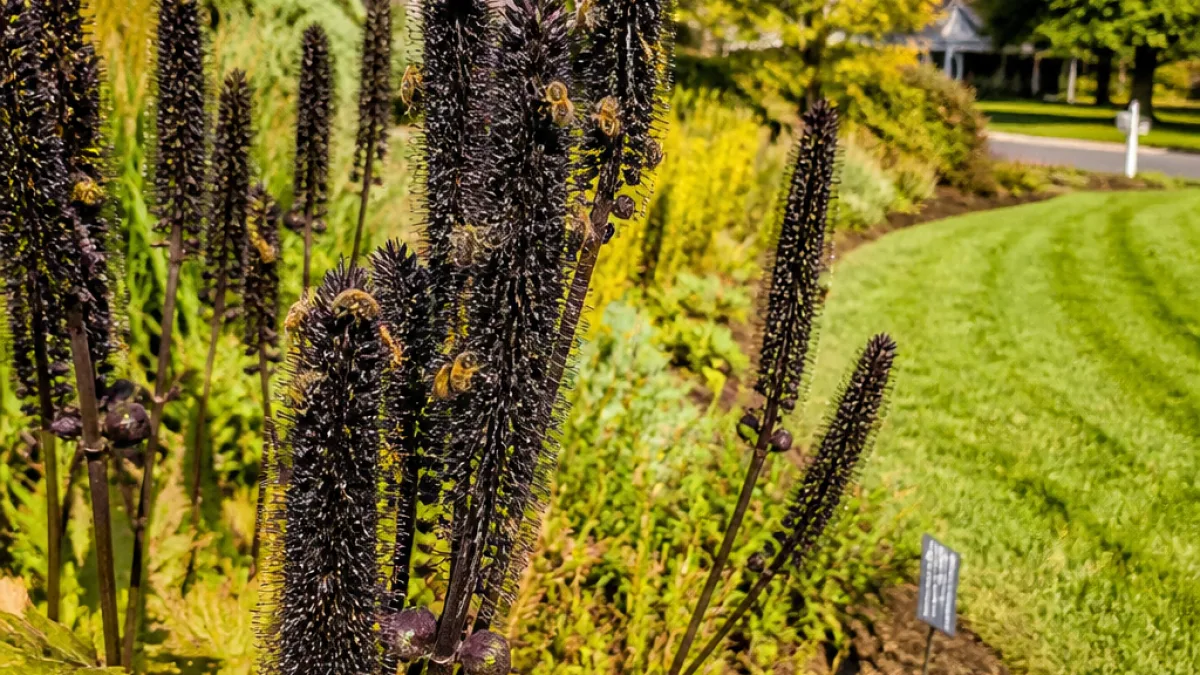
Black bugbane (Actaea racemosa), a native understory plant recently featured by Mt. Cuba Center, is blooming and attracting swarms of bees despite its unflashy appearance. The plant’s flowers lack traditional petals and instead present dense clusters of stamens — a form that still provides nectar and pollen for insects.
What gardeners saw
Video shared by the native‑plant garden showed bees clustering on the bottlebrush‑like blooms. The post highlighted the plant’s "apetalous" structure — a botanical term for flowers without petals — and noted how that design does not deter pollinators.
"The black bugbane (Actaea racemosa) is in full bloom and the bees aren't wasting any time!"
That message resonates beyond the garden gate. Native species such as black bugbane are adapted to local conditions and can be reliable food sources for bees, butterflies and other beneficial insects without the constant upkeep many ornamental plantings demand.
Practical takeaway for Delaware yards
Landscaping choices can cut maintenance and support wildlife at the same time. Replacing sections of traditional turf with native plantings reduces mowing, watering and the need for fertilizers — changes that can lower household costs and benefit local ecosystems.
- Consider converting lawn edges or shaded strips into a native‑plant border.
- Start small: a pollinator patch or shaded planting area can establish quickly and expand over time.
- Choose species suited to your yard’s light and moisture to minimize irrigation.
For homeowners weighing options, alternatives include clover mixes, low‑water grasses and xeriscaped beds that incorporate native shrubs and perennials. Over time, these choices often become less demanding than traditional lawns.
| Benefit | Effect |
|---|---|
| Reduced mowing | Lower time and fuel costs |
| Less irrigation | Lower water bills, increased drought resilience |
| Native habitat | Steady food for pollinators and birds |
Local gardeners and conservation groups have been promoting the idea that even modest swaps in landscaping can add up. By planting species that evolved here, residents help maintain food webs that support honeybees and native pollinators alike.
Mt. Cuba Center’s post is a reminder that attractive, ecologically valuable gardens do not always rely on showy blossoms. Plants like black bugbane demonstrate that function — supporting pollinators — and form can be different from what homeowners expect, while still delivering clear environmental and practical benefits.