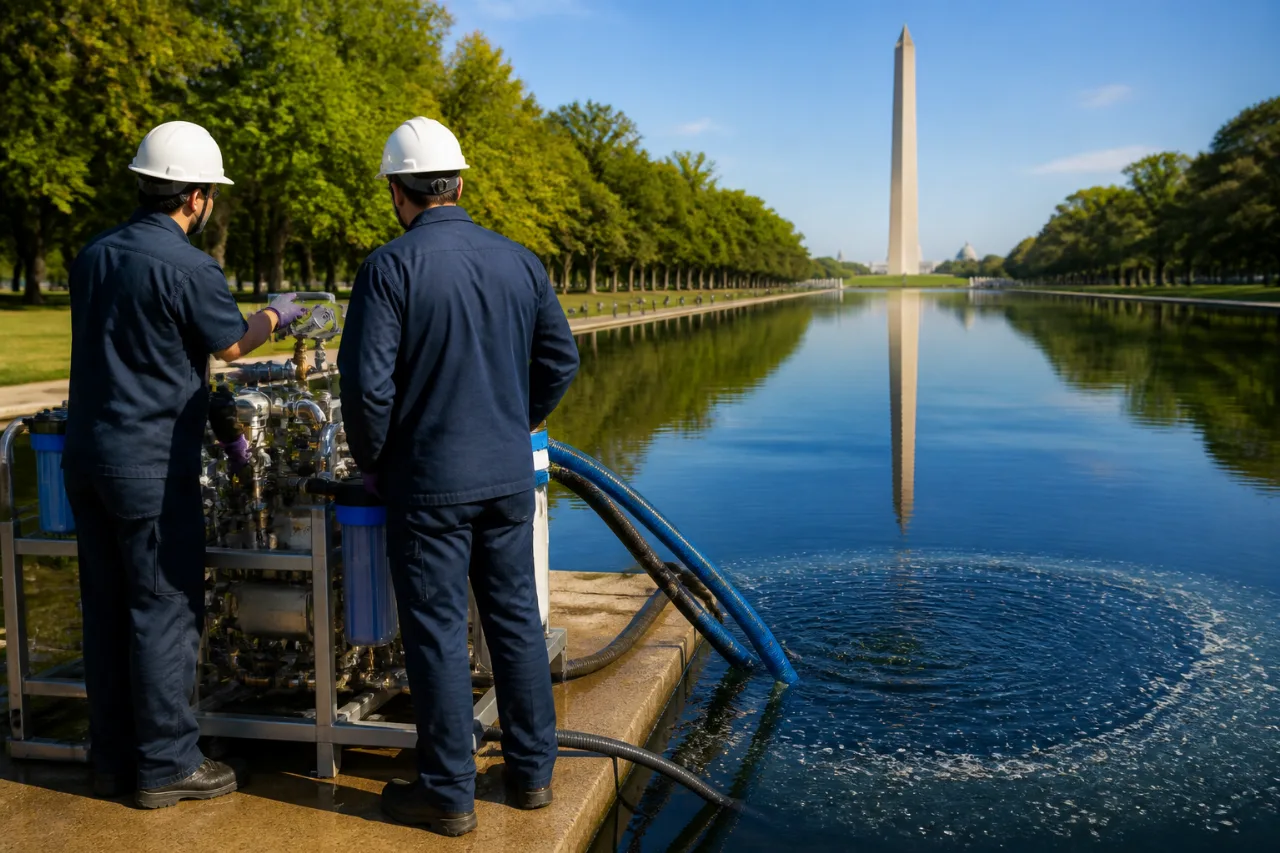
AQUADEI’s nanobubble system, which traps oxygen and ozone in microscopic bubbles to act as an oxidizer, is being used in the effort to clean the Reflecting Pool in Washington, D.C., after proving commercially viable at a 3 million-gallon surf lagoon in Mesa, Arizona.
How the technology works
The system infuses water with extremely small bubbles containing oxygen and ozone. Those nanobubbles increase the surface area of oxidizing agents in the water, which accelerates breakdown of organic contaminants and can suppress microbes without relying solely on high levels of chlorine. Operators at Revel Surf in Mesa say the process has allowed them to operate with lower chlorine concentrations, reducing eye and skin irritation and the characteristic pool odor.
Why it matters
- Public sites: Use at the Reflecting Pool demonstrates municipal and federal interest in alternatives to traditional disinfection.
- Health and comfort: Lower chlorine can reduce common complaints tied to recreational water facilities.
- Broader applications: The company identifies potential roles in wastewater treatment, agriculture and restoration of lakes and ponds.
The technology’s appeal is practical: it provides a more potent oxidizing environment without simply increasing chemical dosing. That can matter for historic or heavily trafficked features such as the Reflecting Pool, where water quality affects both aesthetics and visitor health.
Scale and settings
Revel Surf’s installation handles approximately 3 million gallons of water, illustrating the system’s capacity for large recreational bodies. AQUADEI’s leadership has said similar approaches could be expanded to other sectors, though deployment details and long-term performance in municipal systems were not specified in the reporting.
| Use case | Reported benefit |
|---|---|
| Surf lagoon (Revel Surf, Mesa) | Lower chlorine levels; reduced irritation and smell |
| Reflecting Pool (Washington, D.C.) | Part of ongoing cleanup efforts |
Water managers and public agencies are increasingly weighing alternatives to conventional chlorination because of public demand for improved comfort and environmental concerns about disinfection byproducts. Nanobubble systems aim to address both issues by enhancing oxidation while enabling reduced reliance on chlorine.
Adoption will hinge on cost, regulatory acceptance and evidence of long-term effectiveness across different water bodies. The company promoting the technology frames it as adaptable to diverse settings, from municipal wastewater plants to agricultural operations and small lakes or ponds, signaling potential cross-sector interest if pilot projects continue to show benefits.
As federal and local stewards look for ways to modernize water treatment for both operational and public-health reasons, nanobubble technology represents a practical innovation that could shift how large public and private water features are maintained.