MOLOKAI — Dozens of island residents and community leaders on July 9 halted a newly launched National Park Service ranger-led tour of Kalaupapa National Historical Park, saying officials pushed the program forward without properly consulting local stakeholders and family members of those who were forcibly quarantined there.
Community leaders say park ignored concerns
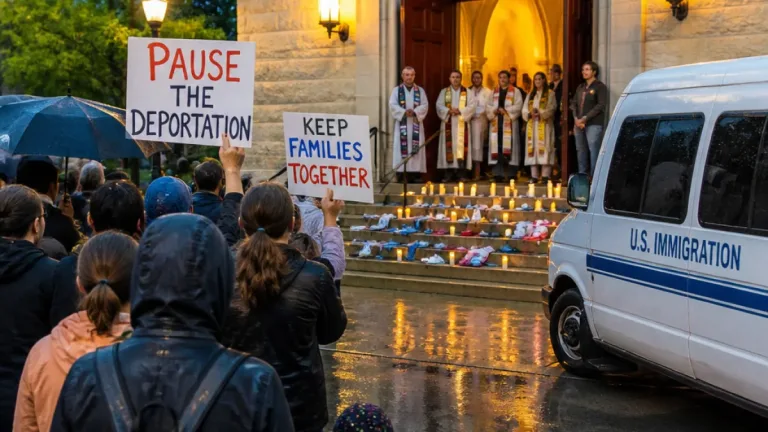
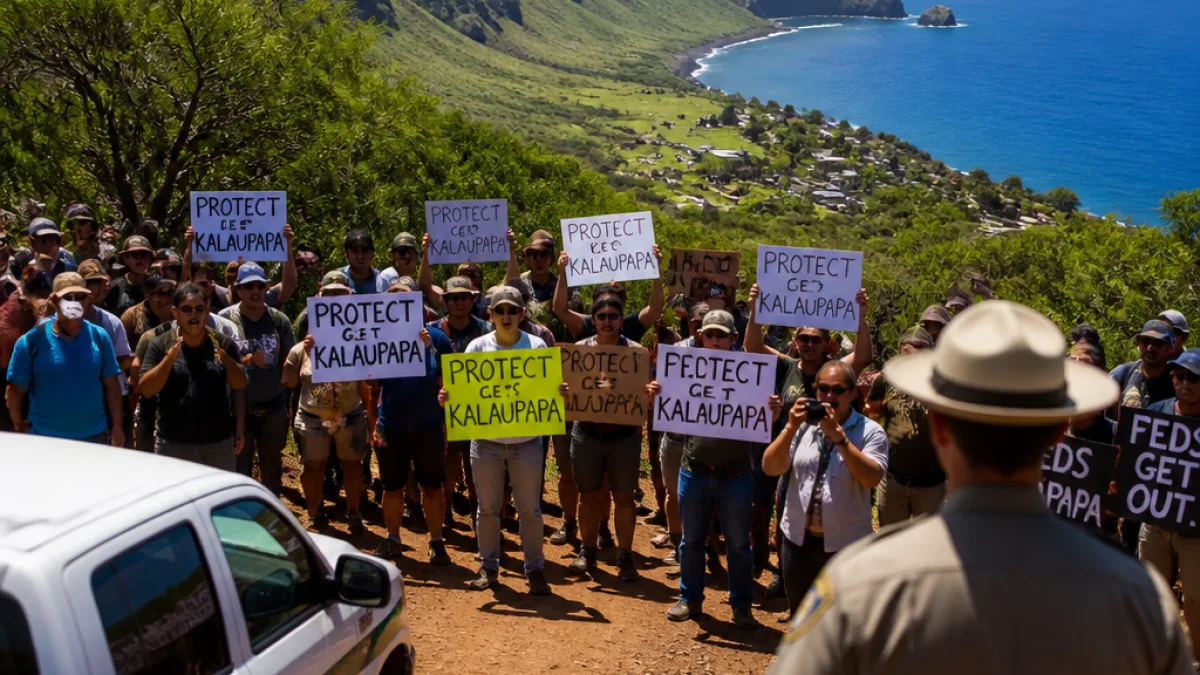
The confrontation unfolded at the trailhead leading down to the isolated peninsula where thousands of people diagnosed with Hansen’s disease — commonly called leprosy — were sent and confined between 1866 and 1969. As park rangers prepared to lead a group of hikers onto the roughly 3-mile route, protesters carried signs reading "Protect Kalaupapa," "Feds Get Out" and "Park Services Shame on You."
Maui County Councilwoman Keani Rawlins-Fernandez intervened at the gate and physically prevented the tour from beginning. She said she closed the gate to allow community members to speak about the pain they felt over the National Park Service's decision to begin the ranger-led program without taking Molokai voices into account.
"I grabbed the gate and I shut the gate, and I told them no," Rawlins-Fernandez said, describing how residents were given a chance to convey how the lack of consultation hurt the community.
Protesters contend the entire peninsula is sacred and largely functions as a cemetery: Rawlins-Fernandez noted there are more than 8,000 kupuna buried at Kalaupapa, many in unmarked graves. For them, opening new tours without extended engagement with families, landowners and cultural stewards amounts to disrespect.
Background and recent developments
The Park Service introduced its own full-day ranger-led tours in June after the death in May of Meli Watanuki, who founded and led the privately run Kalaupapa Saints Tour. Watanuki’s family discontinued that tour following her death, and the agency moved to fill the gap with federally managed outings.
Those decisions have drawn criticism from residents who say the agency did not follow protocols for consulting affected communities on management actions tied to deeply sensitive historical sites. The protest on July 9 reflects broader tensions over how to balance public access, commemoration and stewardship of places tied to historical trauma.
What protesters want
- Full consultation with Molokai community leaders, kupuna and landowners before tours proceed.
- Recognition and protection of burial sites and culturally sensitive areas within the peninsula.
- Greater local control or co-management arrangements that center Native Hawaiian perspectives.
The standoff raises questions for federal officials about how national parks should manage access when histories involve forced removal, illness and loss. Kalaupapa’s legacy of isolation and the large number of Native Hawaiian interments make it a uniquely sensitive unit within the National Park System.
For now, the Park Service’s new ranger-led program faces opposition from community members who say the agency must pause, listen and work with Molokai stakeholders before continuing tours that bring visitors into a landscape many see primarily as a site of mourning and remembrance.
| Item | Detail |
|---|---|
| Protest date | July 9 |
| Historic quarantine period | 1866–1969 |
| Estimated burials | Over 8,000 kupuna |
| Local action | Gate blocked; tour prevented from starting |
The dispute is likely to prompt further talks between federal park managers and Molokai leaders, as officials weigh the competing objectives of access, education and cultural preservation at one of Hawaii’s most sensitive historical sites.
— Leilani Akana, Hawaii Correspondent