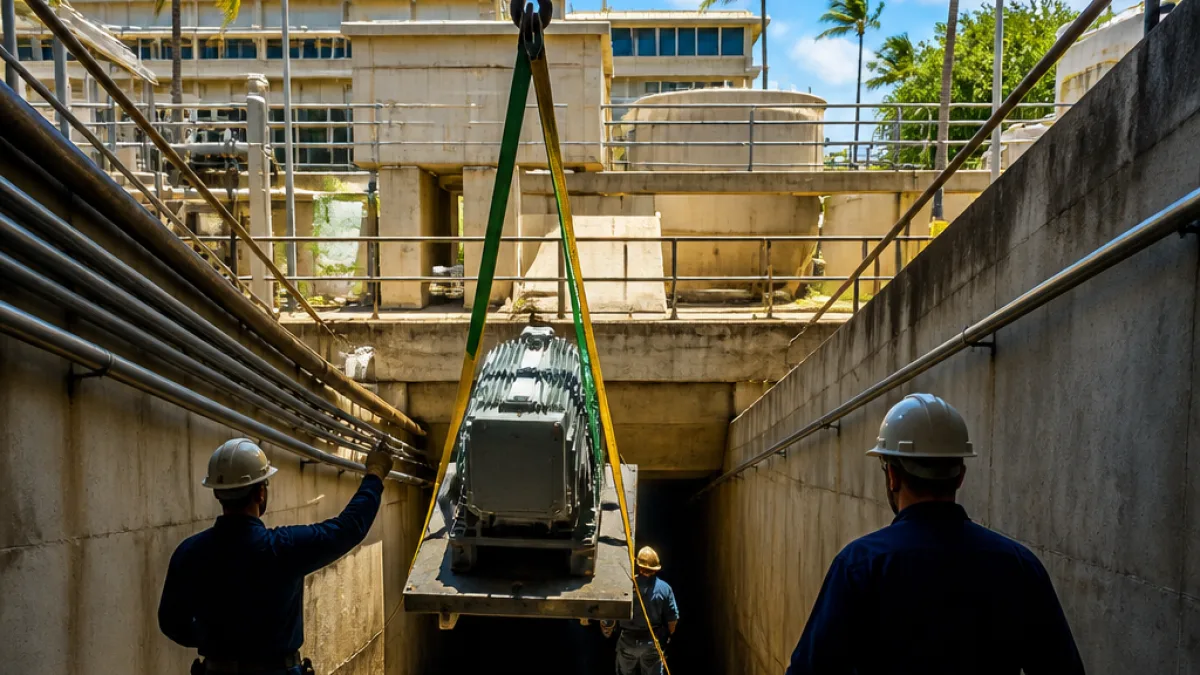
Repair crews at U.S. Army Garrison Hawaii removed and replaced a 4,000‑pound motor beneath the Area North water treatment plant on July 17, officials said, marking a major step toward stabilizing a water system that has been under strain.
Complex underground operation
The work required moving the heavy motor along a steep, 1,200‑foot underground track — a descent officials compared to Oʻahu’s Koko Head Trail in reverse. The scale of the task reflected both the size of the equipment and the constrained conditions crews faced while working inside the installation’s subsurface infrastructure.
The replacement was performed as part of broader efforts by the garrison to repair and reinforce its water treatment capabilities. The motor swap is significant because the deep‑well equipment plays a central role in delivering potable water across the installation.
Why this matters locally
The Area North water treatment plant serves parts of the garrison, and mechanical failures there can affect water availability, pressure and quality for military residents and operations. Restoring reliable operation at the plant reduces the need for interim measures such as water rationing, trucking in potable water or issuing boil‑water advisories.
- What was replaced: 4,000‑pound motor
- Where: Area North water treatment plant, U.S. Army Garrison Hawaii
- Access challenge: 1,200‑foot steep underground track
Broader context
Military water systems in Hawaiʻi operate alongside civilian utilities and are critical to base readiness, health and safety. Extended outages or recurring equipment failures at treatment plants can disrupt daily life for service members and their families and complicate mission support functions.
Replacing large, deep‑well components is labor‑ and resource‑intensive. The successful motor replacement at Area North reduces immediate system risk, but long‑term resilience depends on ongoing maintenance, spare parts availability and contingency planning for potential future failures.
| Item | Detail |
|---|---|
| Motor weight | 4,000 pounds |
| Access route | 1,200‑foot underground track |
| Date of replacement | July 17, 2026 |
Officials did not release a timeline for returning the plant to full normal operation or detail any interim measures that had been used while repairs were underway. The operation was reported by Nathan Wilkes on July 17, 2026.
Maintaining robust water infrastructure remains a priority for installations across Hawaiʻi given the islands’ limited freshwater sources and the strategic importance of uninterrupted base operations.