
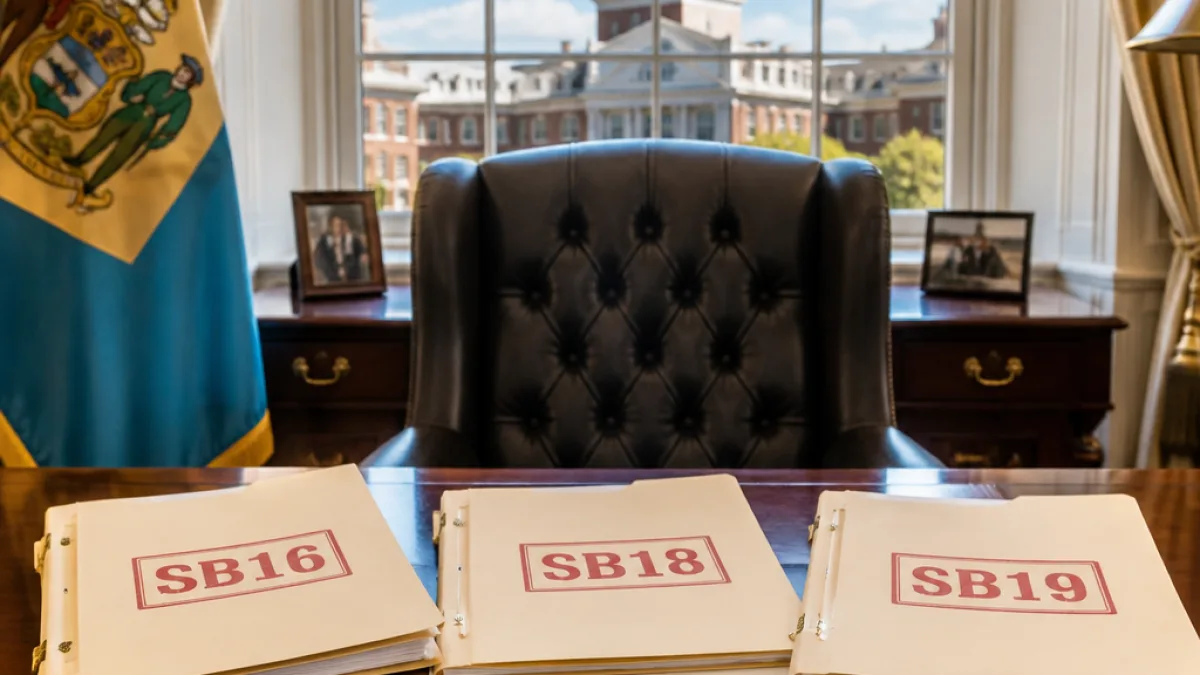
Gov. Matt Meyer on July 6 signed a trio of bills designed to bring Delaware's banking laws into the digital age, a move state leaders say will protect consumers while keeping the state competitive for financial services and fintech firms.
Modernizing a legacy industry
The legislation — backed by Sen. Spiros Mantzavinos, D-Hockessin, and Rep. Bill Bush, D-Wyoming — updates longstanding statutes to address digital assets, virtual currency businesses and payment stablecoins. Supporters framed the package as a way to preserve Delaware's role as a leading financial-services jurisdiction while giving regulators clearer tools to oversee new products and providers.
"Delaware didn't become the financial capital of America by standing still," Meyer said in a statement. "More than 40 years ago, our state set the national standard for banking innovation. Today, we're doing it again by creating a modern framework that welcomes new financial technologies, protects consumers and ensures Delaware remains the premier place to innovate, invest and succeed in financial services."
The bills deliver several concrete changes, from recognizing virtual currency in the banking code to imposing licensing requirements and consumer safeguards for money transmission and stablecoin issuance.
- Senate Bill 16 — updates the banking code to acknowledge digital assets and virtual currency, modernizes governance and interstate banking provisions, and strengthens the Office of the State Bank Commissioner.
- Senate Bill 18 — creates a licensing and supervisory framework for money transmitters and virtual currency firms, including financial safeguards and consumer protections.
- Senate Bill 19 — establishes a state framework for payment stablecoins aligned with the federal GENIUS Act, authorizing chartering and supervision of stablecoin issuers with strict reserve and reporting requirements.
What the laws require
| Bill | Primary focus | Key requirement |
|---|---|---|
| SB 16 | Banking modernization | Recognition of digital assets; stronger regulatory authority |
| SB 18 | Money transmission | Licensing, supervisory standards and consumer safeguards |
| SB 19 | Payment stablecoins | One-to-one reserve backing; monthly public attestations; AML compliance |
Advocates say the statutes will help attract and retain banks, fintech companies and other financial firms by clarifying state-level expectations and offering a path for chartering and oversight. The measures also explicitly build consumer protections into new frameworks — a key point for lawmakers who have watched the rapid growth of digital currencies raise both innovation opportunities and risks.
This package continues a long-running trend in Delaware policy: updating corporate and financial law to match changing markets. Lawmakers and regulators here have historically viewed clear, business-friendly rules as a competitive advantage. With these bills now law, Delaware is positioning itself to host and supervise emerging financial products while requiring safeguards proponents say are necessary for consumer confidence.
For Delaware residents and businesses, the immediate impact will likely be seen in how the Office of the State Bank Commissioner implements the new authority and how quickly licensing pathways for virtual currency firms and stablecoin issuers open. Those regulatory steps will determine whether the state attracts new entrants and how consumers are protected as technologies evolve.