PORTLAND — The Maine Democratic Party announced a planned convention process to select a new nominee for U.S. Senate after Graham Platner withdrew amid accusations he denies. Party leaders say the approach is intended to be open and inclusive but acknowledged it will be complicated.
How the convention will work
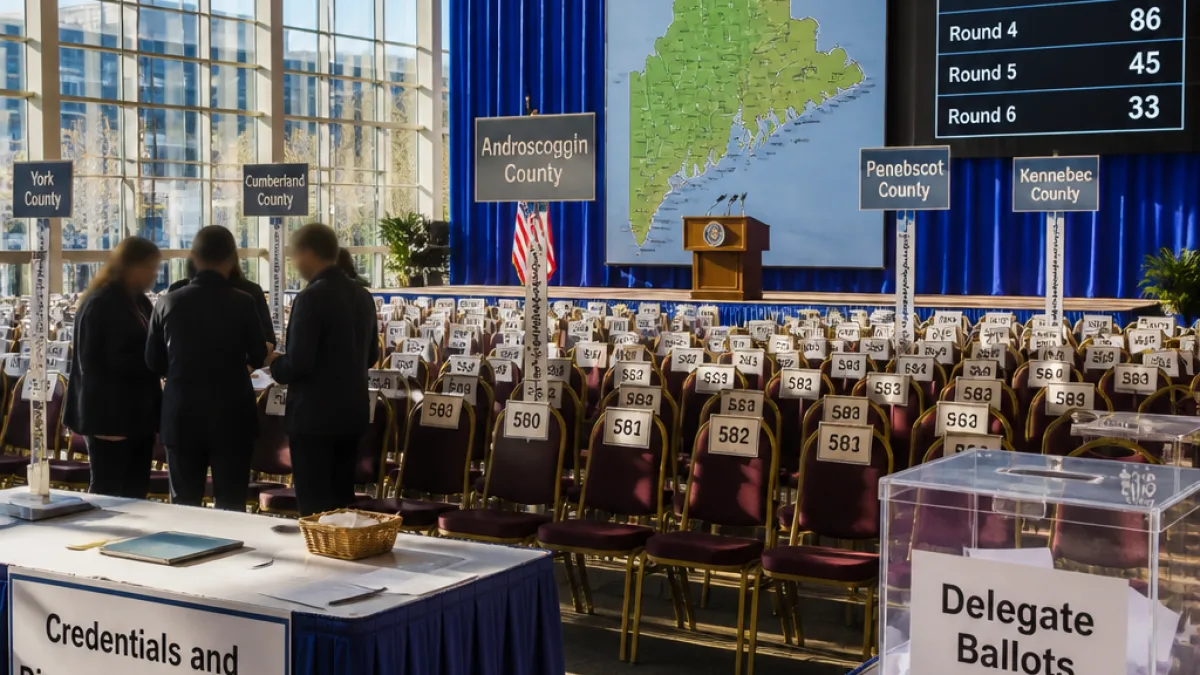
Under the rules released by party officials, a total of 601 delegates will cast ballots to determine the new Democratic nominee. Those delegates include members of the Democratic State Committee and registered Democratic voters chosen by county party committees across Maine’s 16 counties.
- All candidates will appear on the ballot in the first round.
- The top five vote‑getters advance to the second round.
- Balloting continues in rounds until one candidate achieves a majority.
Party leaders also built explicit diversity provisions into the delegate pool. A minimum of 25% of voting delegates must meet one or more of the listed diversity criteria, such as identifying as Black, Indigenous or a person of color, as LGBTQIA+, or as an immigrant. Officials said those quotas were designed to ensure the field of selectors reflects Maine’s communities.
"This isn't going to be easy," Charlie Dingman, chair of the Maine Democratic Party, said. "Our laws never anticipated this unusual circumstance."
Why the process matters locally
Whoever emerges from the convention will face long‑time Republican Sen. Susan Collins, who is seeking a sixth term. Collins has framed her candidacy around seniority and experience and said she remains confident heading into November.
The party described the procedure as one of the most transparent replacement mechanisms it believes any state party has used, emphasizing that multiple rounds of voting and a broad delegate pool will help produce a nominee with broad support among Democrats statewide.
| Item | Detail |
|---|---|
| Total delegates | 601 |
| Counties represented | 16 |
| Diversity minimum | 25% |
| Balloting format | Multi‑round elimination until majority |
Democrats will now move through a compressed decision process to produce a challenger for Collins in the fall. For voters and party activists across Maine, details such as which county committees select delegates, the identity of early contenders and the timing of the convention will be the next items to watch as the state heads toward November.
The party’s emphasis on procedure highlights how a locally driven, rule‑bound selection process can quickly become a focal point in a nationally consequential Senate contest.