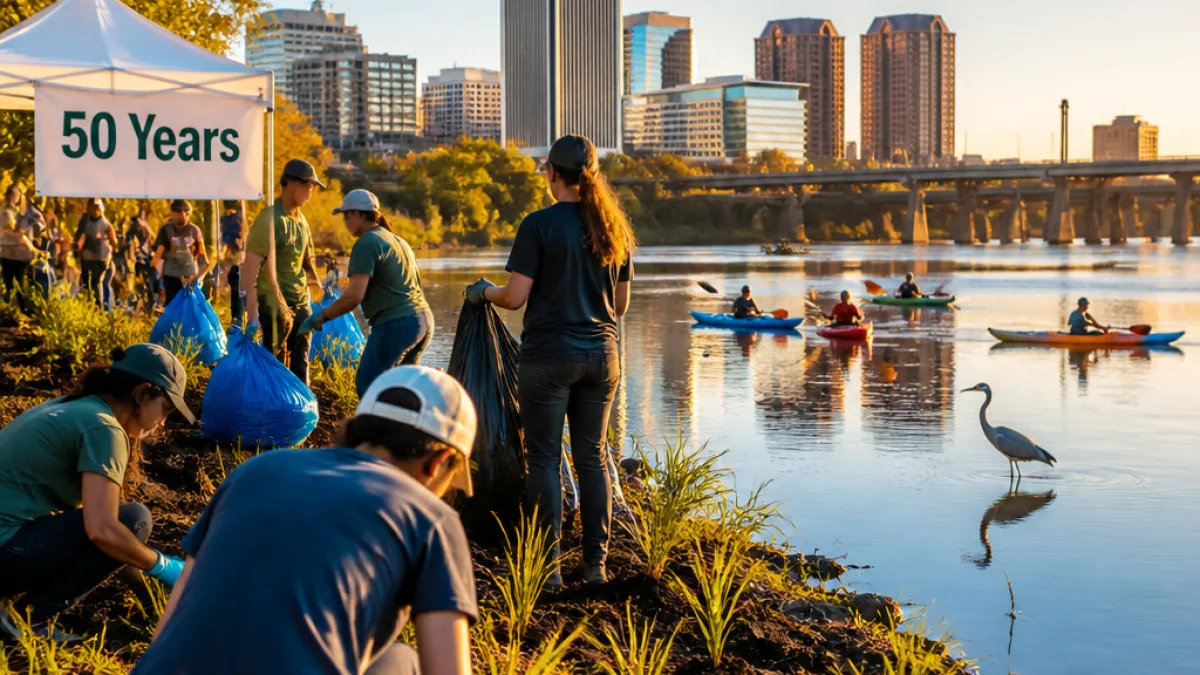
The James River Association is marking its 50th year as a community-based force behind a dramatic turnaround on one of Virginia’s signature waterways. What began in 1976 as a small coalition of riverfront landowners has grown into a statewide organization that helped steer the James from an environmental disaster to a recovering river that supports wildlife, recreation and local economies.
From crisis to comeback
In the 1970s, the James River suffered from decades of habitat loss, heavy pesticide use and routine discharges from outdated treatment plants. The contamination culminated in a high-profile toxic spill of Kepone by a manufacturer in Hopewell, which devastated fish and wildlife and prompted a commercial fishing ban and a no-swim advisory south of Richmond that lasted more than a decade.
"The James was considered one of, if not the most polluted rivers in the country," said Bill Street, president and CEO of the James River Association.
That crisis spurred public outrage and policy responses such as the federal Clean Water Act and other protections. State agencies, conservation groups and volunteers joined restoration efforts. Over the ensuing decades, populations of once-declining species — including bald eagles, oysters and other native fish and shellfish — began to return in measurable numbers.
What the association did
The James River Association began as a modest group of about 140 property owners between Hopewell and Newport News who decided to act rather than accept deteriorating conditions. Its work expanded to include advocacy, habitat restoration, education and volunteer monitoring — roles that, combined with state and federal programs, have helped the river recover.
- Advocacy: Pushing for stronger pollution controls and protections.
- Restoration: Projects to rebuild habitats and improve water quality.
- Community engagement: Volunteer groups and education programs along the river.
Experts praised the river’s recovery as a major conservation achievement. Bryan Watts, founding director of William & Mary’s Center for Conservation Biology, called the turnaround “one of the greatest conservation success stories of all time” and said the James now serves as an example for what focused restoration can achieve.
Milestones across five decades
| Year | Development |
|---|---|
| 1976 | James River Association founded by riverfront landowners |
| 1970s–1980s | Major pollution, Kepone spill, fishing and swim advisories |
| 1980s–2020s | Federal and state protections, restoration efforts, wildlife rebound |
The narrative of the James River’s recovery is not only ecological. Improvement in water quality has reopened recreational opportunities and supported local businesses tied to boating, fishing and tourism. The association’s five-decade arc underscores how policy, science and local stewardship can combine to restore a degraded waterway.
As the James River Association celebrates 50 years, the river’s revival offers a practical reminder for communities across Virginia: sustained civic engagement, backed by science and policy, can reverse long-standing environmental harm.