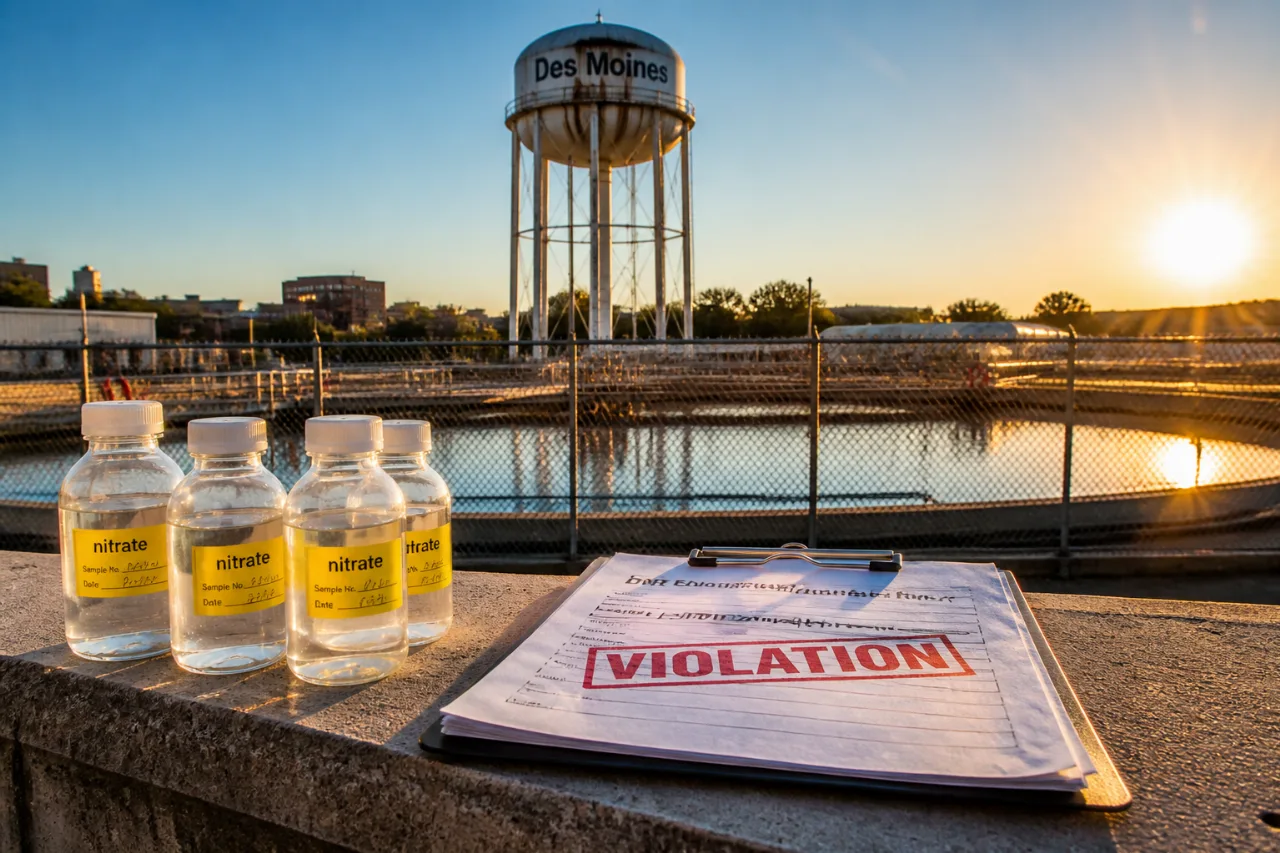
A report filed by the Iowa Department of Natural Resources to the U.S. Environmental Protection Agency shows Iowa recorded 36 nitrate-related drinking water violations in 2025, more than double the number reported a year earlier. The violations were the state’s most frequent health-based breach of federal drinking water standards and affected 2,479 customers across 13 public water systems.
What the report found
The DNR’s annual compliance document catalogs breaches ranging from contaminant levels above federal limits to operator certification lapses. For 2025, the single biggest problem was nitrate concentrations in finished drinking water, which accounted for 41% of the state’s 87 total health-based violations.
- 36 nitrate contaminant violations in 2025
- Impacted 13 public water systems and 2,479 customers
- Nitrate violations were the most common health-based standard exceeded
By comparison, the 2024 DNR report documented 14 nitrate violations at nine systems, affecting 1,765 customers. The DNR also reported 38 nitrate violations in 2023 across seven systems. A graph included in the DNR materials shows that 2023 and 2025 stand out as years with notably higher nitrate violations than the remainder of the 2016–2025 period.
Why nitrates matter in Iowa
The DNR notes nitrates enter source waters from several pathways — the natural breakdown of organic matter, commercial fertilizer applications, human waste and farm animal waste. Iowa’s hydrology compounds the issue: more than 90% of public water systems rely on groundwater, and surface or groundwater-influenced systems, while a smaller share of systems, supply roughly 47% of the state’s population. Heavy spring and summer rains can flush nutrients from land into rivers and aquifers, pushing nitrate concentrations higher.
| Year | Nitrate violations | Systems affected |
|---|---|---|
| 2023 | 38 | 7 |
| 2024 | 14 | 9 |
| 2025 | 36 | 13 |
Local impact and context
Rising nitrate readings reflect patterns Iowans have seen in rivers and wells during wetter seasons. The DNR highlighted that major rivers such as the Des Moines and Raccoon reached near-record nitrate levels during the summer of 2025 — conditions that can strain water systems and prompt local restrictions or treatment adjustments. In fact, high summer river nitrate concentrations contributed to a first-ever lawn-watering ban in parts of the Des Moines area last year.
For residents concerned about their drinking water, the DNR report underscores two practical points: public water suppliers are required to monitor and report finished-water contaminant concentrations, and health-based violations are those where finished water exceeded EPA-established limits intended to protect consumers. Where systems detect nitrate exceedances, public notices and guidance to affected customers are typically required under federal and state rules.
This spike in nitrate violations arrives amid ongoing state and federal discussions about nutrient loss, best management practices on farms, and investments in water infrastructure and treatment. The DNR’s compliance report is part of that larger picture, documenting where systems fell short of standards and where attention — and likely resources — will be needed.
The DNR report did not provide a complete list of the specific systems or the names of affected communities in its summary. For customers worried about their tap water, contact information for local suppliers and the Iowa DNR is available on the agency’s website, and public water systems must issue notices when a health-based standard is violated.