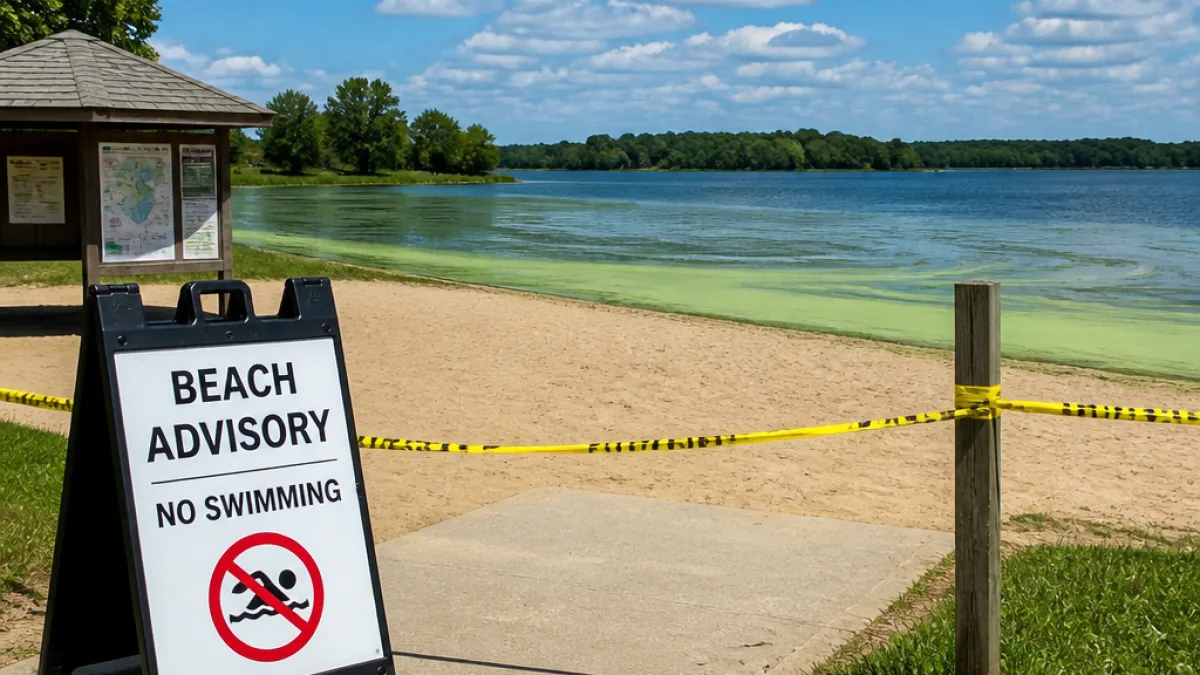
The Iowa Department of Natural Resources is advising the public that swimming is not recommended at 11 state public beaches this week after routine testing flagged elevated levels of E. coli bacteria or algal toxins.
Which beaches are affected
The DNR's weekly beach monitoring — part of a program that samples roughly 40 public beaches between Memorial Day and Labor Day — posted results Friday showing advisories at the following locations:
- Backbone Beach — Delaware County
- Big Creek Beach — Polk County (Polk City area)
- Black Hawk Beach — Sac County
- Crandalls Beach — Dickinson County
- Denison Beach — Sac County
- Emerson Bay Beach — Dickinson County
- Lake Darling Beach — Washington County
- Nine Eagles Beach — Decatur County
- Pleasant Creek Beach — Linn County
- Prairie Rose Beach — Shelby County
- Union Grove Beach — Tama County (near Marshalltown)
What the advisory means
According to the DNR, high E. coli readings are an indicator that other harmful bacteria may be present in the water. E. coli itself can cause gastrointestinal illness and other infections if swallowed or if water enters the body through open cuts. The agency also cited elevated algal toxin levels at some locations; certain algae blooms can produce toxins that irritate skin, eyes and respiratory systems or cause more serious problems if ingested.
The DNR publishes weekly sampling results on the AQuIA website, with tests conducted during the week and updated online on Friday mornings. Beach conditions can change quickly after storms or heavy rainfall, which can wash bacteria and nutrients into recreational waters.
Practical guidance for swimmers and families
- Avoid swimming, wading or letting children play in water at beaches listed under an advisory.
- Keep pets out of advisory waters; animals can get sick and spread contaminants along shorelines.
- Stay informed by checking the DNR's AQuIA website before heading to a beach — conditions are updated weekly.
- If you or a family member develops symptoms such as diarrhea, vomiting, fever or skin irritation after swimming, contact a healthcare provider.
Monitoring program and timing
The DNR samples about 40 public beaches each week from Memorial Day through Labor Day. Results that prompt a "swimming not recommended" advisory are based on established thresholds for E. coli and algal toxins. The weekly schedule aims to give Iowans reliable, up-to-date information for planning safe outdoor recreation during the busiest months for beach use.
| Data point | Detail |
|---|---|
| Beaches tested weekly | About 40 |
| Beaches with advisories this week | 11 |
As warm weather and weekend plans bring more people to Iowa's lakes and reservoirs, the DNR's advisories serve as a reminder that water quality can vary even at familiar local spots. Keeping an eye on the weekly AQuIA updates can help families avoid potential health risks while enjoying summer recreation.