The Feinstein Institutes for Medical Research reported that a novel hybrid neurotechnology has both restored immediate hand function and produced lasting recovery in a person with complete spinal cord injury after a three‑year clinical trial, findings featured on the cover of Nature Medicine.
What the study tested
The system, described by researchers as a “double neural bypass”, links a brain‑computer interface (BCI) with targeted electrical stimulation of the spinal cord and brain. Over the trial the technology allowed the participant, identified by the institute as Keith Thomas of Massapequa, New York, to perform tasks such as feeding himself and drinking from a cup using his own hand. Investigators reported persistent improvements in arm strength and wrist sensation beyond the periods of active stimulation.
How it works and why it matters
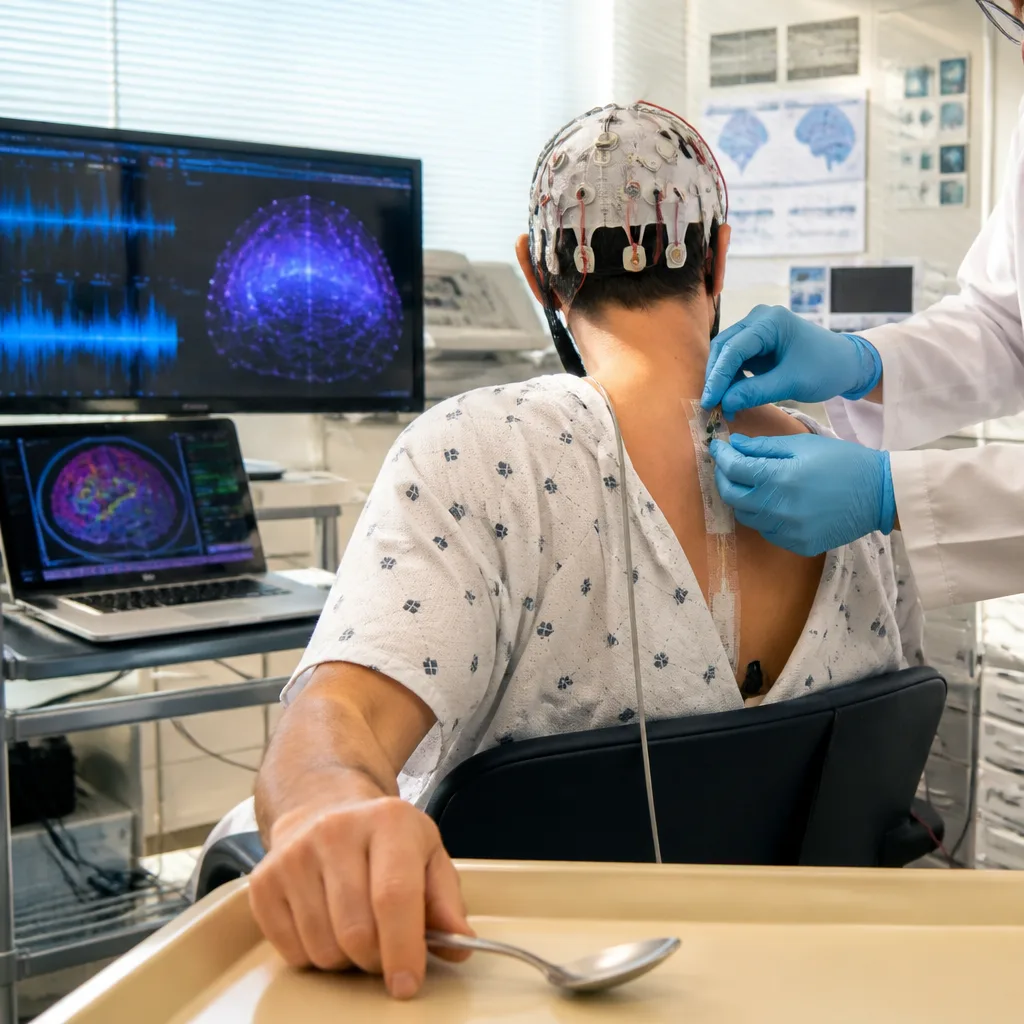
The approach combines three technical elements: a BCI to decode neural intent, high‑precision electrical stimulation applied to spinal circuits and cortical regions, and artificial intelligence to coordinate signals between brain and spinal cord modules. The Feinstein team says the hybrid system does more than bypass the injured segment; it appears to promote rewiring of residual neural pathways to restore function.
- Duration: three‑year clinical trial
- Outcome: immediate restored function plus sustained sensory and motor gains
- Participant: individual with complete tetraplegia regained hand control and wrist sensation
“This research holds promise for millions of patients, opening up potential for future research and practical clinical applications that could help hundreds of thousands of people living with paralysis. We saw this in action when Keith was able to move and feel again,” said Chad Bouton, PhD, the study’s corresponding author.
Clinical and technological implications
The results signal a shift in what clinicians and engineers consider achievable for severe spinal cord injuries. Immediate, device‑mediated control of a limb has been demonstrated before with BCIs; what distinguishes this report is the combination of stimulation modalities and AI control that investigators say led to lasting neurological recovery. If replicated in larger cohorts, the method could change rehabilitation strategies from solely assistive devices toward therapies that seek durable biological recovery.
| Feature | Reported effect |
|---|---|
| Immediate function | Regained ability to use hand for tasks |
| Long‑term changes | Persistent gains in arm strength and wrist sensation |
| Technology | BCI + AI + spinal and brain stimulation |
The study was led at the Feinstein Institutes’ Institute of Bioelectronic Medicine under Dr. Bouton. The institute has released multimedia and participant accounts documenting the recovery. The team frames the work as opening avenues for future research and practical clinical applications for people living with paralysis, while also raising questions about scale, cost and how to test and regulate complex neurotechnologies as they move beyond early trials.
As the field of bioelectronic medicine advances, regulators, payers and rehabilitation centers will need to assess reproducibility, long‑term safety and which patients may benefit. For now, the Feinstein report provides the strongest single demonstration to date that combining decoding, stimulation and AI can both restore function immediately and promote lasting neurological change in a person with complete spinal cord injury.