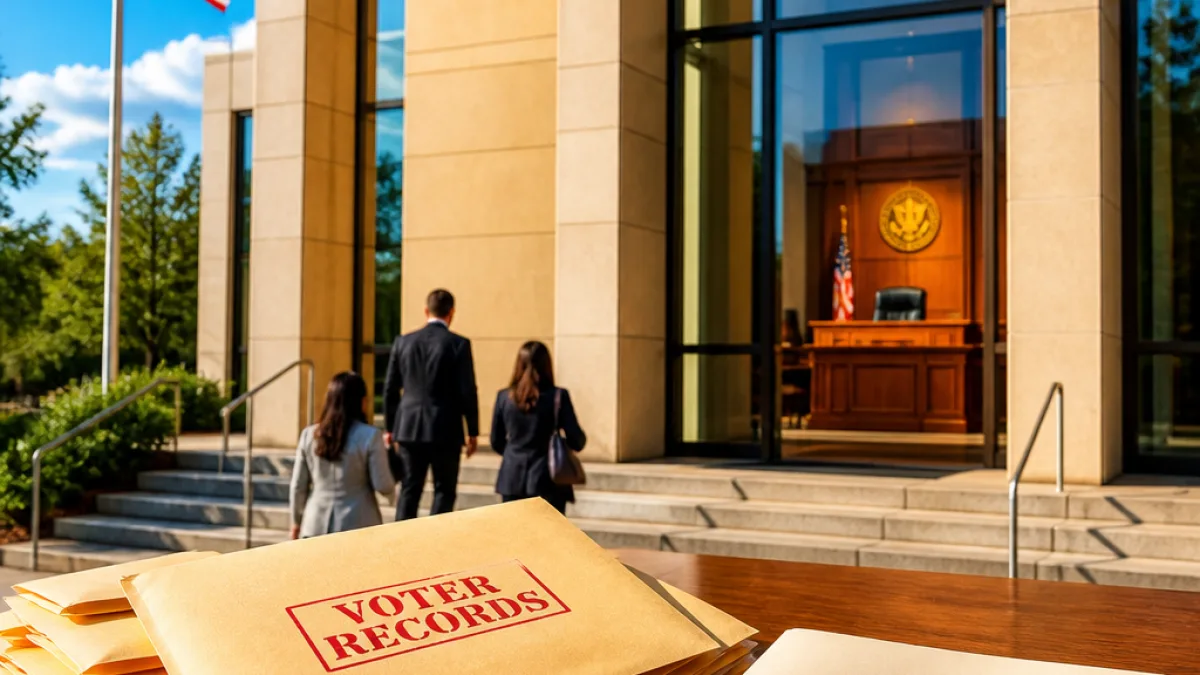
A federal judge on Wednesday dismissed the U.S. Department of Justice’s attempt to compel New Mexico to turn over private voter information, ruling that the department’s demand lacked a legally identifiable basis. The suit, originally brought in December 2025 alongside similar actions in multiple states, sought unredacted voter records that election officials in New Mexico declined to release.
State officials applaud ruling
Secretary of State Maggie Toulouse Oliver and Attorney General Raul Torrez portrayed the decision as a safeguard for New Mexicans’ personal data. Toulouse Oliver emphasized long-standing legal protections that shield sensitive information such as Social Security numbers and dates of birth from disclosure.
“I am pleased with the court’s decision to dismiss this case. Federal and state legal guardrails on social security numbers and dates of birth exist for the identity protection of every voter in our state. I absolutely will not risk any disclosure of voters’ private data, as it could carry very real and severe consequences for the personal lives of New Mexicans participating in our democratic process.”
Torrez described the ruling as a victory for voters, saying the DOJ presented no evidence to justify its request and that New Mexico will continue defending the integrity and privacy of its election rolls.
What the court said
The judge found the Justice Department’s demand, delivered as a demand letter, failed because it did not provide an identifiable legal basis for compelling the records. Courts in other states had similarly blocked DOJ efforts to obtain unredacted voter data; the department has not succeeded in securing full statewide files through those parallel actions.
- Legal basis: Court ruled DOJ demand lacked an identifiable basis.
- Privacy protections: State legal protections cover Social Security numbers and dates of birth.
- Broader context: DOJ filed similar demands in 14 other states; courts have blocked several of those efforts.
Why it matters for New Mexico
The ruling preserves state control over how voter registration data is managed and shared. Election officials argue that unrestricted release of certain fields could expose voters to identity theft and intimidation. New Mexico’s approach aligns with state-level privacy safeguards that limit distribution of sensitive details from voter rolls.
Beyond privacy, the dispute has political and administrative implications. The Justice Department’s requests were framed as part of broader concerns about election integrity; state officials countered that they have administered elections competently and transparently while complying with applicable law. The court’s dismissal reinforces the view among state leaders that existing state and federal safeguards are sufficient to protect voters without surrendering sensitive records.
Immediate effects and next steps
The dismissal means New Mexico will not be required to produce the unredacted voter information sought by DOJ in this action. State officials say they will continue to defend voter privacy in court if further legal pressure arises. The federal government may choose to appeal or to pursue alternative legal avenues, but the ruling adds to a pattern of judicial reluctance to order full disclosure of protected voter data in several states.
| Item | Outcome |
|---|---|
| DOJ demand for unredacted records | Dismissed by federal judge |
| Key legal finding | Demand lacked an identifiable legal basis |
| State response | Officials hailed ruling; vow to protect voter privacy |
For New Mexico voters and local election administrators, the decision offers immediate reassurance that certain personal identifiers will remain shielded from federal subpoena in this instance. It also keeps intact the policies that county clerks and the Secretary of State’s office follow when responding to requests for voter-roll information.
The case adds to a national legal debate over how much access federal officials are entitled to when investigating election administration. While the Justice Department has said it seeks information to probe potential misconduct, states have pushed back on broad demands that could force the exposure of highly sensitive data without clear statutory authorization or adequate justification.
Officials in Santa Fe will likely monitor whether the DOJ appeals the dismissal or pursues other actions. For now, the ruling stands as a decisive development in the state’s effort to keep voter data protections intact.