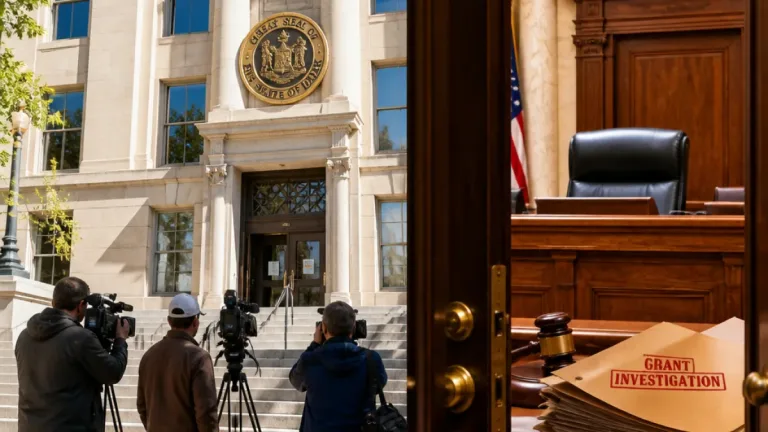
The U.S. Department of Justice told New Mexico officials this week it is barred by law from turning over unredacted files on Jeffrey Epstein that state investigators requested, intensifying a dispute between federal and state authorities over access to material tied to an investigation into the late financier's activities at his former ranch south of Santa Fe.
Federal refusal and state criticism
A Justice Department spokesperson said Wednesday the department is constrained by "federal law, court orders, and privacy protections for victims and witnesses" and must comply with protective orders and legal limits on disclosure. The statement said the department will continue to follow those laws and court directives.
"Federal law, court orders, and privacy protections for victims and witnesses do not allow us to release millions of unredacted documents,"
New Mexico Attorney General Raul Torrez has accused the DOJ of deliberately obstructing the state's criminal inquiry. Torrez's office requested unredacted material after reopening a state criminal investigation in February into alleged abuse at Epstein's former New Mexico ranch, where he is accused of abusing women and girls for nearly three decades.
What the state received
The U.S. Attorney's Office for New Mexico provided what the state characterized as a limited set of materials on July 10: 31 pages that state officials said were already public, contained redactions rendering them unusable for the probe, or were photocopies of local news stories. New Mexico's Justice Department responded to the federal position by saying federal prosecutors frequently sought modified protective orders so they could share materials with state law enforcement for criminal investigations.
- February — New Mexico reopens its criminal investigation into Epstein's ranch.
- July 10 — U.S. Attorney's Office for New Mexico provides 31 pages to state prosecutors.
- Mid-July — DOJ says it cannot release unredacted documents because of legal restrictions.
Broader context and stakes
The dispute occurs amid ongoing pressure from survivors and advocates for fuller federal disclosure of Epstein-related records. The issue has national political resonance and has placed additional scrutiny on how federal prosecutors handled past inquiries. New Mexico's legislature is conducting a parallel investigation through a Truth Commission that subpoenaed U.S. Attorneys' offices in several jurisdictions last month and is expected to issue an interim report this month.
The communications from both sides underline the tension between victims' privacy, court-imposed protective orders and the investigative needs of state prosecutors pursuing criminal charges. How federal and state officials resolve that tension could shape both the progress of New Mexico's probe and broader calls for transparency in Epstein-related investigations.
| Item | Detail |
|---|---|
| Pages provided to state | 31 |
| State action | Reopened criminal probe in February |
| DOJ position | Cannot release unredacted files due to law and orders |
As both sides exchange public statements, New Mexicans following the case — particularly survivors seeking accountability — will be watching whether federal courts or prosecutors make arrangements that balance legal protections with the state's need for investigatory material.