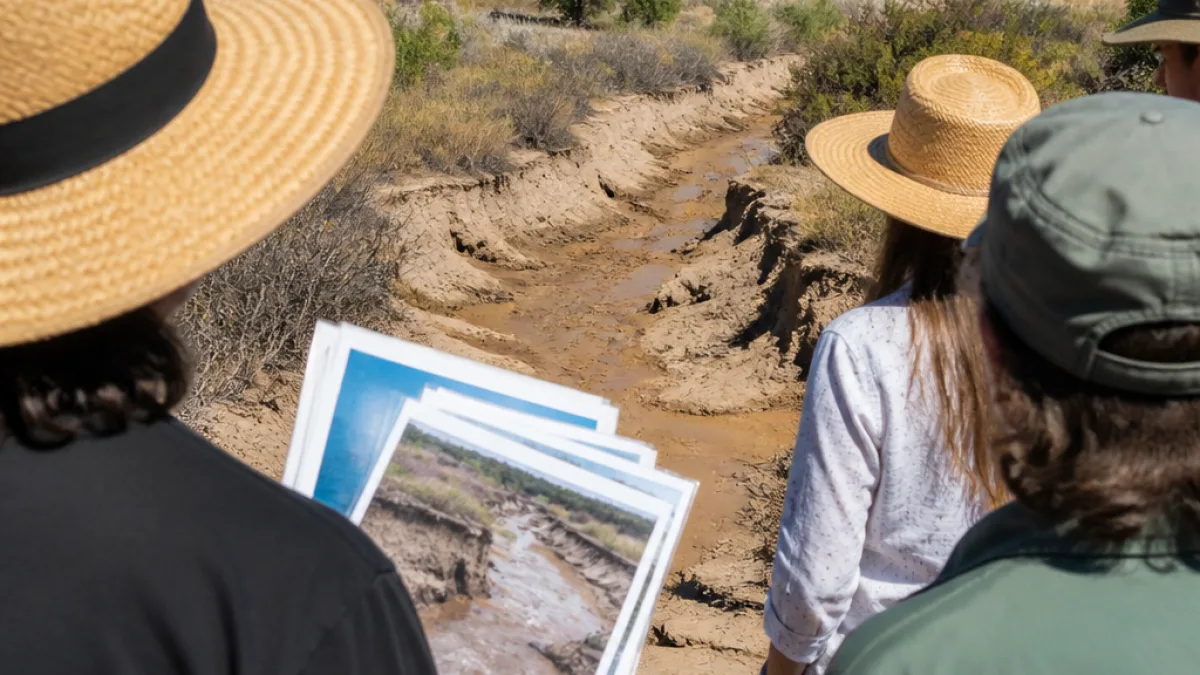
Advocates for New Mexico’s acequias urged state lawmakers this week to create a dedicated, easy-to-access disaster fund to help the century-old community irrigation systems recover from increasingly common wildfires, floods and drought.
Why acequias need a new funding approach
Paula Garcia, executive director of the New Mexico Acequia Association, told the interim Land Grant Committee that current state and federal disaster mechanisms often fail to address damage to acequias — or are too slow and complex for the volunteer groups that manage them.
“In the [current] disaster framework, it's just not considered important enough to rise to the level of a disaster, but you've got dozens of acequias silted in, and millions of dollars of help they need,” Garcia said.
Garcia recounted recent instances in which floods damaged about 30 acequias near Chimayó and Ojo Caliente without prompting a state disaster declaration. She also pointed to a Jemez-area acequia washed out by a flood earlier this summer that is being rebuilt without state or federal aid.
Barriers to existing disaster aid
Under current rules, most disaster funding requires an official declaration at the state or federal level. Even when such declarations are made, the small, volunteer-led acequia organizations frequently lack the administrative capacity to navigate the paperwork and matching-fund requirements. In many cases, acequias must front 25% of repair costs or pay in full and await slow reimbursement.
- Declaration thresholds can leave localized damage unnoticed or unacknowledged by state or federal authorities.
- Volunteer infrastructure managers often lack staff or fiscal mechanisms to apply for and manage grants.
- Delays and cost-share rules force local users to absorb immediate repair costs, threatening irrigation and local agriculture.
Local and statewide stakes
Acequias are not only irrigation systems; they are community institutions that support local food production, cultural practices and rural economies. Repeated damage and uneven access to aid could weaken those functions across the state, particularly in northern and central New Mexico where acequias remain central to farming and ranching.
Lawmakers on the Land Grant Committee convened budget experts and advocates to explore legislative options to establish a resilient funding mechanism that would operate independently of the traditional disaster-declaration process. The discussion reflects growing state concern about climate-driven extreme events and the need to protect smaller, decentralized infrastructure that does not fit neatly into existing emergency response categories.
| Area | Recent issue |
|---|---|
| Chimayó & Ojo Caliente | About 30 acequias damaged by floods (no state declaration) |
| Jemez area | Acequia destroyed by summer flood; rebuilding without state or federal funding |
Committee deliberations are preliminary. Any new program would require legislative approval and budget allocation. Advocates say a streamlined, standing fund — with simplified application rules and technical support — would reduce recovery times and financial burdens on acequia communities.
As the state faces more frequent and severe weather extremes, acequia proponents argue that protecting these community-managed water systems is both a cultural imperative and a practical necessity for local food security and water management.