Kirk, 22, and Jacob McKinney, 21, grew a business from informal resale and labor into a seven-figure junk-removal company by combining low startup costs, local demand and hands-on execution. Their story highlights how modest investments and marketplace platforms can create durable income streams for young people and shift how households dispose of bulky items.
From roadside finds to a repeatable service
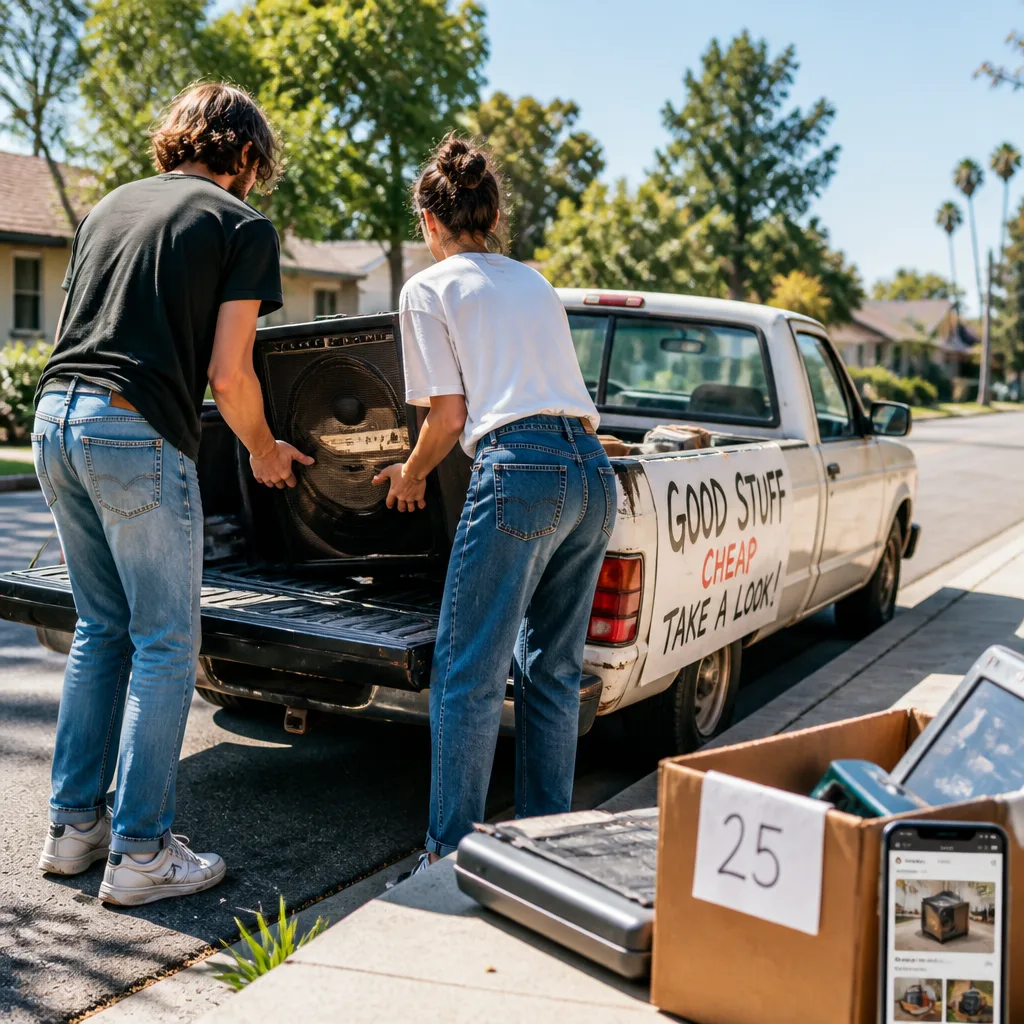
As a high school student, Kirk began salvaging electronics and speakers he found at a local dump in Massachusetts. He resold his first radio for $50 on Facebook Marketplace, an experience he described as his initial introduction to entrepreneurship. Working alongside professional junk haulers taught him the practical steps of the job — lifting, loading and transporting — and convinced him the brothers could offer the same service themselves.
"I sold my first radio on Facebook Marketplace for $50. That's when I discovered what entrepreneurship was," Kirk said.
In 2021 the brothers pooled savings to buy a used Ford F-150 for $4,000. Jacob joined the effort, contributing prior side-hustle experience splitting firewood. Their first paid job through a referral was moving a couch for $100, a task that took about 15 minutes and confirmed the business model: quick, local pickups at price points that cover labor and transport while leaving room for profit.
Scaling a simple model into seven figures
Since that first couch move, the brothers expanded reach and volume. By combining marketplace listings, social referrals and hands-on service, they transformed pickup and resale into a reliable revenue stream that now reaches seven-figure annual sales. The operation shows how low overhead and high-frequency, short-duration jobs can aggregate into substantial revenue without the need for heavy capital or complex infrastructure.
- Low capital barrier: Initial vehicle purchase was $4,000.
- Early monetization: First resale fetched $50; first job paid $100.
- Operational leverage: Learning on the job reduced training costs and sped service launch.
For households, the rise of services like the brothers' means easier disposal options for bulky items, often at lower cost and faster turnaround than traditional municipal bulk pickup. For local small businesses and contractors, the model creates competition as well as complementary demand — contractors often need debris removal after renovations, and nimble haulers can win that work with faster scheduling.
Implications for young entrepreneurs and local markets
The McKinneys' trajectory underscores several trends shaping the economy for younger workers: digital marketplaces lower customer acquisition costs; hands-on skills remain valuable for entry-level entrepreneurship; and micro-investments in equipment can unlock scalable service models. Their case also points to potential regulatory and labor questions — such as waste handling rules and how independent haulers integrate with municipal disposal systems — though those issues were not detailed in the brothers' account.
| Item | Value |
|---|---|
| Truck purchase | $4,000 |
| First resale | $50 |
| First paid job | $100 |
| Founders' ages | 22 and 21 |
Their experience shows how small-scale arbitrage — finding underappreciated value in discarded goods and charging for removal — can compound into meaningful earnings. For consumers, that means more choices for handling unwanted items; for competitors, that means a reminder that simple logistics and good customer service can create rapid growth.
As the brothers continue to expand, their business will offer a useful case study for educators and policymakers focused on entrepreneurship pathways, and for financial advisers counseling young clients on how modest capital and practical skills may lead to sustainable ventures.