SITKA, Alaska — Alaska Sea Grant is testing a new safety curriculum designed specifically for the state’s expanding mariculture industry after recognizing that existing marine safety training is aimed largely at commercial fisheries on larger vessels.
Training shaped for small-boat and raft work
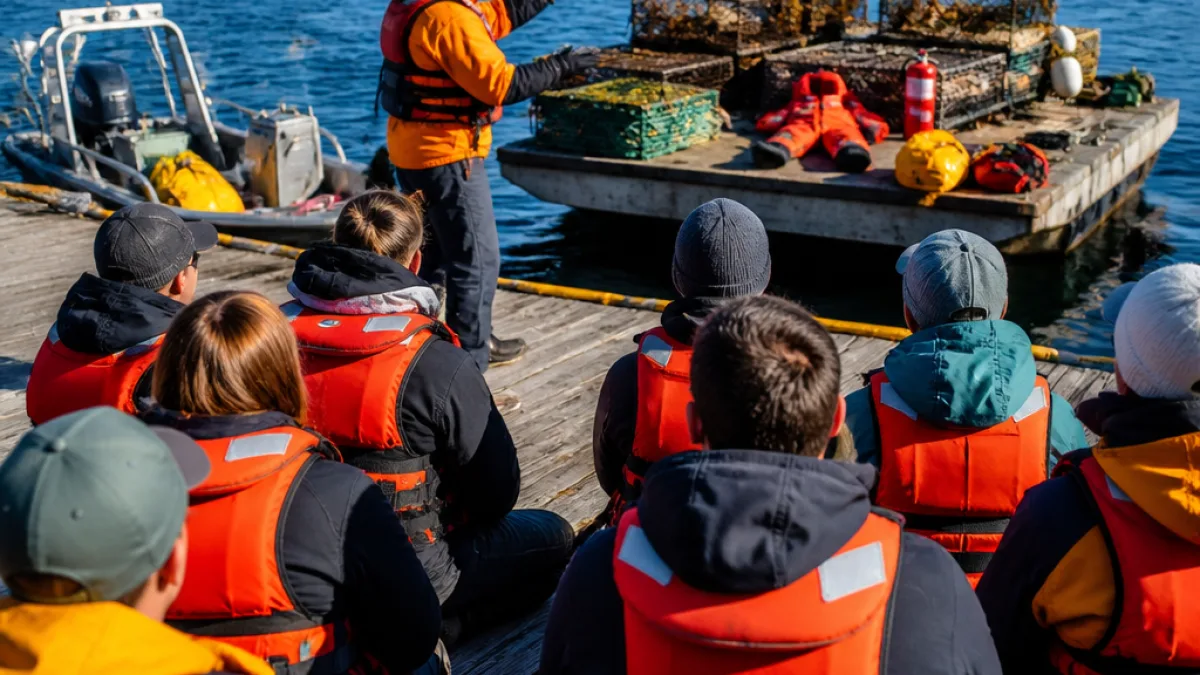
In May, instructors from the Alaska Marine Safety Education Association (AMSEA) and the University of Alaska Southeast (UAS) led a train-the-trainer exercise in Sitka with Alaska Sea Grant staff, including shellfish mariculture specialist James Crimp, mariculture specialist Missy Good and mariculture trainer Arron Jones. The program combined classroom instruction with hands-on drills covering scenarios frequent in mariculture operations.
“There’s this recognition that the existing resources for marine safety in the state have mostly been targeted towards commercial fisheries that take place on bigger vessels,” said James Crimp.
The training addressed topics organizers say better fit mariculture settings where crews work from skiffs, low-sided boats, rafts and platforms and handle equipment such as cranes and lines under tension.
- Classroom topics: small boat safety, situational awareness, ergonomics.
- Hands-on skills: fire suppression, knots, survival kits, cold-water survival and person-overboard drills.
- Equipment testing: near 20 types of personal flotation devices evaluated during practical sessions.
Why it matters for coastal communities
Mariculture operations are often run by small crews working close to hazards — trip points on rafts, low rails on skiffs, suspended loads from cranes and repetitive tasks that can cause strain. Trainers noted falling overboard may be more common in mariculture than on larger fishing vessels, and that ergonomics and situational awareness are central to prevention.
The course aims to prepare trainers who can deliver consistent, industry-appropriate instruction across the state. Organizers also staged cold-water survival training in the Blatchley Pool to replicate Alaskan conditions where hypothermia risks are high.
| Training component | Examples |
|---|---|
| Classroom | Boat handling, ergonomics, hazard recognition |
| Hands-on | Fire suppression, knotwork, PFD trials, person-overboard |
| Pool drills | Cold-water survival, immersion response |
As Alaska’s mariculture sector grows — including oyster, shellfish and seaweed farms — tailored safety education could reduce injuries and improve readiness for remote operations. By equipping local trainers with targeted curricula, proponents hope the material will be adopted statewide and adapted to varied community needs.
Alaska Sea Grant and partner organizations plan to continue refining the materials based on field feedback and to expand training opportunities for producers and crews in coastal communities.