On Aug. 10, 2025, a landslide in Tracy Arm fjord south of Juneau sent a tsunami racing through the narrow channel and stripped vegetation from mountainsides as the wave ran up to 1,580 feet above sea level — the second-largest run-up ever recorded, scientists say. The event, driven in part by glacial retreat near the South Sawyer Glacier, provides a stark example of how changing ice and steep coastal topography can produce sudden, powerful coastal hazards in Southeast Alaska.
What happened in Tracy Arm
Sea kayaker Sasha Calvey and two companions were camped on a remote island about 74 days into a trip when they were awakened before dawn by unusual, thunderous noise and waves hitting the shore. They described 15-foot waves that swept into the forest, damaged gear and left the group stranded. Calvey later learned the waves were generated by a landslide about 30 miles away at the terminus area of the South Sawyer Glacier.
“Everything in my gut told me to check outside,” Calvey said, describing the surge of water that upended gear and pushed seaweed into the trees.
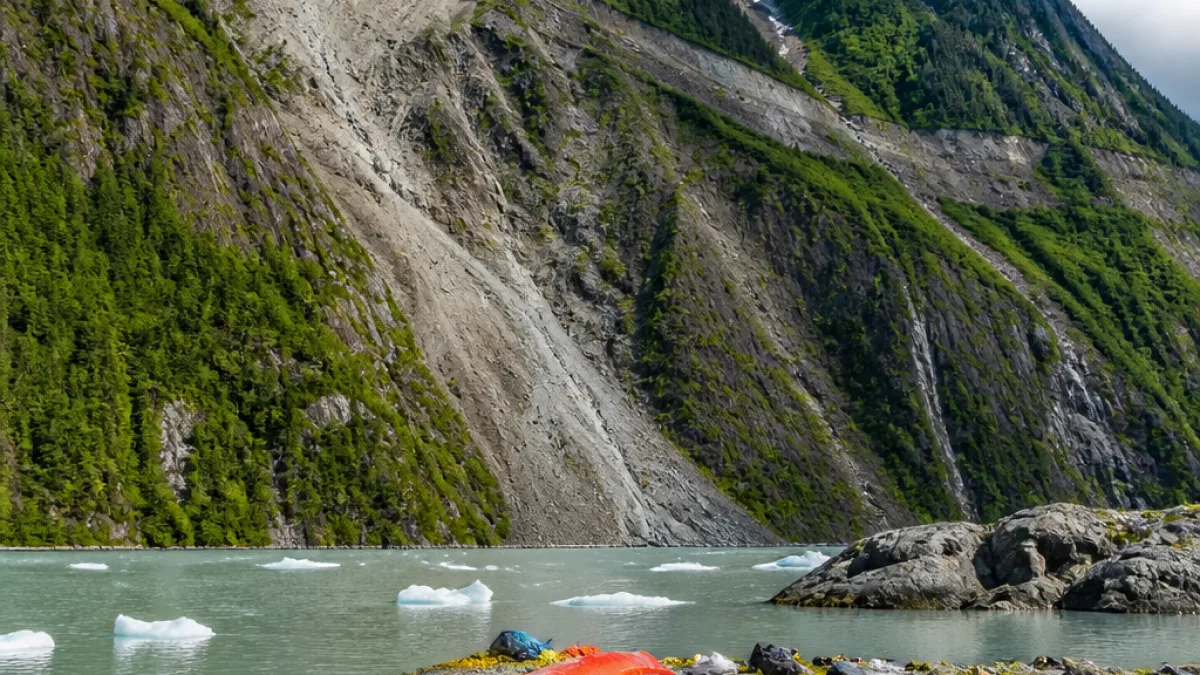
Researchers who inspected the fjord documented a massive bedrock scar at the slide site. As the displaced mass entered the water it produced a wave that climbed steep mountain slopes on the opposite side of the fjord, scouring soil and vegetation along steep shorelines.
Why glacial retreat matters
Scientists link the event to glacial retreat at the South Sawyer Glacier. As glaciers thin and pull back, they can destabilize adjacent slopes, removing the buttressing effect of ice and altering stresses in rock and soil. In steep, confined fjords such as Tracy Arm, a rapid slope failure can transfer enormous energy into the water, producing a tsunami that travels the length of the fjord and strikes shoreline communities and recreation areas.
- Date: Aug. 10, 2025
- Location: Tracy Arm fjord, south of Juneau
- Reported run-up: 1,580 feet (second-largest recorded)
- Local impacts: 15-foot waves near campsite; gear loss and rescue of kayakers
| Measure | Value |
|---|---|
| Wave run-up | 1,580 ft |
| Local observed shoreline waves | 15 ft |
| Distance from slide to campsite | ~30 miles |
The event underscores growing concerns for coastal safety across Southeast Alaska. Many fjords and inlets in the region are narrow, steep-walled and closely tied to glacial systems. Communities, fishery installations, campgrounds and backcountry recreation sites can be vulnerable to fast-moving waves with little warning time.
Stakes for local communities and visitors
While the kayakers were fortunate to survive without injury, the incident highlights how sudden slope failures can create far-reaching hazards. For local officials and search-and-rescue teams, the unpredictability of such events complicates planning and response. For the state, repeated high-energy slope failures tied to a warming climate increase the need for monitoring and hazard mapping in fjord systems.
Scientists and emergency managers say the Tracy Arm event offers an urgent case study: improved monitoring of glacial retreat, slope stability assessments, and public awareness campaigns about tsunami risk in fjords could reduce future harms. For boaters, campers and coastal residents in Southeast Alaska, heightened vigilance around steep-sided fjords and rapidly changing glacial landscapes is now a practical safety priority.
Authorities and researchers continue to study the slide, its causes and the run-up measurements. The event will inform efforts to understand how Alaska's ice loss and terrain interact to produce rare but devastating coastal events.