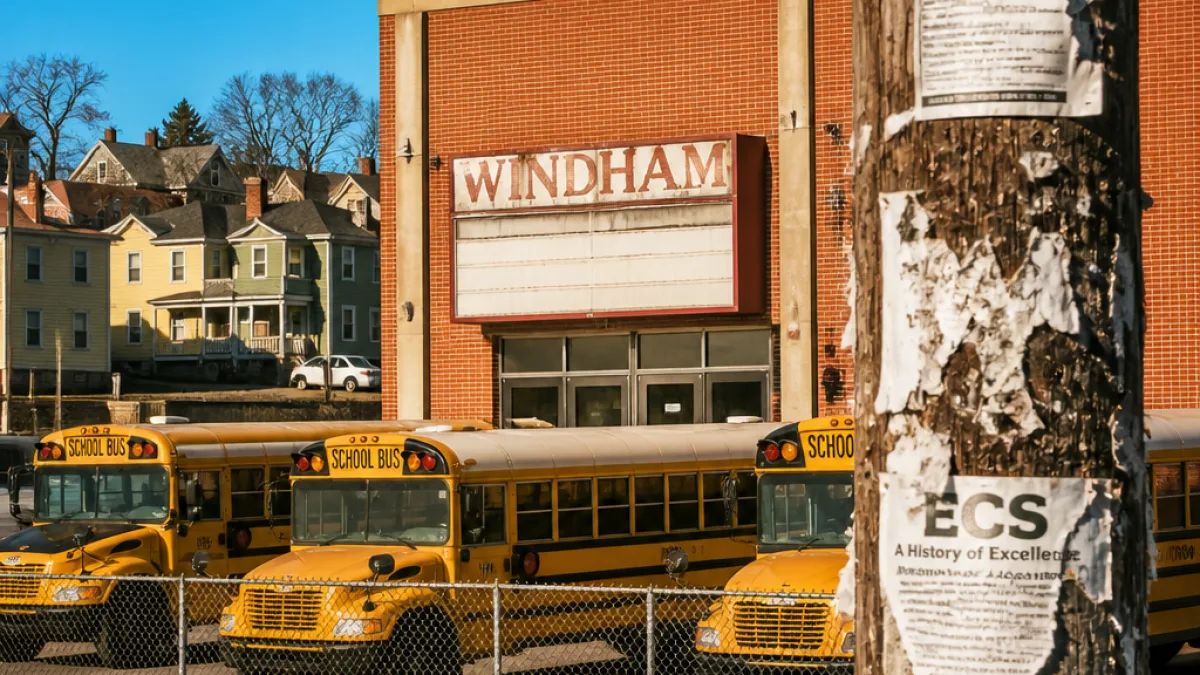
Windham High School has become markedly more concentrated by race and poverty since neighboring Columbia stopped sending graduates to the school, according to local officials and a recent national analysis.
What changed for students and schools
The change dates to about 2012, when the Columbia Board of Education removed Windham from the list of placement options for students finishing eighth grade, opting instead to send graduates to schools whose student bodies more closely matched Columbia’s demographics. Local education officials and community members say that move reduced the number of higher-income, largely white students attending Windham, increasing the school’s racial and economic isolation.
Windham High School, located in Willimantic, now reports that 82% of students are Hispanic and 88% are students of color. Officials also say roughly 75% of students are economically disadvantaged.
| Measure | Windham High (recent) | Change noted since 2010 |
|---|---|---|
| Share Hispanic | 82% | — |
| Students of color | 88% | Up 17 percentage points vs. earlier cohort |
| Economically disadvantaged | 75% | — |
| College enrollment rate | 37.9% (2024) | Down from 53.9% (2010) |
Voices from the community
Longtime Windham Board of Education member Mark Doyle said the district had relied in part on Columbia students to help distribute per-classroom costs.
“Windham has never received the fully-funded level required by law,”
Doyle also told the author that Columbia’s exit reduced the number of “lower-cost students” attending Windham classrooms, a change that he and others say altered the school’s financial and demographic profile.
Statewide context and funding implications
A recent analysis by Brown’s Promise and the Segregation Tracking Project placed Connecticut among the most racially segregated states by district, reflecting a broader pattern of concentrated poverty and racial separation.
Connecticut’s school funding relies heavily on local property taxes; about 57% of public-school funding comes from those local sources. That structure means towns with lower household incomes carry a disproportionate burden, even as state Education Cost Sharing (ECS) grants aim to help districts with more English learners, special education needs and economically disadvantaged students.
Local officials say Windham has received ECS aid, but critics contend the district has not been funded at the level state law envisions, leaving persistent gaps.
Practical impact for residents
- Students at Windham High face a school population that is now heavily concentrated by race and poverty, which can affect peer composition, course offerings and extracurricular resources.
- Local taxpayers in Willimantic continue to shoulder a larger share of school funding because of lower local property wealth.
- Longer-term outcomes such as college enrollment rates show decline since 2010, though multiple factors are at play.
Advocates and local officials say addressing the concentration will require attention from state policymakers, including consideration of full funding formulas and policies that reduce inter-district segregation. The changes in Windham are part of a broader statewide pattern highlighted in the national analysis.
This story draws from the Brown’s Promise and Segregation Tracking Project analysis and interviews with local Windham school officials and board members.
Olivia Ferraro, Connecticut correspondent, News Block.