
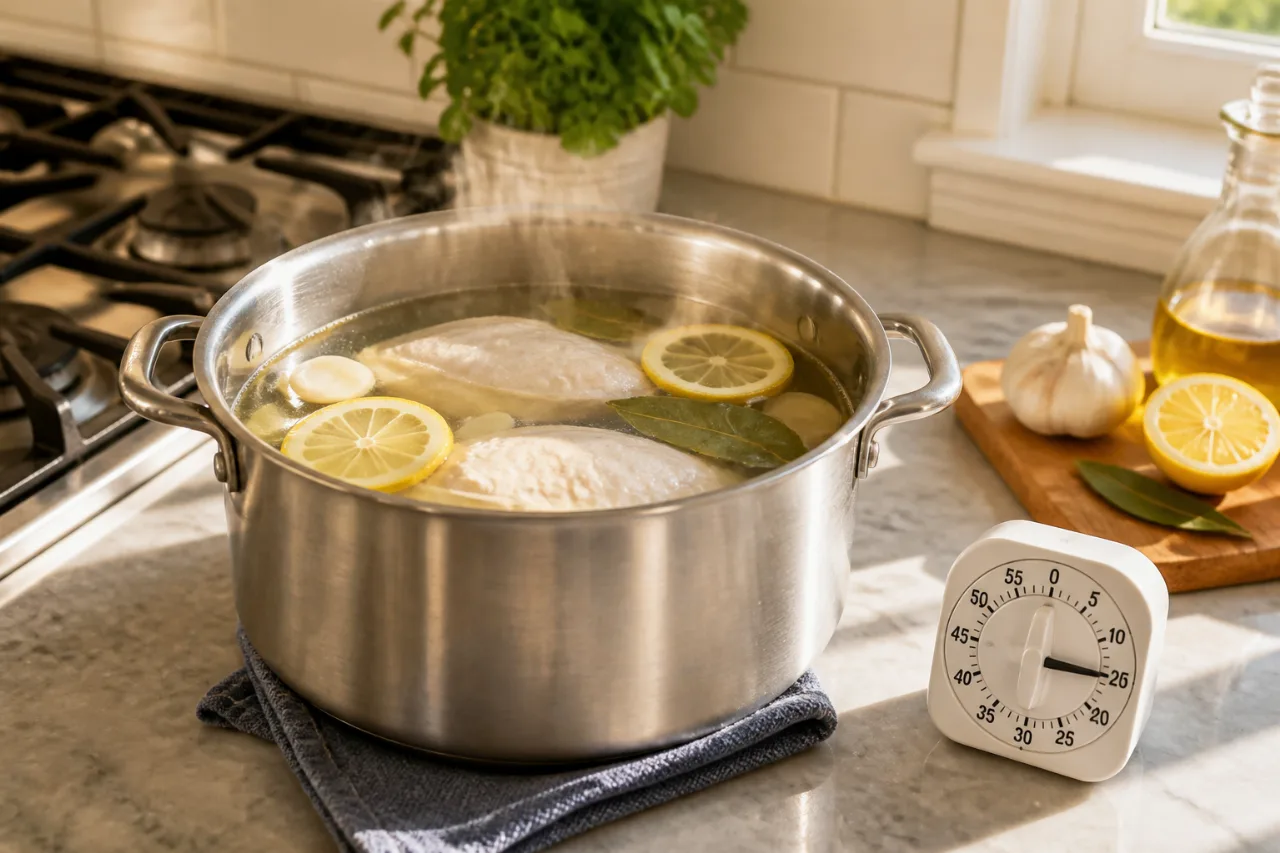
Home cooks chasing tender, juicy chicken may have been overcomplicating the process. A straightforward poaching technique shared by cookbook author Nagi Maehashi — known for RecipeTin Eats — promises reliably moist chicken breasts without fuss or fancy equipment.
What the method is
The approach is deliberately simple: place boneless chicken breasts in water, bring the liquid to a boil, then remove the pot from the heat and leave the chicken submerged while the residual heat finishes cooking it. The result, Maehashi says, is a consistently juicy piece of poached chicken that won’t dry out if left up to an hour.
"If you put chicken breasts in boiling water, then leave it with the stove turned off for 20 minutes, you will have the juiciest poached chicken of your life,"
Why it works and what to add
Poaching gently cooks meat through ambient heat rather than vigorous boiling, which can force moisture out and tighten muscle fibers. The method minimizes temperature swings and prevents overcooking. Maehashi notes you can enhance the cooking liquid with simple aromatics — lemon juice, a bay leaf and minced garlic — added before heating so they infuse the water and the meat as it rests.
- Timing: 20 minutes gives excellent results; you can leave chicken up to 60 minutes and still have it remain tender.
- Flavoring: Lemon, bay leaf, garlic suggested; add them before heating so flavors have time to mingle.
- Do not add salt: Maehashi cautions against salting the poaching water because it can affect the boiling temperature and risk undercooking.
Quick guide
| Step | Action | Approx. time |
|---|---|---|
| 1 | Place chicken in pot with cold water and aromatics | — |
| 2 | Bring water to a boil | 5–10 minutes (depending on stove and amount) |
| 3 | Turn off heat and cover; let sit | 20 minutes (up to 60 minutes OK) |
| 4 | Remove, rest briefly, and slice or shred | 2–3 minutes |
Uses and follow-ups
Poached chicken prepared this way is versatile: slice for sandwiches and salads, shred into tacos or soups, or chill and cube for pasta salads. Because the technique keeps meat moist without adding oil, it’s a low-effort option for meal prep. Testers who tried the method reported a noticeable improvement over more aggressive boiling or pan-searing without careful timing.
The method’s simplicity makes it appealing for cooks who want reliable results without monitoring a thermometer. Try it next time you need a batch of neutral-flavored, tender chicken to adapt into different weeknight meals.