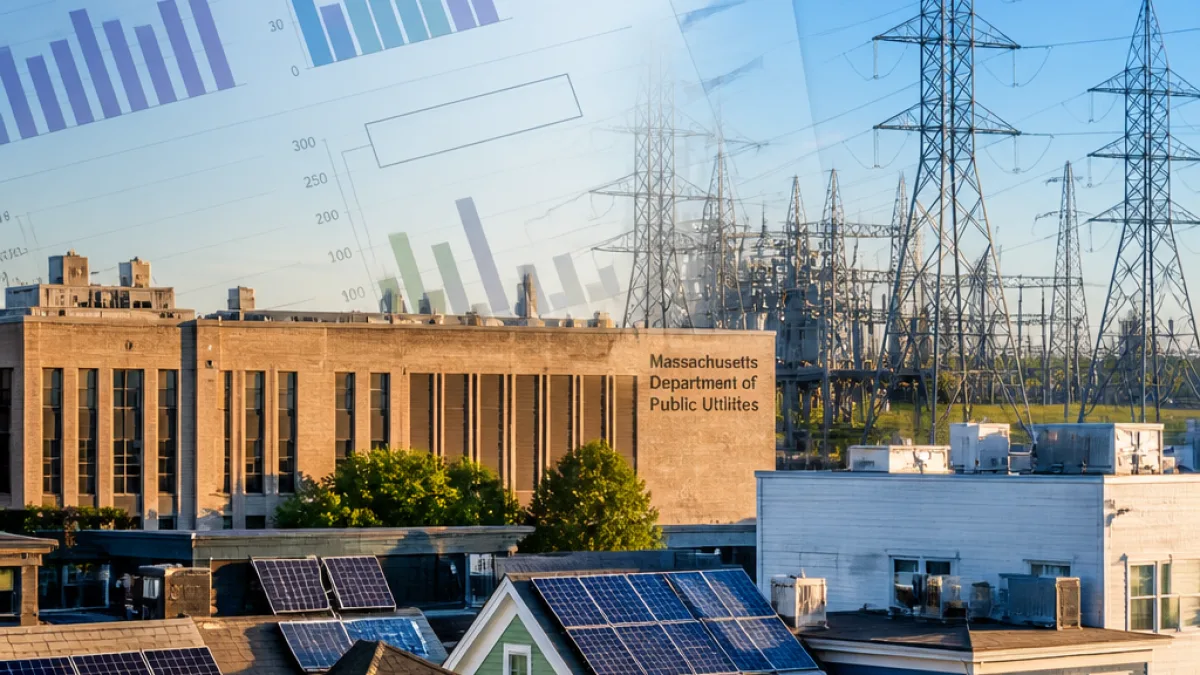
A study filed with the Massachusetts Department of Public Utilities that found rooftop solar can raise electric rates while large, utility‑scale projects lower them is now shaping debate over whether homeowners should receive the same credits for the power they send to the grid.
Why the funding model matters
Massachusetts’ major electric companies — Eversource, National Grid and Unitil — do not make most of their profit by selling electricity to customers. Instead, their earnings come from investments in infrastructure: wires, poles, substations and transmission lines. State regulators allow those companies to earn a guaranteed return — currently around 9 to 10 percent annually — on that so‑called rate base for the life of the equipment.
“by selling electricity,”
That structure matters because a significant portion of customer bills goes toward delivering power and providing that regulated return, not the commodity price of electricity itself. Proposals to reduce net‑metering credits for rooftop systems often rest on analyses that focus narrowly on wholesale power prices and ignore how delivery revenues and utility incentives interact with distributed generation.
What the MIT filing says
Economist Christopher Knittel, with MIT’s Center for Energy and Environmental Policy Research, submitted a study to the DPU concluding residential rooftop solar tends to push rates up while large utility solar farms exert downward pressure on rates. Knittel did not explicitly recommend changing net‑metering policy, but his findings have been cited by parties advocating cuts to rooftop credits.
Supporters of net metering argue the practice is crucial to making rooftop solar affordable for ordinary homeowners. Net metering lets households with solar systems send surplus power to the grid and receive credits when their meter runs backward; they draw from the grid at other times and pay for net consumption at the end of a billing period.
- Net metering provides bill credits for surplus household solar exported to the grid.
- Utilities’ profits largely derive from regulated returns on infrastructure, not electricity sales.
- Policy stakes include rooftop solar economics, utility revenue recovery and overall rate impacts for consumers.
How this affects Massachusetts residents
If regulators accept analyses that do not account for utilities’ rate‑base incentives, advocates warn, policymakers could undervalue the grid benefits of distributed solar and reduce payments that make rooftop systems financially viable. That would affect homeowners who have already invested in solar and those considering it, as well as the state’s goals for decarbonization and equitable access to renewable energy.
| Item | Detail |
|---|---|
| Utilities’ guaranteed return | Approximately 9–10% on infrastructure investment |
| Study on record | MIT/CENEPER analysis finding rooftop solar raises rates; utility solar lowers rates |
The DPU will weigh the study alongside submitted testimony from utilities, solar advocates, consumer groups and other stakeholders. For Massachusetts, the decision could reshape how rooftop systems are compensated and influence the pace and equity of the state’s transition to renewable electricity.
Regulators and legislators face a technical policy choice: whether to favor a narrower cost comparison that separates rooftop and utility‑scale resources or to adopt a broader accounting that considers delivery charges, long‑term grid investment and how distributed generation reduces demand on transmission assets. The outcome will determine whether current net‑metering arrangements remain intact or are modified — with direct financial consequences for thousands of Massachusetts homeowners.