Storm runoff and aging pipes blamed as officials urge caution
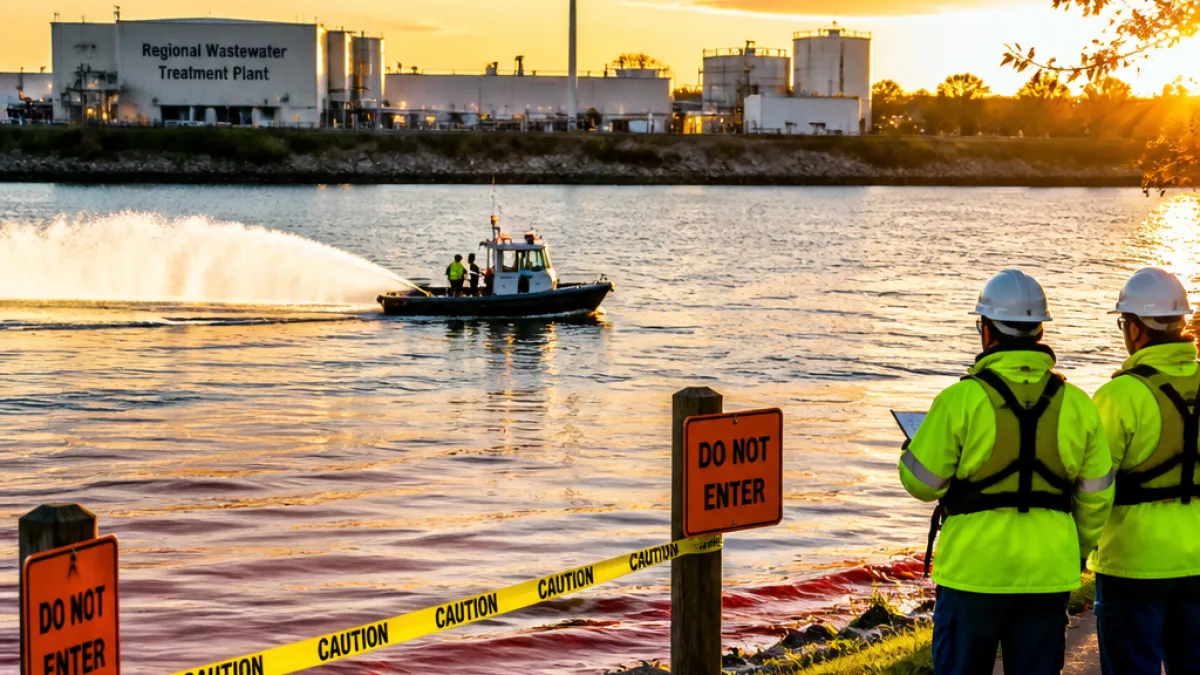
Heavy rainfall earlier this week forced the release of more than 6 million gallons of untreated wastewater into the Connecticut River, Springfield area water officials said. The discharge came through a Combined Sewer Overflow (CSO) system that periodically routes excess flows to the river during intense storms.
Springfield Water and Sewer Commission alerts prompted a public tour Friday of the Springfield Regional Wastewater Treatment Plant — commonly called Bondi’s Island — where commission and plant leaders described the scale of the event and ongoing efforts to limit future overflows.
“People turn the sink on, but they have no idea where their water comes from. They flush the toilet, but they don’t know where it goes,”
said Josh Schimmel, executive director of the treatment plant, explaining why officials hosted the tour and why transparency about the system matters.
Decades of work, hundreds of millions spent
Schimmel told attendees the CSO program has been in place for roughly 30 to 35 years. Since its inception, the Springfield Water and Sewer Commission has invested nearly $300 million to shrink the frequency and volume of overflows and to upgrade monitoring systems.
Officials also noted that runoff from stormwater and agricultural land contributes to water pollution, in addition to combined sewer events, complicating efforts to keep discharges from harming the river.
- Event: Heavy rain triggered a CSO
- Volume: More than 6 million gallons discharged
- Advisory: Avoid river contact for at least two days after an alert
Public concern and community outreach
Dozens of residents joined the plant tour to learn how wastewater is treated and why overflows still happen. East Longmeadow resident Tiffany Sanchez brought her children to the facility to better understand local water systems.
“If you have unsafe water to consume, you’re going to have some side effects from that,”
she said, adding that the tour improved her confidence in the plant’s recent upgrades.
Public health guidance from the commission recommends people stay out of the Connecticut River for at least two days following an overflow alert. The most recent heavy rain occurred three days ago, and the advisory timeline depends on monitoring results and weather forecasts.
Where residents can get information
Officials told the crowd the commission continues work to reduce overflows and to improve water quality. Residents with questions or concerns are directed to the city’s alert portal at springfieldalerts.com/Suez for updates on water quality, monitoring data and planned infrastructure projects.
| Item | Detail |
|---|---|
| Reported overflow volume | More than 6,000,000 gallons |
| CSO program duration | 30–35 years |
| Commission investment | Nearly $300 million |
The incident underscores the region’s vulnerability to intense rain events and the long timeline and substantial cost required to overhaul century-old sewer infrastructure. For Springfield and surrounding Hampden County communities, continued investment, vigilance and public communication will shape how often residents must heed advisories and how quickly the Connecticut River recovers after future storms.