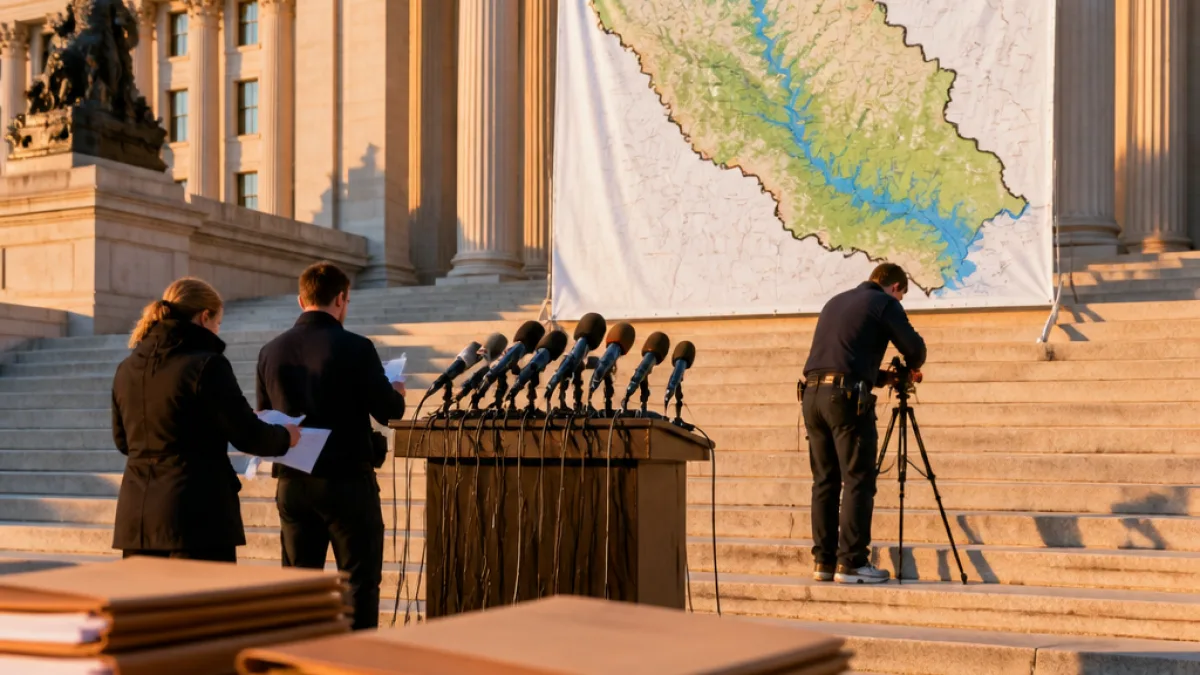
Oklahoma has reached a settlement totaling $44 million to resolve a 21-year lawsuit tied to poultry litter pollution in the Illinois River Watershed, Attorney General Gentner Drummond announced Monday.
Funds aimed at remediation and watershed protection
The settlements include payments from major poultry processors that state officials say will be directed toward cleanup and long-term improvements in water quality. Under the agreements made public Monday, Tyson Foods will contribute $19 million, Cargill will pay $6.5 million, and an earlier agreement with George’s Incorporated accounted for $5 million. Combined with other settlements, the total reaches $44 million.
Attorney General Drummond framed the resolution as an opportunity to shift attention from litigation to conservation work and monitoring of improvements in the Illinois River Watershed over coming years.
"Monumental efforts that have been made by all parties, and I believe that the settlement is in the best interest of the state of Oklahoma,"
State officials say the money will underwrite remediation projects, scientific monitoring and steps intended to protect the watershed. How the funds will be apportioned across specific projects, agencies or timelines was not fully detailed in the announcement.
Local farmers and industry reaction
The settlement has drawn mixed responses from farming communities that operate poultry houses under contract with processors. Some producers have pushed back over concerns that any fallout from the case could fall on family-run farms rather than the corporations that buy their birds. The Oklahoma Farm Bureau acknowledged the attorney general’s role in reaching the settlement but said it still harbors concerns about downstream impacts on producers.
- Settlement total: $44 million
- Tyson Foods: $19 million
- Cargill: $6.5 million
- George’s Inc.: $5 million (previously announced)
State leaders emphasized that the poultry houses are privately owned by local families, not by the corporate processors. The governor welcomed the settlement but cautioned that court approval could be contested in the days ahead.
What this means for the watershed and the state
The Illinois River Watershed, which spans parts of northeastern Oklahoma and northwest Arkansas, has been at the center of disputes over nutrient runoff and the role of poultry litter in degrading water quality for more than a decade. Officials say the settlement will allow state agencies and conservation partners to accelerate remediation work and monitor progress.
| Company | Settlement amount |
|---|---|
| Tyson Foods | $19,000,000 |
| Cargill | $6,500,000 |
| George's Inc. (earlier) | $5,000,000 |
| Other/combined | Remaining to total $44,000,000 |
Officials said improvements in water quality should be measurable over the next four to five years if conservation efforts are sustained. For residents and recreational users of the watershed, the settlement could mean cleaner streams and lakes, fewer fish kills, and a reduction in harmful algal blooms that have affected parts of the river system.
As the state moves from courtroom fights to on-the-ground projects, questions remain about the specifics of fund allocation, the timeline for remediation and how regulators and local partners will work together to prevent future pollution. The attorney general’s office indicated those details will be addressed as implementation plans are developed.
This settlement closes a long chapter of litigation but opens a practical one: turning payment commitments into measurable water-quality gains for communities that rely on the Illinois River for drinking water, recreation and local economies.