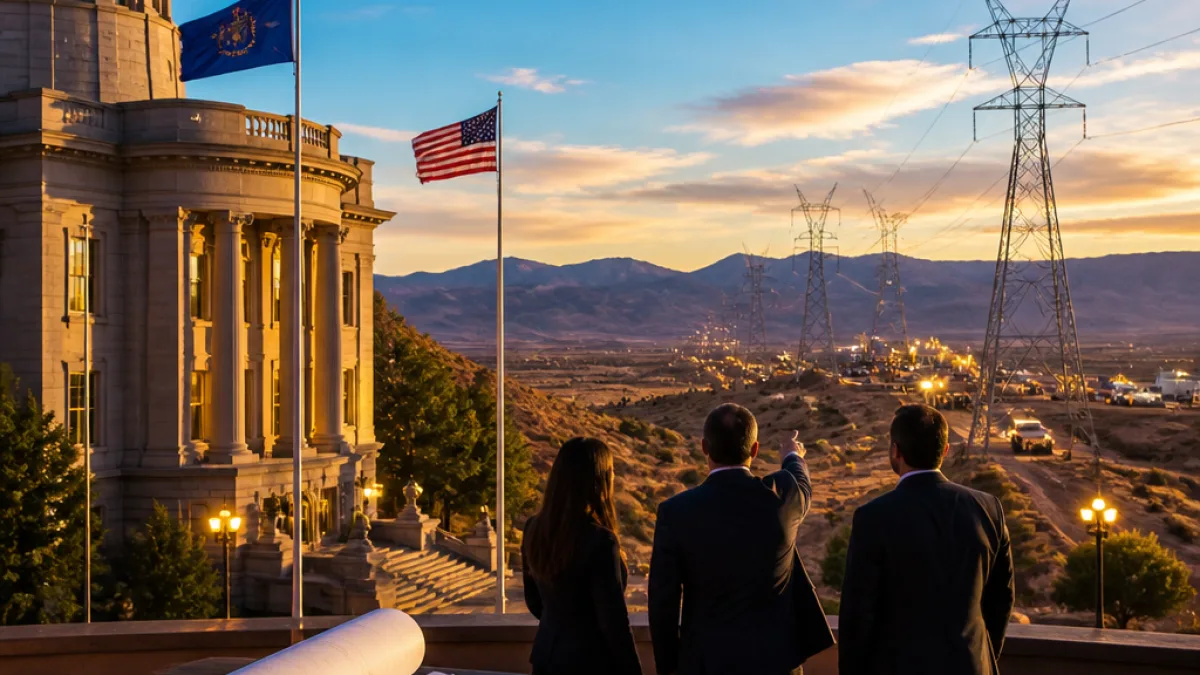
The state of Nevada is part of a newly formed regional effort to expand and modernize the western power grid as officials and industry experts anticipate a sizable increase in electricity needs across the region.
Coalition aims to move transmission projects faster
Nevada joined 10 other western states in the Western Transmission Expansion Coalition, a cooperative that will prioritize major transmission corridors and seek a coordinated framework for delivering power where demand is growing. Participants say the work is intended to ready the grid for what experts expect will be a more than 20% rise in electricity demand over the coming decade.
State leaders framed the move as necessary to preserve Nevada’s economic momentum. In a prepared statement, Governor Joe Lombardo linked reliable, affordable energy to continued business attraction and long-term growth. He said the pact demonstrates that western states can collaborate on grid modernization, protect customers and build the transmission network to support “the next generation of economic opportunity.”
"As our state expands and attracts new businesses, we need the infrastructure to support that growth. This agreement shows that western states can work together to modernize our grid, protect ratepayers, and build the transmission network needed to power the next generation of economic opportunity."
Context: projects delayed, federal review in the spotlight
The regional push follows a string of setbacks for large solar and other projects in Nevada. The source of delays includes a directive that requires Interior Secretary Doug Burgum to personally review certain projects, a federal step that stakeholders say has slowed permitting and deployment.
Environmental and community advocates emphasize the need for new lines but express caution about how the added capacity will be used. Olivia Tanager, executive director of the Sierra Club’s Toiyabe Chapter, said she supports transmission that enables decarbonization but objected when new lines appear to be routed primarily to data centers and natural gas-fired plants.
"We were promised that the green link transmission projects were going to help decarbonize our grid and be the answer to renewable energy in Nevada. And instead, what we're seeing is we're seeing data centers and natural gas plants being hooked up directly to those projects,"
What this means locally
For Nevada residents and businesses, the coalition’s work could influence several practical matters over the next decade:
- Electric reliability: New transmission could reduce grid bottlenecks and improve service during peak demand.
- Economic development: Improved infrastructure may support growth in manufacturing, tech and other sectors that require reliable power.
- Project siting and purpose: Community groups will be watching how capacity is allocated — to renewables, data centers or fossil-fuel generators.
| Measure | Detail |
|---|---|
| States in coalition | 11 (Nevada plus 10 others) |
| Projected regional demand growth | More than 20% over the next decade |
The coalition plans to urge Congress and the administration to accelerate approvals and financing for high-impact lines. Local leaders and advocates will need to follow how federal review processes and permitting rules evolve, since those govern how and when transmission can be built.
As Nevada grows, the balance between enabling development and ensuring the state’s energy transition remains equitable and low-carbon will be a central local debate. Community groups, utilities, regulators and state officials all have a stake in how the coalition’s priorities translate into on-the-ground projects.