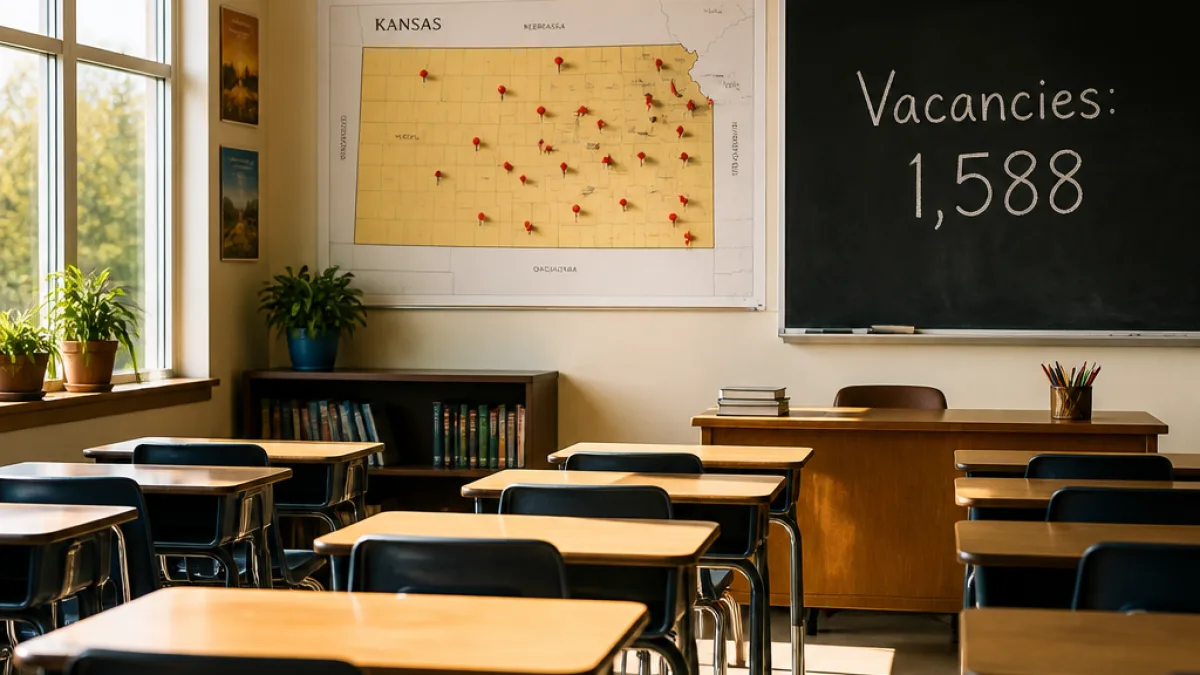
TOPEKA — Kansas school districts reported a notable drop in classroom teacher vacancies this spring, with the Kansas State Department of Education saying the statewide vacancy total fell to 1,588 from 1,747 in the fall — a reduction of about 9.1%.
The department counts a vacancy as any position without a teacher or filled by an educator who is not fully certified for that role. Officials said the decline included openings in traditionally hard-to-staff areas such as special education, science, math and elementary grades.
What changed for classrooms
More slots in special education and core subject areas were filled, though special education remains the most difficult area for districts to staff. Districts reported 378 special education vacancies this spring, down from 414 last fall. Elementary vacancies dropped to 344 from 390 over the same period.
"We showed drastic drop, not only from spring of 2026, but if you look at last year’s data we were sitting around 2,200 at the end of spring of 2025," said Shane Carter, director of teacher licensure with the State Department of Education. "We’re keeping more people in the profession. They’re choosing to stay."
Retention, retirements and applications
Retention improved: 87.9% of licensed educators — about 38,694 people — remained employed by their districts in 2025-26. The number of retirements fell slightly to 857 from 910 the prior year, and the number leaving the profession also declined.
Districts are also seeing fewer positions that attract no applicants. The number of unfilled jobs with no applicants has been declining for several reporting cycles:
- Fall 2024: 640 no-applicant positions
- Spring 2025: 623
- Fall 2025: 521
- Spring 2026: 423
Still, the statewide picture masks regional differences. Six of the state’s 10 State Board of Education districts saw vacancy declines; four saw increases. Urban districts experienced the largest rises: Wichita reported a 17% increase, Johnson County 11%, and Topeka 6%.
| Snapshot | Fall 2025 | Spring 2026 |
|---|---|---|
| Total vacancies | 1,747 | 1,588 |
| Special education vacancies | 414 | 378 |
| Elementary vacancies | 390 | 344 |
Why it matters
Fewer vacancies and higher retention generally mean more consistent classroom instruction for students and reduced hiring strain for districts. But the persistence of shortages in special education and the increases in several urban districts indicate local challenges remain. Districts facing rising vacancies may continue to rely on emergency certifications or teachers working outside their areas of full certification.
State officials offered the figures during a briefing to the Kansas State Board of Education, emphasizing the need to keep supporting teacher retention and targeted recruitment in high-need fields.
Families and school staff looking for specifics about openings or staffing plans should contact their local district offices or the Kansas State Department of Education for the most current information.