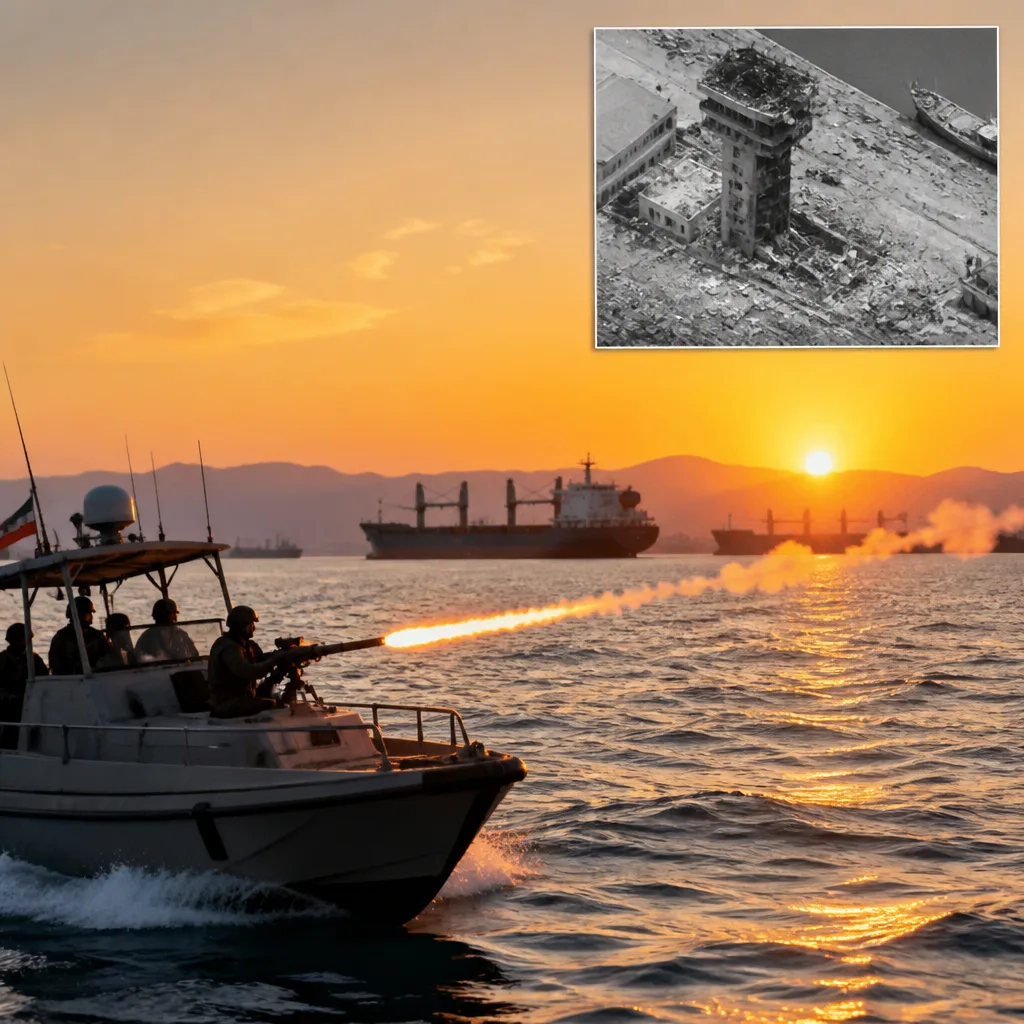
Ports and shipping companies across the globe woke to a fresh security alarm Sunday when Iran's Revolutionary Guard Corps' navy declared the Strait of Hormuz closed "until further notice," according to state media reports. The announcement followed an incident in which the Guards said they fired a warning shot at a vessel they accused of attempting to transit via an unauthorized route.
Immediate context and recent strikes
The declaration comes in the wake of military action earlier in the week. U.S. forces said they conducted fresh strikes aimed at keeping the strait open for international shipping. Satellite imagery, released by a private firm and cited in reporting, shows damage to a control tower at the Iranian port of Chabahar on July 9 — imagery that Reuters linked to the U.S. strikes reported on July 8.
Why the strait matters
The Strait of Hormuz is one of the world's busiest maritime chokepoints. While the state media account did not offer operational details beyond the warning shot and the closure notice, any interruption there has the potential to ripple through global energy and shipping markets and draw increased attention from the U.S. military, which has repeatedly emphasized the importance of keeping the waterway open.
- Action reported: Iran's IRGC navy announced closure of the strait until further notice.
- Trigger: Authorities said a warning shot was fired at a vessel for using an unapproved route.
- Related events: U.S. strikes earlier in the week; satellite photos show damage at Chabahar port control tower.
Timeline
| Date | Event |
|---|---|
| July 8 | U.S. military said it launched strikes intended to keep the Strait open |
| July 9 | Satellite imagery shows damage at Chabahar port control tower |
| July 12 | IRGC navy declared the Strait of Hormuz closed, state media reported |
Officials in Washington, shipping firms and regional actors will be watching closely for confirmation of the closure and for any subsequent moves that could escalate tensions. The state media dispatch did not provide details on enforcement measures or how maritime traffic would be handled for vessels already committed to transits.
For now, maritime operators and governments must weigh rapidly evolving reports from the Gulf against on-the-water realities, where navigational decisions are made hourly and consequences for commerce and security can be immediate.