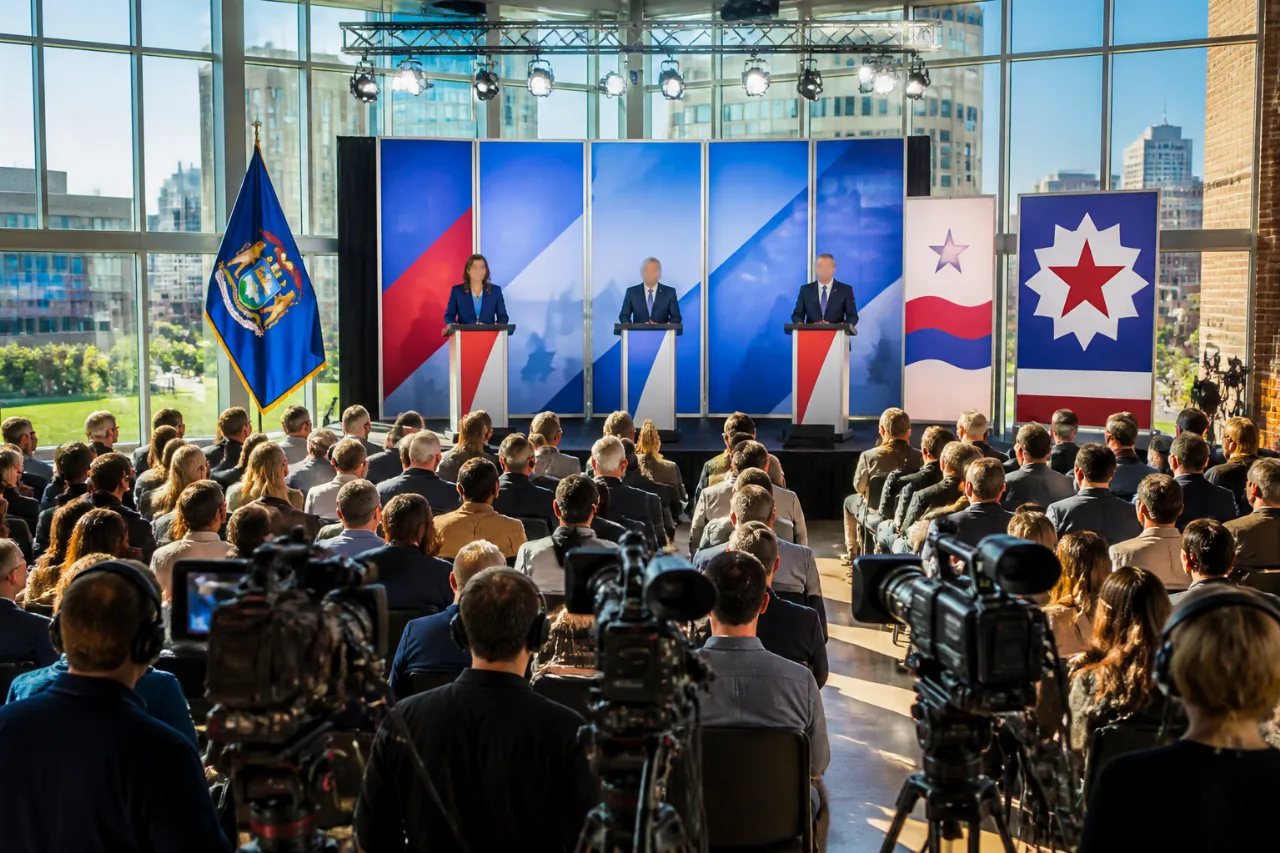
The three leading Republican contenders for Michigan governor clashed Wednesday night in a heated primary debate, delivering pointed criticisms over business records, past campaign performances and who can best beat Democrats this fall.
Sharp exchanges as candidates seek an edge
Rep. John James — who has emerged as a frontrunner after winning former President Donald Trump’s endorsement last month — was the primary target of his rivals. Former state Attorney General Mike Cox and businessman Perry Johnson repeatedly pressed James on his private-sector background and earlier statewide campaign losses.
Cox used his rebuttal time to suggest James benefited from family connections in business and to question the congressman’s track record in statewide races, pointing to his unsuccessful Senate bids in 2018 and 2020. At one point Cox addressed James directly.
"You can talk some rap, but that’s total nonsense."
James responded by confronting Cox’s own electoral history, noting Cox’s third-place finish in the 2010 Republican primary for governor and arguing Michigan Republicans need a candidate who can win in November.
What’s at stake
The Republican nominee will be chosen in the Aug. 4 primary and will face the Democratic nominee in November to succeed term-limited Gov. Gretchen Whitmer. With less than a month to go, the debate underscored the intra-party jockeying and the emphasis on electability and conservative credentials.
- Key figures: John James, Mike Cox, Perry Johnson.
- Primary date: Aug. 4, 2026.
- Context: James holds an endorsement from former President Trump; Cox and Johnson seek to undercut his frontrunner status.
| Candidate | Noted focus of attacks |
|---|---|
| John James | Business background; past statewide losses despite high-profile endorsement |
| Mike Cox | Electability; accused James of benefiting from nepotism |
| Perry Johnson | Campaign spending and private-sector credentials |
The debate’s sharp tone highlighted how quickly this primary can shift in the remaining weeks. Voters will weigh questions of experience, campaign effectiveness and who can mount the most competitive challenge in November.
As the campaign moves forward, candidates are likely to continue focusing on each other’s records and the practical question of who can convert primary momentum into a general election victory.