
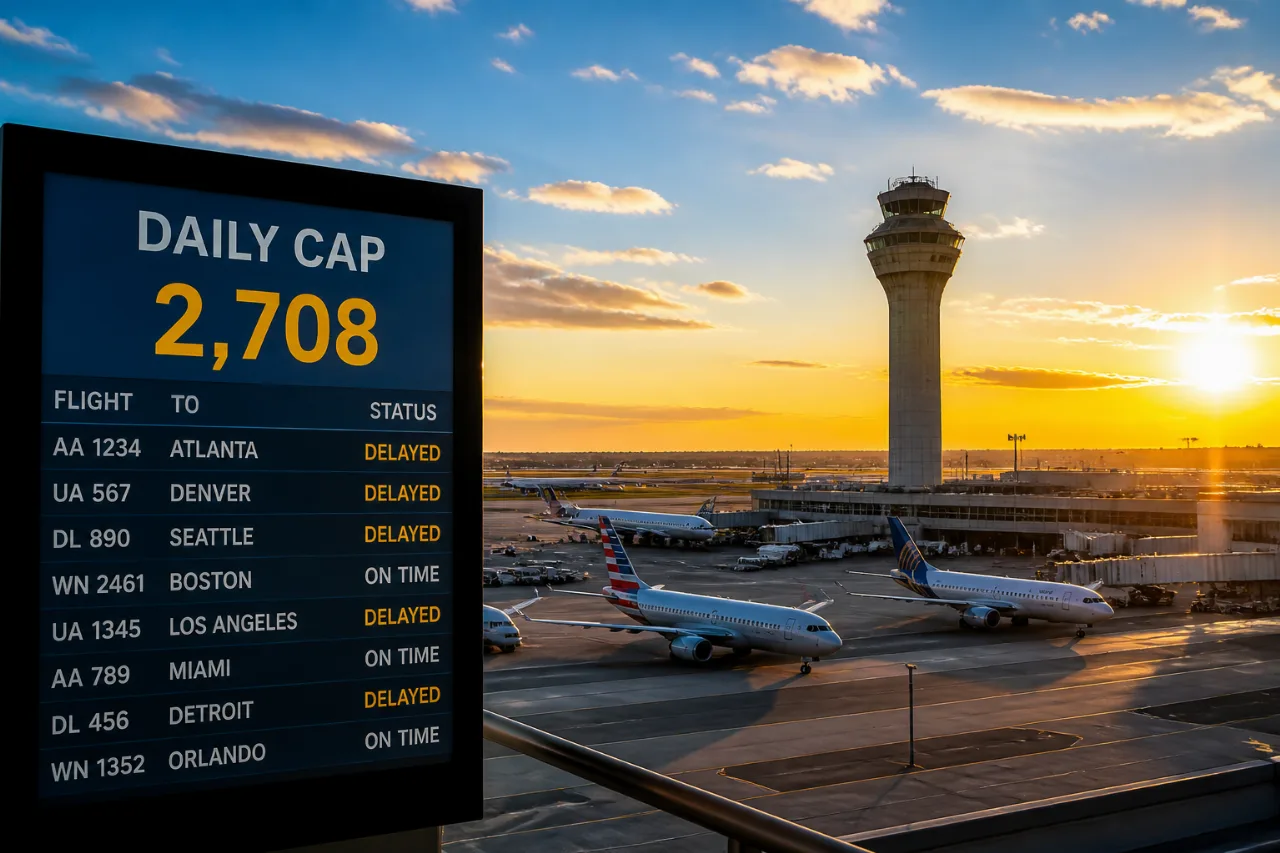
The Federal Aviation Administration said Friday it will keep a daily cap on flights at Chicago O'Hare through the end of October 2027, a move that preserves limits intended to curb congestion at one of the nation’s busiest airline hubs.
Why the cap remains
The FAA in April set a maximum of 2,708 daily arrivals and departures at O'Hare, a restriction originally framed as temporary during runway work and the summer travel season. That cap will remain in place, the agency announced, rather than allowing airlines to resume larger schedules this summer.
The decision directly affects the two carriers that dominate O'Hare, United and American Airlines, which had planned about 3,080 daily operations this summer — roughly 15% above last year's activity. Regulators say the limit is intended to prevent a repeat of widespread delays that left only about 56% of departures and 58% of arrivals operating on time during last summer's peak season.
Impact on travelers and airlines
- Passengers may face fewer schedule choices and potentially higher fares on affected routes as capacity is constrained.
- United and American must continue to pare back planned growth at O'Hare, altering competitive strategies at the hub.
- Airport operations should see less pressure from overlapping airline schedules, runway construction and weather-related bottlenecks.
FAA officials said overscheduling at O'Hare reflected aggressive competitive behavior between the two largest carriers at the airport. Regulators had also rejected calls to use new summer 2026 schedules as a baseline for limits, arguing that would encourage airlines to file inflated plans to gain negotiating leverage.
Operational context and recent performance
Despite the cap, O'Hare has continued to experience significant delays this year tied to ongoing runway work and variable weather. The FAA and airport authorities framed the restriction as a tool to keep operations near the prior season's levels and to smooth traffic while infrastructure projects proceed.
| Metric | Figure |
|---|---|
| FAA daily cap | 2,708 arrivals/departures |
| Planned daily operations by airlines | 3,080 (this summer) |
| Last summer on-time departures | 56% |
| Last summer on-time arrivals | 58% |
Airport and airline officials have argued for increased capacity to support growth, but federal regulators have emphasized limits are necessary where physical infrastructure, construction and weather combine to strain operations. The extension through October 2027 signals the FAA’s willingness to take a firm regulatory approach in managing hub congestion.
For travelers, the cap means airlines will have to prioritize routes and schedules more conservatively, at least through the next two summers. For consumers and businesses that rely on predictable air service, the policy aims to trade some capacity for more reliable operations.
Reporting for this story drew on the original reporting by David Shepardson of Reuters.