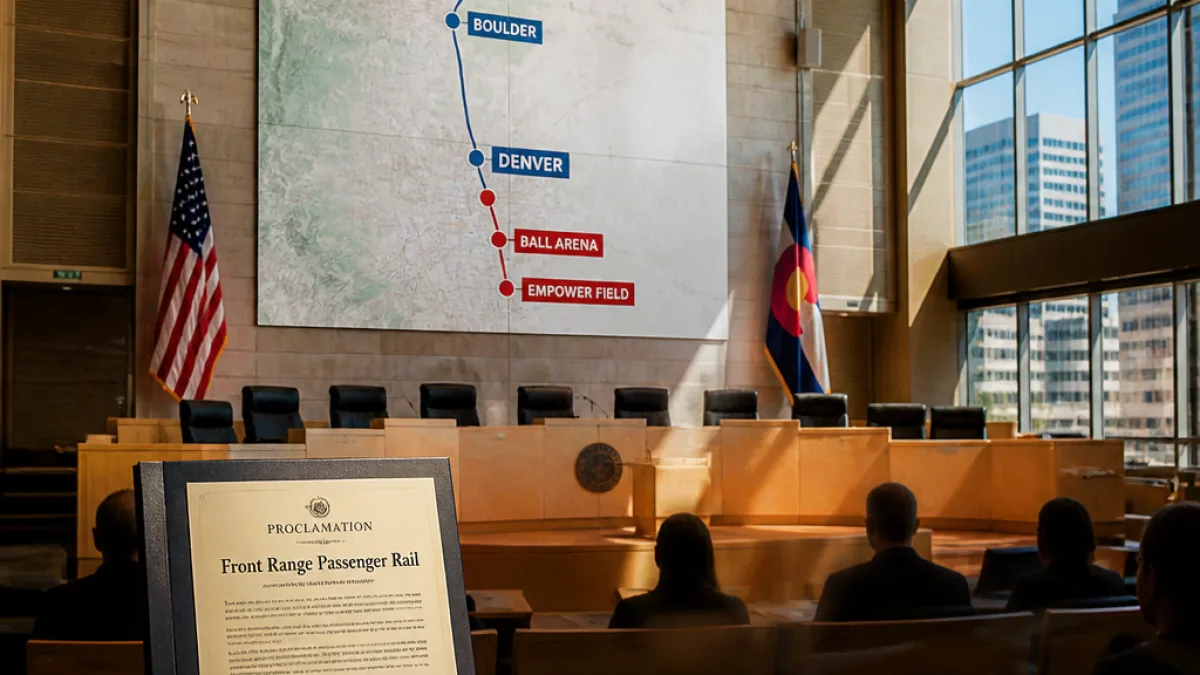
The Denver City Council on July 13 unanimously approved a proclamation endorsing the Front Range Passenger Rail District and proposed station placements along the planned line that will connect Denver with Boulder and Fort Collins.
What Denver approved
Councilman Darrell Watson sponsored the proclamation at the council’s regular meeting. The action makes Denver the latest of nearly a dozen municipalities to publicly back the regional rail plan as the district seeks alignment with local governments ahead of any potential ballot questions.
"Right now, we're dealing with forest fires throughout the state. That air that's coming in, having a cleaner approach to transit is important, and the Front Range Rail provides that," Watson said.
Front Range Passenger Rail District General Manager Sal Pace told the council the proclamation also supports the creation of two additional “special events” stops located south of Union Station that would need voter approval to move forward:
- A stop at South Broadway and I-25 intended to serve the proposed Denver Summit stadium.
- A stop at Burnham Yard intended to serve the proposed Denver Broncos stadium.
Money and local returns
Pace said Denver’s population entitles the city to $225 million in local-return dollars from future district tax revenue. By passing the proclamation, Pace added, Denver has now qualified for an additional $22.5 million in local return funds.
| Item | Amount / Note |
|---|---|
| Base local-return for Denver | $225 million |
| Additional return tied to proclamation | $22.5 million |
| First phase route | Denver → Boulder → Fort Collins (used by Colorado Connector / CoCo) |
The district is working to get local governments to agree on station locations and placement so that any future ballot referrals are coordinated across municipalities, Pace said during the council meeting.
Regional context and next steps
Support from Denver joins approvals from nearly a dozen other municipalities that have signaled backing for the project. The first phase of rail service — which the project has identified as the route for the Colorado Connector (CoCo) — will run from Denver north to Boulder and Fort Collins. Pace framed the city resolutions as part of positioning the rail district to pursue voter authorization for broader elements of the plan, including the special-event stops.
Council members discussed environmental and public-health angles during the meeting, with Watson noting the potential air-quality benefits as Colorado continues to grapple with wildfire smoke in recent seasons. Pace emphasized that the additional local-return funds would come from taxes collected by the district in the future, meaning the dollars are tied to whether voters authorize district revenue measures down the line.
For Denver residents, the immediate implications are twofold: the city has signaled political alignment with the regional rail vision, and it has secured eligibility for additional local-return funding tied to that alignment. The next formal steps will depend on district-level planning, outreach to other municipal partners and whether voters in affected jurisdictions approve ballot measures authorizing tax revenues or special-event stops south of Union Station.
Local officials and transit advocates will watch whether the Front Range Passenger Rail District moves toward ballot referrals and how communities along the corridor weigh station placements near major event venues and new stadium proposals.