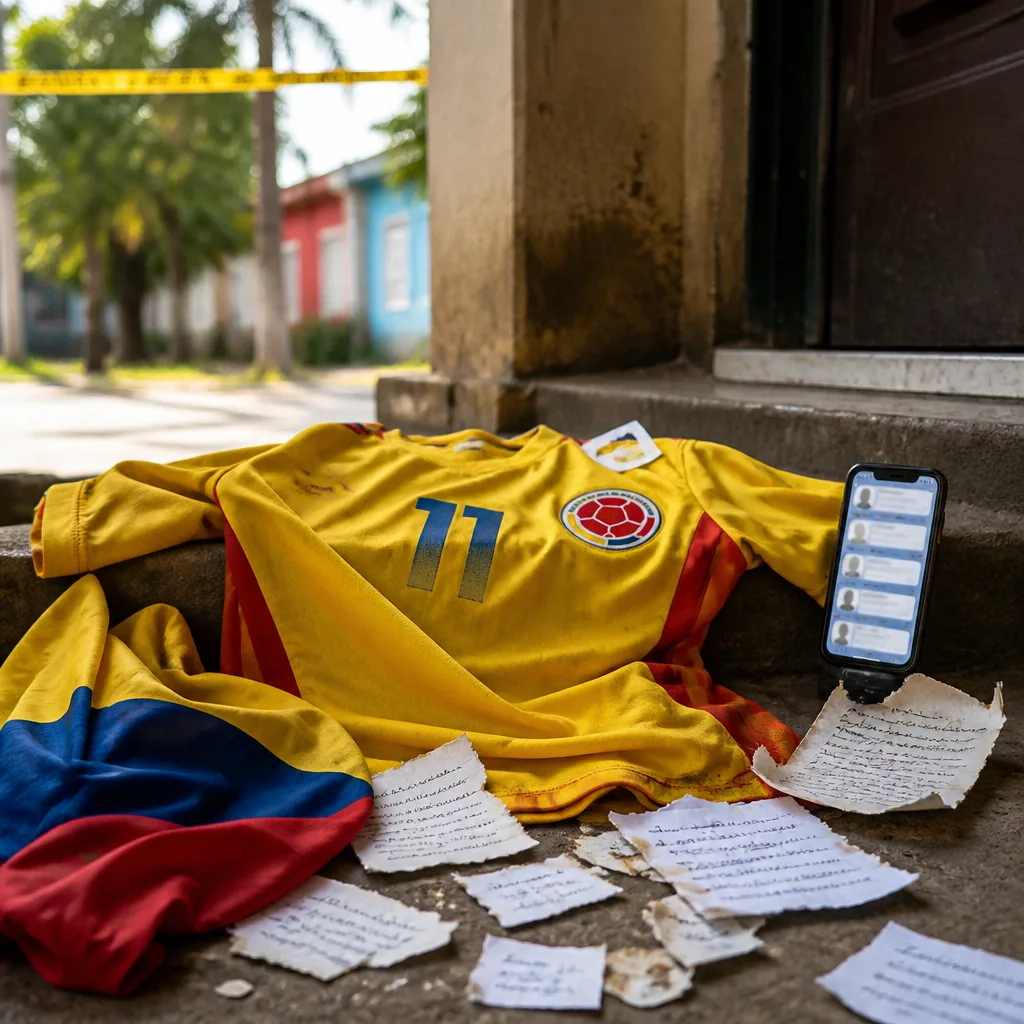
Jaminton Campaz, a midfielder for Colombia, has been the subject of death threats after his national team was eliminated from the World Cup following a penalty shootout loss to Switzerland, the Colombian Football Federation said.
Federation condemns threats and requests investigation
The Colombian Football Federation (FCF) publicly denounced the messages and urged authorities to move quickly to identify those responsible. The federation said no athlete or member of an athlete’s inner circle should face intimidation for representing their country in sport, and called on the attorney general’s office to expedite an investigation.
“No athlete, nor any member of their inner circle, should be subjected to intimidation for representing their country in a sporting arena,”
Campaz, who plays club football for Rosario Central in Argentina, missed a notable opportunity during extra time of the last-16 match against Switzerland when his shot went wide. Colombia were eliminated after the match was decided on penalties.
Player appeal and historical echo
On Instagram, Campaz posted a photo of himself covering his face and appealed for respect, saying football includes difficult moments and urging that passion never justify hatred or fear. The federation’s statement and the player's plea recalled darker episodes in Colombian football history — most notably the 1994 murder of Andrés Escobar after his team’s World Cup elimination, which remains a grim touchstone for how sporting outcomes can spill into violence.
- Incident: Death threats directed at Jaminton Campaz following Colombia’s World Cup elimination.
- Match context: Colombia lost to Switzerland on penalties after Campaz missed a key chance in extra time.
- Official response: FCF condemned the threats and asked prosecutors to act swiftly.
| Detail | Information |
|---|---|
| Player | Jaminton Campaz |
| Club | Rosario Central (Argentina) |
| Match | Colombia vs. Switzerland, last 16 (eliminated on penalties) |
The federation framed football as a space for unity and respect, urging fans not to let disappointment translate into intimidation or violence. Authorities in Colombia now face pressure to identify who sent the threats and to demonstrate that harassment and threats against athletes will be investigated and prosecuted.
The incident underlines the risks high-profile players can face after high-stakes matches and raises questions about measures to protect athletes and their families from online and real-world abuse. It also reinforces why sporting bodies and law enforcement often collaborate after high-profile eliminations to deter dangerous behavior.
For many Colombians, the episode will revive painful memories of past violence tied to football and spotlight the continuing need for protective safeguards for athletes who represent their country on the global stage.