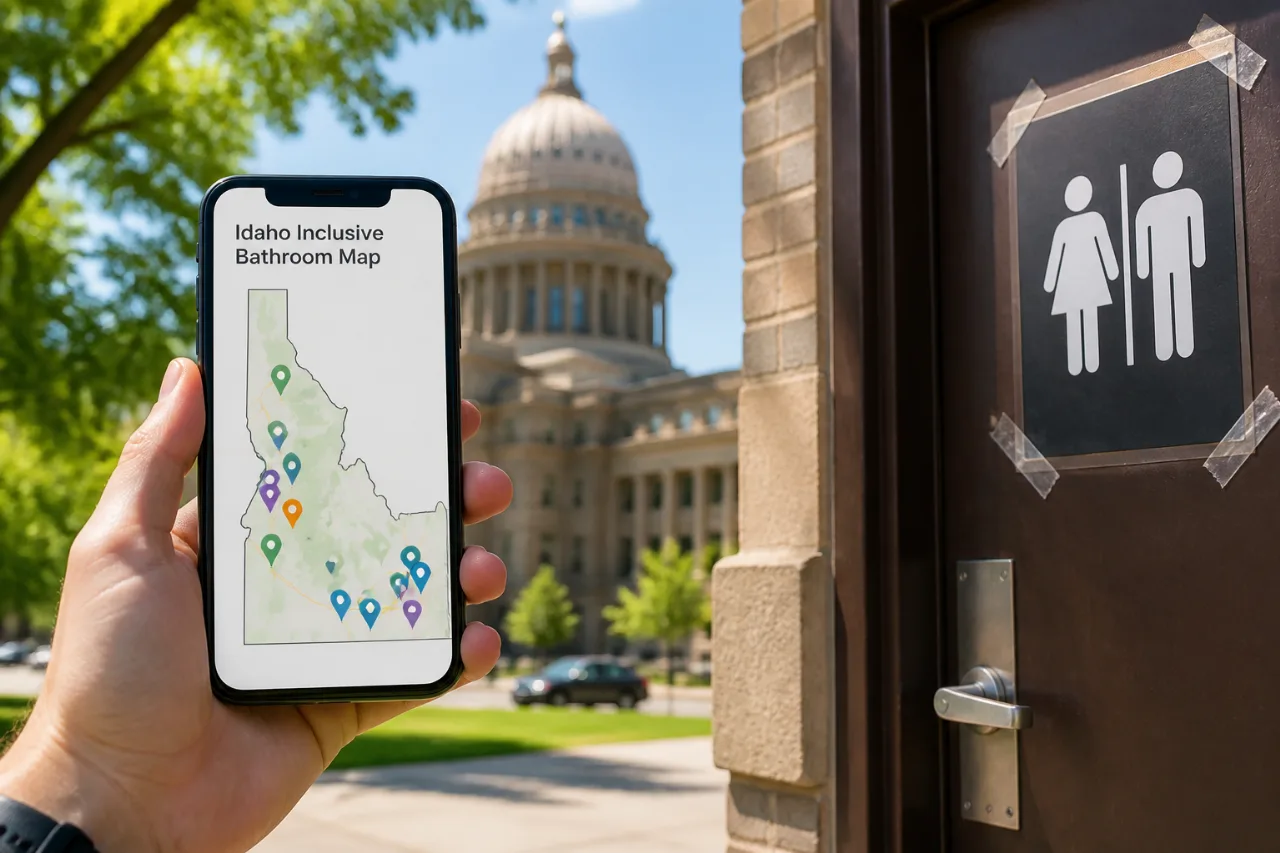
The passage of a new Idaho law that can penalize transgender people for using public restrooms that don't match their sex assigned at birth has prompted advocates to create a practical tool: an online map of inclusive single-stall and welcoming facilities across the state.
Community-built map aims to reduce risk
Trans Affirm, a local advocacy organization, this week published the "Idaho Inclusive Bathroom Map," cataloging places where people can use restrooms aligned with their gender identity without fear of legal exposure. The map identifies primarily single-occupancy, gender-neutral restrooms as well as businesses and public spaces that community members have flagged as positive and welcoming.
Organizers say the project was born from urgency: the new statute, signed into law by Gov. Brad Little, makes it a crime to "knowingly and willfully" enter a restroom or changing area in a government building or place of public accommodation that does not align with the sex listed on an individual's original birth certificate. The law carries steep penalties, including jail time for a first offense.
"It is already a confusing law as it is," said Scar Rulien, a Trans Affirm board member, in a statement to the Idaho Capital Sun. "And it can be scary for transgender people, who identify as one gender, to use the bathroom that is of the gender that they don't identify as. Especially if they are actively transitioning and look like the gender that they identify as, it can pose a risk to their safety."
How the map works and why it matters
The map is intended as a living document maintained by Idahoans. Trans Affirm said it will update locations frequently to reflect policy changes by businesses and other space managers. The group framed the effort as offering "practical tools, not just conversations" to enhance access to information and strengthen community knowledge-sharing.
- Most listings are single-stall, gender-neutral restrooms.
- Community input determines which public spaces receive a "welcoming" designation.
- Trans Affirm plans regular updates to track changing policies.
Penalties and legal context
The law sets criminal penalties for violations tied to restroom or changing-area use in government buildings and places of public accommodation. The penalties, as described by state reporting, include jail time for a first offense and the possibility of felony charges for repeat convictions within a five-year window.
| Offense | Potential Penalty |
|---|---|
| First offense | Up to one year in jail |
| Second conviction within five years | Charged as a felony |
Advocates say the law is confusing in practice and raises safety concerns for transgender Idahoans, particularly those whose appearance aligns with their gender identity but differs from the sex listed at birth. The map is designed to reduce the day-to-day hazards people face when moving through public spaces for work, school and errands.
Broader implications for Idaho communities
This local response reflects a broader pattern of services and grassroots tools emerging where legislation affects basic access to public facilities. For many residents, the map will serve both as a guide and as an information resource: it lists locations identified by peers, clarifies which spots offer single-stall privacy, and signals businesses that community members consider supportive.
Organizers have emphasized that the map does not replace legal advice and that updates will be necessary as businesses and public entities respond to the new law. Meanwhile, community members continue to weigh the law's social and economic effects alongside its legal consequences.
News Block will monitor updates to the map and the law, and will report on how communities, businesses and courts respond in the weeks ahead.