
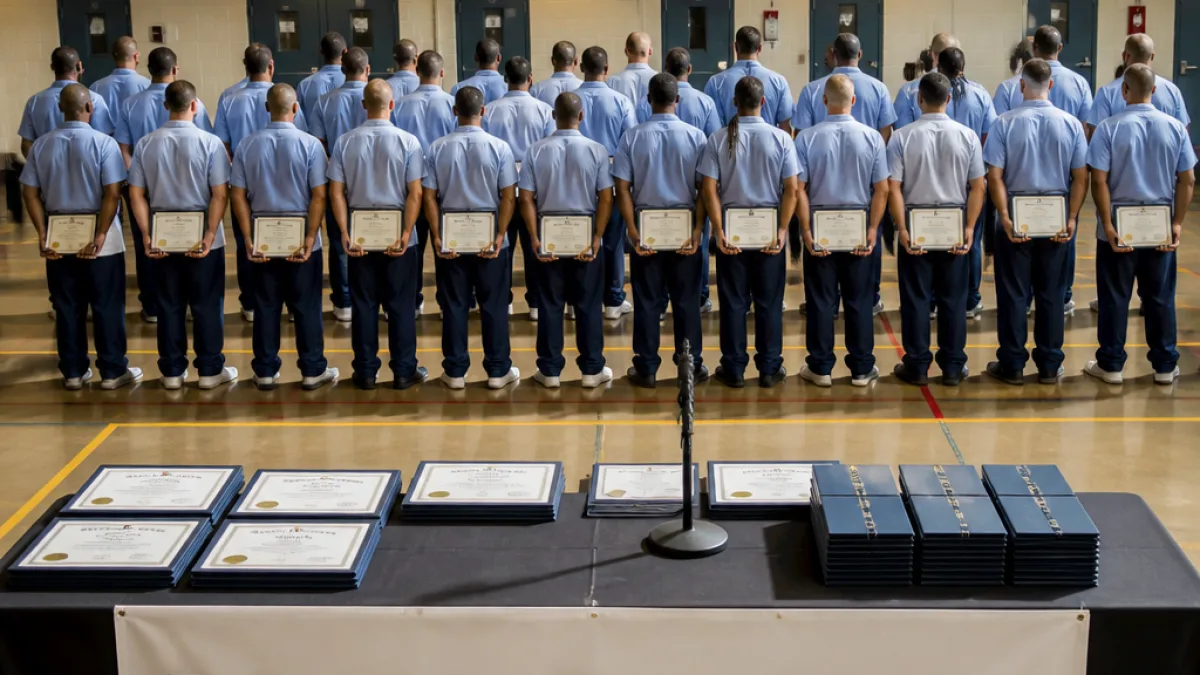
JEFFERSON COUNTY, Miss. — Twenty-nine men housed at the Jefferson-Franklin Regional Correctional Facility were recognized this week after completing the department’s Prison to Possibilities program, a structured, 26-week initiative designed to equip incarcerated people with tools to rejoin their communities successfully.
Program focus and classroom work
The course emphasized practical life skills and behavior change through a mix of instruction and reflective practice. Participants engaged in classroom lessons, group discussions, journaling exercises, scenario-based learning and self-evaluation. Modules addressed:
- Communication skills
- Decision-making
- Conflict resolution
- Goal setting
- Emotional intelligence and personal responsibility
Officials and local impact
Officials from the Mississippi Department of Corrections said the program is part of broader efforts to lower recidivism and prepare people for life after incarceration. Derrick Chambers, director of Private and Regional Facilities and Joint County-State Work Programs, commended the initiative and its outcomes.
“This program demonstrates the importance of providing meaningful opportunities for rehabilitation and personal development,”
The department also singled out Kim Nugent for her leadership in expanding opportunities for incarcerated individuals, and it praised staff at Jefferson-Franklin for their role in delivering the program.
Why it matters locally
Reentry programs like Prison to Possibilities can affect small, rural counties by improving public safety and easing transitions when people return to their families and neighborhoods. In counties with limited social services, successful reentry can reduce the strain on probation systems and local law enforcement while helping employers and community organizations find stable workers.
| Program | Length | Number of graduates |
|---|---|---|
| Prison to Possibilities | 26 weeks | 29 |
Graduates completed a curriculum intended to change behavior and build practical competencies that parole officers, employers and community groups often look for during reentry. The MDOC said most participants complete the program through a combination of lecture, role play and written reflection.
Next steps and community resources
The department called graduation a significant milestone and said it reflects MDOC's continued commitment to reintegration and safer communities across Mississippi. Local leaders and service providers are typically involved in post-release planning, though specifics about job placement or follow-up services for this cohort were not detailed in the department’s announcement.
For families and community members interested in supporting returning residents, county reentry coalitions, faith-based groups and workforce programs often provide resources such as job-readiness training, housing assistance referrals and mentoring. The department encourages cooperation between correctional facilities and local partners to sustain gains made in programs like Prison to Possibilities.
As these 29 individuals move toward release, their success will depend on continued access to services and stable community supports — underscoring the broader role of counties, nonprofits and residents in shaping outcomes after incarceration.