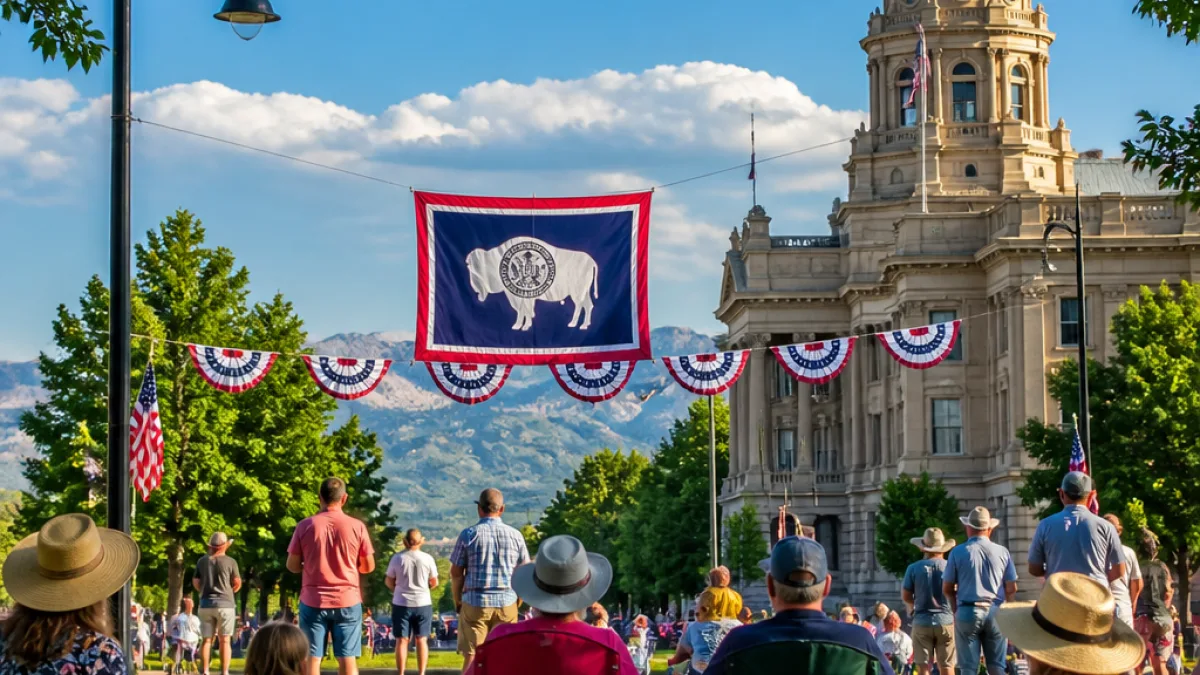
CHEYENNE, Wyo. — Wyoming turned 136 years old on Friday, July 10, and residents used the anniversary to reflect on what they prize about the Cowboy State — freedom, wide open spaces and its mountains among them.
From territory to statehood
The path to statehood began when President Andrew Johnson signed the Organic Act in 1868, establishing Wyoming Territory. Territorial leaders pushed for admission for two decades. A formal petition from the Territorial Assembly in 1888 produced bills in both houses of Congress. After drafting and approving a constitution in 1889, congressional legislation ultimately was signed by President Benjamin Harrison on July 10, 1890, making Wyoming the nation’s 44th state. The territory’s formal celebration occurred July 23, 1890, and contemporary newspapers hailed the milestone as “A GREAT DAY.”
| Year | Event |
|---|---|
| 1868 | Organic Act signed; Wyoming becomes a territory |
| 1888 | Territorial Assembly petitions Congress for admission |
| 1889 | Constitution drafted and approved by voters |
| 1890 | President Harrison signs statehood bill; Wyoming becomes 44th state |
What residents say they love
County 17 asked readers to name their favorite things about living in Wyoming. Answers ranged from scenic landmarks to the state’s perceived freedoms and low population density. Several responses highlighted specific natural features while others expressed an attachment to community and lifestyle.
- Freedom and solitude: “The freedom,” wrote reader Piper Sears, adding “And no one around. Peace.”
- Mountain ranges: Multiple respondents cited the Bighorn Mountains as a favorite.
- Open spaces and friendly people: Respondents praised wide-open landscapes and community character.
“The freedom,” wrote reader Piper Sears. “And no one around. Peace. And all the secret places only certain people can go to. Love this state.”
Why the anniversary matters
Statehood anniversaries offer a moment to assess both history and present-day priorities. For Wyoming, the milestone underscores long-standing themes: sparse population, abundant public lands, extractive industries and an outdoors-based culture. Those elements shape local economies, county planning and policy discussions on issues including land use, recreation management and service delivery in rural areas.
For counties and municipalities, celebrating statehood is also an opportunity to engage residents in civic life and public history. Local events — from museum programs to community breakfasts and historical site commemorations — remind residents of the legal and political steps that converted a territory into a state and set governance structures that persist today.
Looking ahead
As Wyomingites mark another anniversary, the responses collected illustrate what many residents see as the state’s enduring strengths: natural beauty, space and a way of life that residents value. Those sentiments will continue to factor into civic debate as communities across the state confront issues of growth, conservation and public services in largely rural settings.
— Lane Cassidy, Wyoming Correspondent