CONCORD — State officials and a local landowner have reached a temporary agreement to remove concrete barriers that had blocked the Northern Rail Trail in Andover, restoring public access while broader legal questions remain unsettled.
What the agreement does
The deal, announced before a scheduled court hearing, requires the landowner, Leonard Caron, to remove the barriers by 6 p.m. on Friday and allows him limited continued use of a portion of the trail to reach his gravel pit business. The hearing, which had been set to consider the state's motion for a preliminary injunction, was canceled after both sides reached the temporary arrangement.
"This agreement restores public access to the Northern Rail Trail while the remaining legal issues continue to be addressed," said Attorney General John Formella.
Why the trail mattered
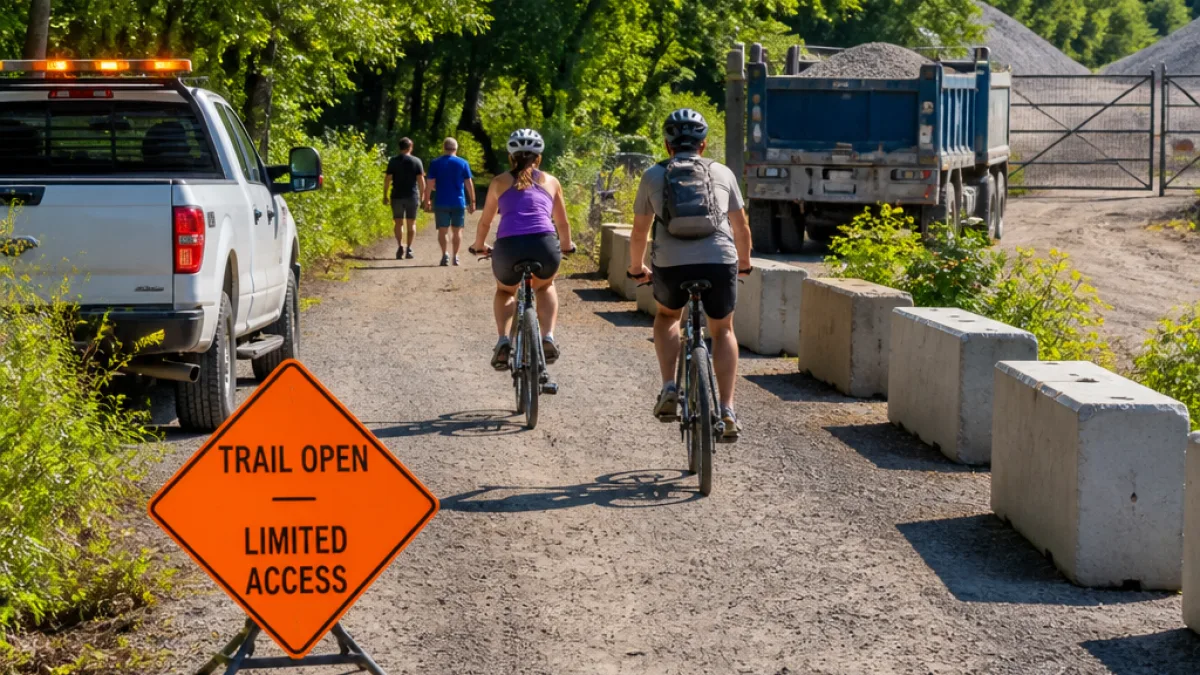
The Northern Rail Trail is a public resource used by residents and visitors for walking, cycling and snowmobiling. The dispute began in May when Caron placed concrete barriers across the trail; he has said he needed to cross the trail and a trestle to access his business property. State attorneys moved to block the barriers and seek enforcement of trail access rights.
What’s next
Officials emphasized the agreement is temporary and does not resolve the underlying legal claims. The Attorney General’s Office indicated it will continue to pursue those issues through the court process or other means.
- Removal deadline: Caron must remove the barriers by 6 p.m. Friday.
- Trail access: Public access restored for hikers, cyclists and other users.
- Ongoing litigation: State will continue to press legal claims regarding the barriers and use of the trail.
| Event | Date |
|---|---|
| Barriers placed across trail | May (installed) |
| Hearing scheduled on preliminary injunction | Friday (scheduled) |
| Agreement reached; removal deadline | Agreement reached before hearing; removal by 6 p.m. Friday |
For Andover residents and regular trail users, the pause in the dispute brings immediate relief: the path that connects towns and green spaces is open again. But the temporary nature of the deal means questions remain about access rights when private businesses border public corridors — an issue that has surfaced elsewhere in New Hampshire as recreational trail use grows.
State officials framed the action as protecting a publicly held resource while keeping options open to resolve competing claims in court. Caron told reporters earlier he needed to cross the trail and a trestle to reach his gravel operation; under the agreement he will be allowed to use a portion of the trail for that purpose, subject to restrictions spelled out by the parties.
With the barriers removed, trail users can expect passage to return immediately, but both sides will continue working through the legal process that produced the dispute. The outcome could shape how the state balances private land use and public trail access in similar cases down the road.