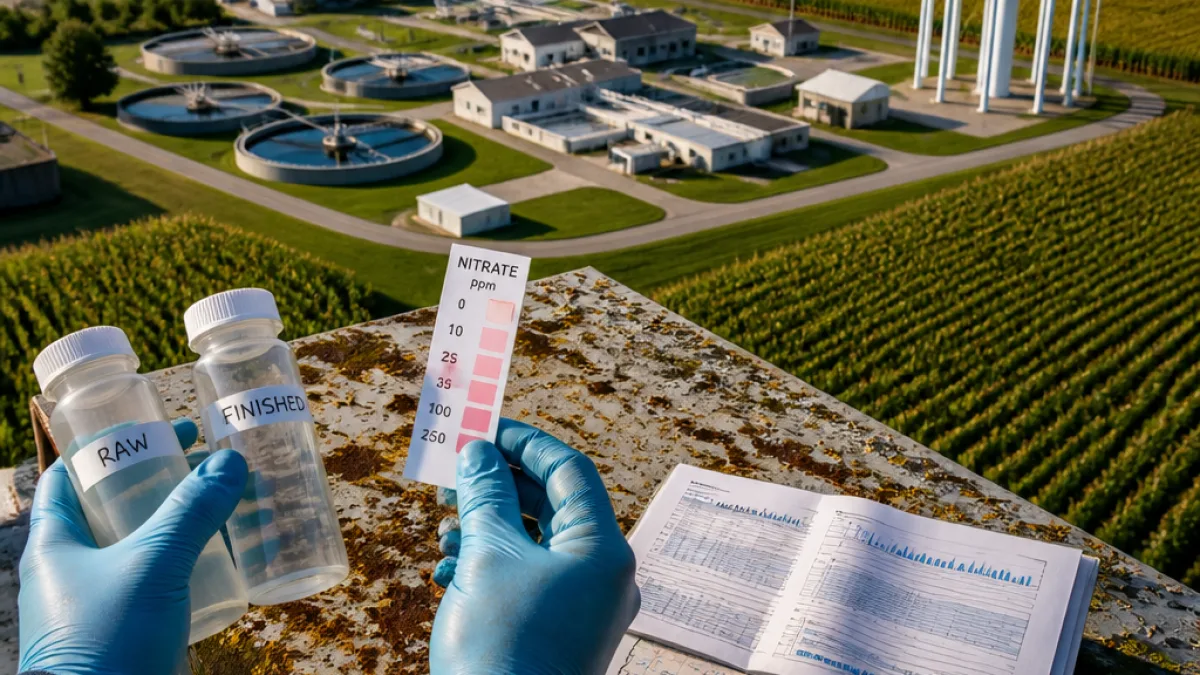
A statewide review by the Iowa Department of Natural Resources found 36 violations related to nitrate levels in treated drinking water during 2025, the agency reported Monday. The data show nitrates were the most frequently cited drinking-water problem in the most recent six-year span the DNR examined.
What the report says
The DNR’s review covers violations recorded between 2020 and 2025 and identifies nitrates as the most common compliance issue for public drinking-water systems in that period. Federal standards set by the U.S. Environmental Protection Agency place a limit of 10 milligrams per liter for nitrates in treated drinking water; a violation occurs when a system reports levels above that threshold.
State officials did not release a list of every water system cited in the summary provided to local media, but the report singled out that the largest regional supplier in the state, Central Iowa Water Works, did not exceed the federal limit during the year in question.
Why nitrates matter here
Nitrate contamination is commonly linked to agricultural runoff and fertilizer application, factors that shape Iowa’s landscape. High nitrate concentrations in drinking water pose a particular danger to infants and pregnant people; the EPA standard is intended to mitigate those health risks.
- 2025 violations: 36 nitrate exceedances in treated drinking water.
- EPA limit: 10 mg per liter for nitrates in finished water.
- Regional supplier status: Central Iowa Water Works reported no exceedances in 2025.
The DNR described nitrates as the leading violation between 2020 and 2025, indicating a persistent compliance challenge rather than a one-year anomaly. That pattern raises questions for local utilities, farmers and regulators about where responsibility and solutions should lie.
Practical implications for Iowans
For most customers served by compliant systems, routine treatment and monitoring should keep water below the federal limit. Households that rely on private wells, however, are responsible for their own testing; the DNR and county health departments recommend periodic well testing for nitrates and other contaminants.
| Item | Detail |
|---|---|
| Reported nitrate violations (2025) | 36 |
| EPA maximum contaminant level | 10 mg/L |
| Central Iowa Water Works | Did not exceed the standard in 2025 |
The report does not assign causes for individual violations and does not provide a county-by-county breakdown in the summary released to media. Local officials and water managers typically follow up on exceedances with public notices, treatment adjustments or source-water investigations. Residents who receive a public notice should follow the guidance provided by their water utility and county health department.
As Iowa continues to wrestle with nutrient runoff and water-quality issues, regulators and communities face pressure to coordinate monitoring, treatment and agricultural practices to reduce nitrate loads in source waters. The DNR’s findings underscore that for some systems, meeting the federal nitrate standard remains a pressing challenge.