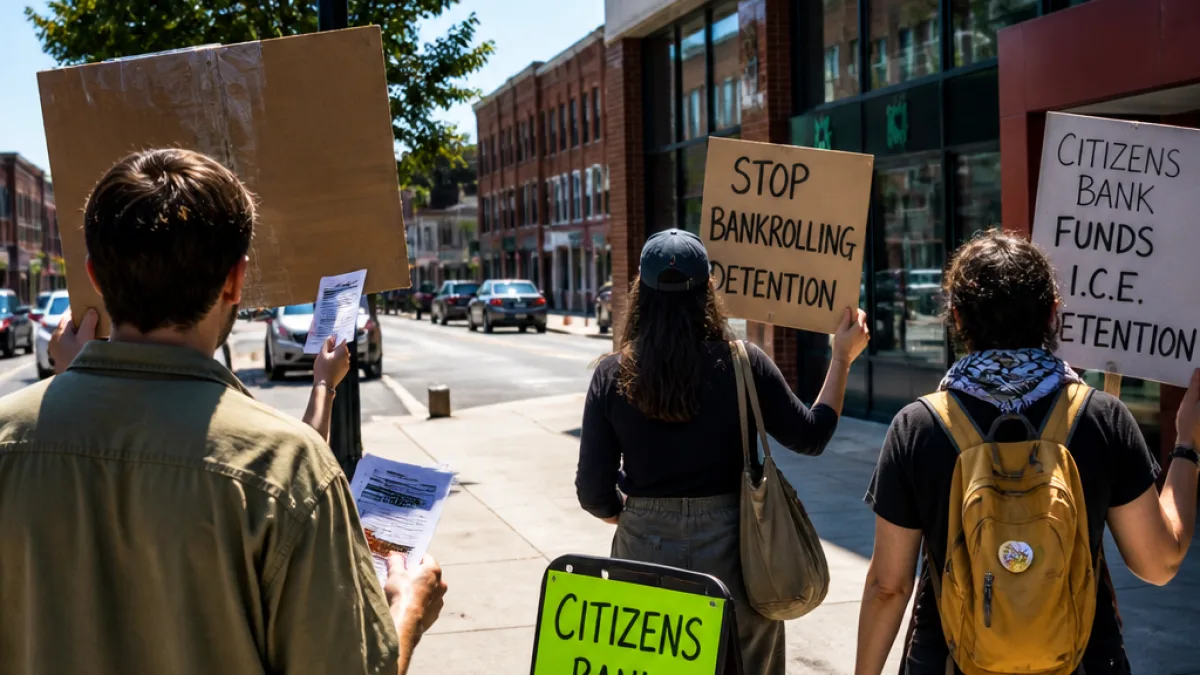
On a summer afternoon in Pawtuxet Village, demonstrators gathered outside the Citizens Bank branch on Broad Street to press a local financial institution to withdraw support for private prison companies that operate immigration detention centers.
Local action amid a national campaign
The protest on July 11 was part of a nationwide effort organized by the De-ICE Citizens Bank Coalition, which says more than 100 groups are urging Citizens Financial Group to stop doing business with CoreCivic and The GEO Group. A handful of people held signs, handed out fliers to pedestrians and drew attention with bright messaging — one placard read "They Finance ICE Prisons" and an activist wore a neon sandwich board stating "Citizens Bankrolls ICE Prisons".
"There have been very inhumane conditions documented," said Chris Campanile of Cranston Forward and allied organizations.
Protesters cited the coalition's figures showing Citizens has helped CoreCivic and GEO access roughly $2.5 billion in financing, including about $100 million in January 2026. The coalition also notes those two companies are responsible for holding about 35,000 of the more than 70,000 immigration detainees nationwide.
How protesters connected national policy to local banking
Organizers in Cranston said they were motivated by reports of deaths and poor conditions at detention facilities and by the expansion of immigration enforcement under the current administration. Protesters encouraged Citizens account holders to move their money and to notify the bank about why they were closing accounts, mirroring tactics used in other cities.
- Location: Citizens Bank branch, Broad Street, Pawtuxet Village, Cranston
- Organizers: De-ICE Citizens Bank Coalition and local groups including Cranston Forward
- Targets named: CoreCivic and The GEO Group; Citizens Financial Group as financier
The demonstration was peaceful and small in scale, consistent with other weekend protests that have intermittently appeared outside the same branch.
Context for Rhode Island
Citizens Financial Group is headquartered in Rhode Island, making it a frequent focus of local activism when national controversies intersect with company practices. For many residents, the protests underscore a broader debate about corporate responsibility and the role of banks in financing operations that critics say produce human rights concerns.
| Item | Figure |
|---|---|
| Financing to CoreCivic and GEO (coalition figure) | $2.5 billion |
| Recent announced financing (Jan. 2026) | $100 million |
| Immigration detainees held by the two companies | 35,000 of 70,000+ |
Protest leaders pointed to reported deaths and alleged inhumane conditions at detention centers as reasons for their campaign. They said their actions aim both to raise public awareness and to persuade Citizens to sever those financing relationships, as some other financial institutions have done in recent years.
The bank has been a financier of the private prison and detention industry since at least 2012, according to the coalition’s materials. Protesters in Cranston said they will continue local pressure as part of the broader campaign until they see policy changes from Citizens Financial Group.
For residents considering action, organizers recommended contacting the bank directly, moving deposits if desired, and joining future demonstrations coordinated through the national coalition and local groups.
Reporting from the scene highlights how a national controversy over immigration enforcement and private prisons can play out on a neighborhood street in Rhode Island — where corporate headquarters and community concerns often collide.