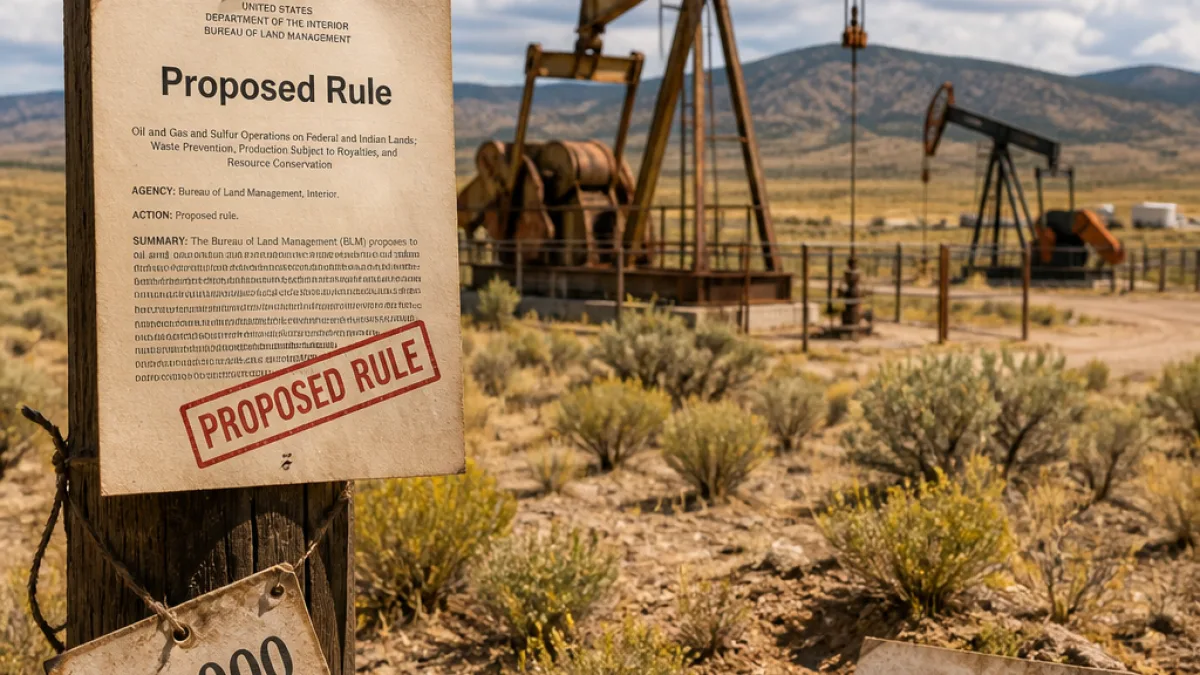
The Bureau of Land Management is seeking to revise the 2024 Onshore Oil and Gas Rule in a way that would significantly cut the money companies must post to guarantee cleanup of wells and drilling sites on public lands.
What the change would do
Under the proposed revision, several bond amounts that today require large financial assurances would be reduced to much smaller minimums. The rule would replace current bonding levels intended to ensure wells are plugged and sites reclaimed with amounts critics describe as insufficient to cover actual cleanup costs.
"Congratulations, taxpayers, you’ll be responsible for cleaning up leaking wells left behind by oil and gas companies who have walked off with their profits from your public resources."
Environmental advocates, local leaders and some landowners warn the change would increase the likelihood that companies will forfeit inadequate bonds rather than pay to properly plug wells and restore land. That can leave abandoned wells that leak methane, contaminate groundwater and degrade surface resources.
Numbers at issue
| Current rule | Proposed revision | |
|---|---|---|
| Bond for all leases in a state | $500,000 | $25,000 |
| Bond per lease | $150,000 | $10,000 |
Those proposed figures contrast with reclamation cost estimates produced by federal auditors: the Government Accountability Office in 2022 estimated a typical low-cost well reclamation at $20,000 and a high-cost well at $145,000. Opponents say the gap between bonds and likely cleanup bills invites abandonment rather than restoration.
Local stakes for Wyoming
Wyoming is among the Western states with extensive oil and gas development on federal and private lands. If bonding no longer reliably covers closure and reclamation, county governments and state agencies could face increased pressure — and costs — to address leaking wells and degraded sites. Consequences cited in critiques include:
- Groundwater contamination risk from unplugged or poorly plugged wells.
- Increased methane emissions contributing to air pollution and climate impacts.
- Spread of invasive plants and reduced land value affecting ranching and recreation.
Critics also note an industry practice in some cases of selling poor-performing leases to undercapitalized buyers or allowing entities to declare bankruptcy, leaving insufficient resources behind to complete reclamation.
Policy context
Bonds are a standard regulatory tool across extractive industries; coal operators, for example, are typically required to post reclamation bonds meant to fully cover mine restoration. Opponents of the BLM revision argue that reducing bonding on public-land drilling creates an uneven standard and increases fiscal risk for taxpayers who ultimately own the land.
The BLM will accept public comment on the proposed changes before any final decision. Local governments, environmental groups and industry representatives are likely to weigh in as the process moves forward. For ranchers, recreation businesses and county officials in Wyoming, the outcome will affect who bears the cost and responsibility for plugging inactive wells and returning landscapes to productive use.
Lawmakers and watchdogs will be watching the administration’s next steps closely, given the potential for long-term environmental and fiscal consequences in energy-producing states.