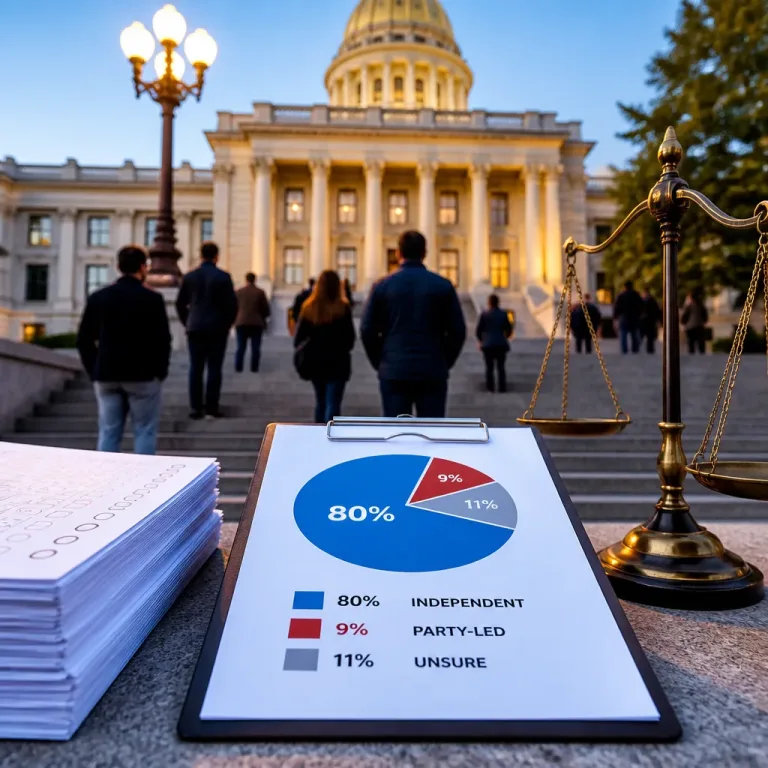

California's education governance changed this summer when lawmakers approved a budget trailer bill that moves day-to-day managerial authority from the independently elected State Superintendent of Public Instruction to a newly created education commissioner appointed by and reporting directly to Gov. Gavin Newsom.
What changes for residents and schools
The legislative action, filed as Assembly Bill 181 and enacted as part of the 2026–27 state budget negotiations, centralizes operational control for K-12 education under an official who answers to the governor. Supporters say the restructure is intended to unify policy-setting and implementation across California's education system; critics contend it reduces accountability by weakening the power of an elected official.
Gov. Newsom framed the move as long-overdue reform. In remarks on the bill signing day he said the state needed to "modernize the governance system" and described the measure as a unification of the policy-making State Board with the Department of Education that carries out those policies. "We’re empowering the State Superintendent of Public Instruction to help align our education policies from early childhood through college," Newsom said, adding the changes will deliver "greater accountability, clarity, and coherence."
"As a teacher and voter, I am completely against this undemocratic power play," said Steve Campos, who taught for more than 30 years in California.
Campos and other education-sector leaders have warned the shift amounts to an "undemocratic power play," arguing the elected superintendent's role is diminished when a governor-appointed official assumes everyday managerial responsibilities.
Officials' rationale and opponents' concerns
Proponents of the change say it addresses long-standing calls for clearer lines between policy and implementation. Opponents say it reduces a layer of democratic oversight by transferring authority from an official chosen by voters to one appointed by the governor.
- Appointed commissioner — will be chosen by and report directly to the governor.
- Elected superintendent — retains the title and some policy responsibilities, but daily management shifts away from the office.
- Legislative vehicle — the reorganization was enacted as a budget trailer bill tied to the 2026–27 fiscal package.
| Role | Before AB 181 | After AB 181 |
|---|---|---|
| State Superintendent of Public Instruction | Independently elected; managed day-to-day operations | Remains elected; day-to-day managerial authority shifted elsewhere |
| Education Commissioner | Not applicable | New position appointed by governor; assumes daily managerial responsibilities |
How the change will play out in practice depends on subsequent appointments, rulemaking and implementation details to be worked out by the governor's office and the Department of Education. The bill was negotiated during budget talks between legislative leaders and the governor, and it was finalized as part of the budget package.
Stakeholders in classrooms and districts statewide are watching closely. Teacher organizations, school board members and other education advocates have expressed concern that shifting managerial control to an appointed official could reduce public influence over school administration. Supporters say a unified system will improve consistency and accountability across the state's vast education system.
For now, the change is law. The next steps include selecting the education commissioner and establishing the operational boundaries between the new commissioner, the elected superintendent and the State Board of Education.
Questions remain about how authority will be divided day to day and how the public will hold education leaders accountable under the new structure. Lawmakers, the governor's office and education officials will be asked to provide those specifics in the months ahead.