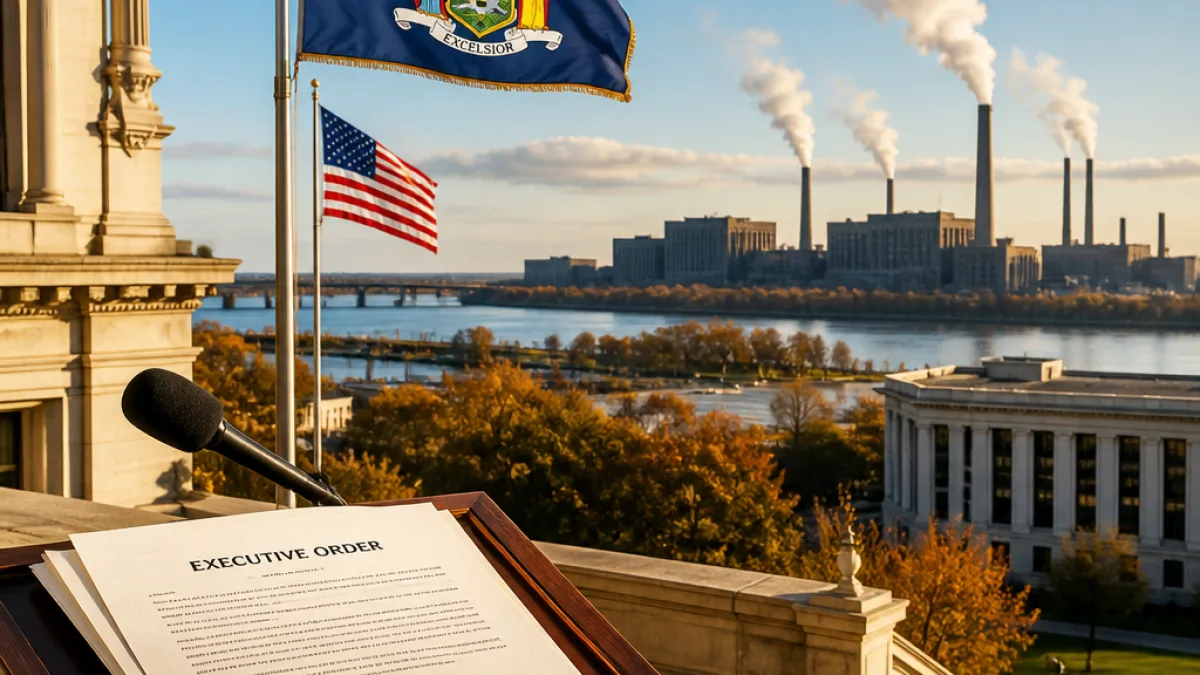
ALBANY — Gov. Kathy Hochul on Tuesday signed an executive order halting state-level approvals for new large data centers for up to one year while regulators develop rules aimed at limiting the facilities’ pressure on the power grid, water resources and local utility bills.
What the order does
The pause affects so-called hyperscale facilities — the massive server farms that underpin artificial intelligence and cloud services. The governor’s office said the moratorium will stop state permitting for new large data centers and direct agencies to draft standards that address:
- Environmental impacts from construction and operation
- Energy demand and contributions to strain on the electric grid
- Water usage and effects on local water supplies
“As data center development threatens to hike up utility bills, deplete our natural resources, and create uncertainty for New Yorkers, it’s my responsibility to take action and lead,”
The executive action follows state lawmakers’ passage of a separate one-year moratorium last month. Hochul aides told reporters the administrative pause would apply to centers that can draw about 50 megawatts of power or more, while the legislature’s bill used a threshold of facilities with a peak load greater than 20 megawatts.
Context and competing priorities
Data centers are energy- and water-intensive. The International Energy Agency has noted that conventional data centers typically use about 10 to 25 megawatts, while an AI-focused hyperscale site can consume 100 megawatts or more. The state action reflects growing concern among elected officials and residents about rising utility costs and the environmental footprint of rapid data center buildouts.
Supporters of large-scale data center development argue such projects bring jobs and economic activity to communities. Opponents counter that deals struck at the local level can saddle residents with higher electric bills and stress on municipal resources. The governor’s move also has clear political overtones: advocates and critics have framed the debate around jobs, costs for consumers and state competitiveness in technology.
Policy tools under consideration
Hochul’s order directs regulators to consider multiple mechanisms, including standards for siting and operation and frameworks for requiring contributions to grid resilience funds. Her aides said the state will work on an investment fund framework to help local governments negotiate terms with companies, and the governor is expected to support repeal of a sales tax exemption used by some large data centers.
| Reference point | Power threshold |
|---|---|
| Legislature’s moratorium bill | >20 MW |
| Governor’s aides (administrative pause) | ~50 MW |
| IEA conventional data centers | 10–25 MW |
| IEA hyperscale AI-focused sites | 100+ MW |
This action joins a broader patchwork of local and state responses across the country: some counties and municipalities have imposed temporary bans while several states have debated or proposed moratoriums. In at least one other state, Maine, lawmakers considered similar restrictions earlier this year but the governor vetoed a moratorium that would have affected a proposed facility in a town still recovering from an industrial closure.
For New Yorkers, the immediate practical effect is that developers seeking state environmental permits for new hyperscale projects will face a pause as regulators write new standards. Local governments and companies now must await the outcome of that rulemaking to learn how siting, permitting and community agreements may change.
The executive order makes clear the state intends to balance clean-energy and climate commitments with concerns about affordability and grid reliability. How regulators and the Legislature reconcile differing thresholds, the role of local agreements and potential tax changes will shape the industry’s footprint across New York in the months ahead.